(Sponsored) KiCad STM32 + USB + Buck Converter PCB Design and JLCPCB Assembly - Phil's Lab #11
Phil’s Lab3 HN recommenders · recommended in 3 months, 2021–2022
tutorial · intro · 2021–2022 on HN
A roughly three-hour screen recording of designing a barebones STM32F4 board in KiCad, covering schematic, four-layer layout and routing, USB and a buck converter. It ends with ordering manufacture and assembly through JLCPCB.
HN people recommend it as a real, end-to-end PCB design walkthrough that beginners successfully imitated to learn KiCad.
Up next
 1 mo on HN
Chest Freezers; What they tell us about designing for X
Technology Connections
1 HN recommend · 2020–2026
 15 mo on HN
AT&T Archives: Similiarities of Wave Behavior (Bonus Edition)
AT&T Tech Channel
12 HN recommender · 2014–2026
 12 mo on HN
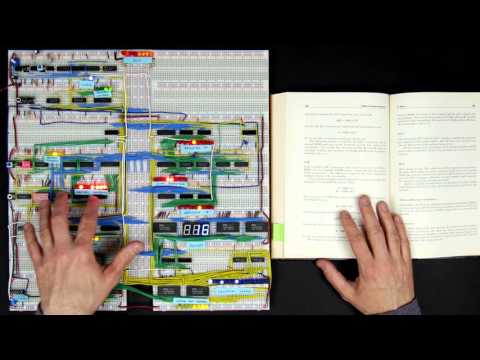
8-bit computer update
Ben Eater
14 HN recommender · 2017–2023
 11 mo on HN
“Hello, world” from scratch on a 6502 — Part 1
Ben Eater
11 HN recommender · 2019–2026
 10 mo on HN
Finding the Missing Memristor - R. Stanley Williams
The Qualcomm Institute
12 HN recommender · 2010–2024
 10 mo on HN
[LIVE] How to Achieve Proper Grounding - Rick Hartley - Expert Live Training (US)
Altium
9 HN recommender · 2021–2025
 8 mo on HN
I bought 1000 meters of wire to settle a physics debate
AlphaPhoenix
8 HN recommender · 2021–2026
 6 mo on HN
What your Differential Pairs Wish You Knew with Rick Hartley - AltiumLive Keynote
Altium
5 HN recommender · 2021–2026
 7 mo on HN
The world's worst video card?
Ben Eater
8 HN recommender · 2019–2024
 6 mo on HN
The Art of Making a Nixie Tube
Dalibor Farný
6 HN recommender · 2017–2026
 6 mo on HN
How does a USB keyboard work?
Ben Eater
7 HN recommender · 2021–2025
 5 mo on HN
Watch electricity hit a fork in the road at half a billion frames per second
AlphaPhoenix
5 HN recommender · 2024–2026
4 comments from Hacker News
I recently learned KiCad and did some basic boards with it. It was a breeze; didn't run into any crashes, bugs, or major difficulties. I learned Eagle a few years ago, and from my vague memory I remember Eagle being a bit less obvious to use. KiCad felt straightforward in every way except maybe drawing the board cuts. (I did run into one paper cut. The PCB DRC didn't flag unconnected nets; there's a second button next to Run DRC that checks for unconnected nets. :/ Cost me an hour wondering why my 5V rail wasn't working... ) Was also my first time using one of those cheap, small-run assembly houses. Absolutely incredible. My project was a tweak of an existing product (an RGB LED driver), and I was able to get my boards made and assembled for less than the retail product, even at a volume of 5 and with nicer parts. Crazy. For anyone looking to learn KiCad, I used this video tutorial: ▶ this video
I've been getting into this over most of quarantine and have successfully imitated this guy's tutorials (just had to swap out the microcontroller): ▶ this video If you don't know EE basics you'll probably want to grok those first, there's plenty of youtube channels covering it. Good starter: link
If folks are interested in best practices to follow when laying out a PCB, I really enjoy this series of videos on YouTube where someone whips one up live over the course of 3 hours. ▶ this video
I almost can't think of a type of board you cannot do with KiCad. I would suggest you try it with a hobby project or two and go from there. Version 6 made important improvements to the file format and other areas. This is what we were waiting for. I wouldn't have touched it before 6.0. Watch this and see what portions of it align with the kind of work you do: ▶ this video Also, like I said in my prior comment, Python scripting turns KiCad into a very powerful tool. A loot of these videos are outdated (prior versions). The point is to illustrate the range of ideas that can be covered using Python. link