Alan Watts - On Prickles and Goo
Jamie AndersonCited 3× on HN, 2017–2026
commentary · general · evergreen · 2017–2026 on HN
A short animated excerpt of Alan Watts describing 'prickles' (rigorous, scientific types) and 'goo' (soft, spiritual types). He argues the real division is between prickly goo and gooey prickles.
HN uses it as shorthand for the divide between systematizing and humanistic outlooks, applied to arguments about science, society and language.
Up next
 12 mo on HN
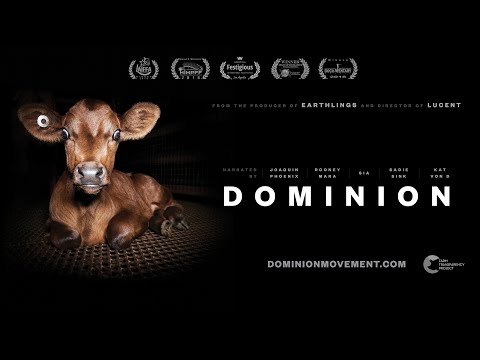
Dominion (2018) - full documentary [Official]
Farm Transparency Project
10 HN recommender · 2019–2024
 12 mo on HN
Justice: What's The Right Thing To Do? Episode 01 "THE MORAL SIDE OF MURDER"
Harvard University
11 HN recommender · 2013–2025
 11 mo on HN
We Were Taught to Call Death a Blessing
CGP Grey
12 HN recommender · 2018–2025
 11 mo on HN
Alain de Botton: Status Anxiety
Alain de Botton
4 HN recommender · 2015–2026
 11 mo on HN
Music and Life - Alan Watts
seandulac
11 HN recommender · 2010–2022
 7 mo on HN
The Egg - A Short Story
Kurzgesagt – In a Nutshell
7 HN recommender · 2020–2024
 7 mo on HN
The Machinery Of Freedom: Illustrated summary
bitbutter
4 HN recommender · 2012–2020
 7 mo on HN
Ep. 1 - Awakening from the Meaning Crisis - Introduction
John Vervaeke’s Lectern
6 HN recommender · 2019–2022
 6 mo on HN
Toward Rational, Authentic Food Choices | Melanie Joy | TEDxMünchen
TEDx Talks
3 HN recommender · 2015–2023
 5 mo on HN
Carl Sagan - Pale Blue Dot
carlsagandotcom
5 HN recommender · 2011–2026
 6 mo on HN
Debate Noam Chomsky & Michel Foucault - On human nature [Subtitled]
withDefiance
6 HN recommender · 2015–2026
 6 mo on HN
Optimistic Nihilism
Kurzgesagt – In a Nutshell
5 HN recommender · 2018–2022
3 comments from Hacker News
It's such a wonderful thing to be reminded of how silly it is to take language seriously. IMO it's prickles and goo[1] all the way down - and the prickles help us share meaning and exchange information, but there is no project of exactitude to be completed. The hubris it takes to maintain the view that we can just keep figuring things out if we are rational enough is also sometimes overwhelming to me. It's not that we can't understand things better through analysis, just that it sometimes seems foolish to me to try to get all of it through system-2 type behavior. We will always miss something crucial[2]. [1]: ▶ this video [2]: link
> "I will skip the rest of what you have written for now to first address this fundamental misunderstanding, I might get back to it when we have cleared this up. I agree that those two statements are not the same. But neither is the standpoint of science generally. "We don't know, at least not yet" does not mean "we don't know but we will know", it means "we don't know and we don't know whether we will ever know", so it is skeptical towards both claims, that we will know, and that we won't know. Not being convinced of some claim does not imply being convinced of the negation of that claim, it is possible, and often rational, to be skeptical of both. OK?" The point I'm making which you're overlooking is that those two viewpoints are not equally likely. Just look at it logically. If science needs the accumulation of evidence to build an accurate understanding, but some parts of our world are highly resistant to this process, it is not at all likely that we will break that barrier. Like it or not, "We don't know, at least not yet" implies hope, I'm suggesting there are some parts of our experience that are fundamentally hostile to scientific inquiry, and the sooner we accept that science (whilst very useful in some fields) has fundamental limits, the easier it'll be to take a more holistic view of what constitutes wisdom. To be clear, I have no problem with the scientific process whatsoever, I think it has been a fantastic tool in helping humanity advance. The issue I have is wi
"I hope you share my intuition that utilitiarianism is an unusually thing-oriented and systematizing moral system, and that this gestures at the same large but hard-to-explain difference as the other two results." I do not. Utilitarianism, at its core, is the exact opposite of "thing-oriented" - it treats rightness of action as a function of the action's good, rather than as a property of actions. In the (act) utilitarian view, something is not good or bad in and of itself - it is only good or bad with respect to its consequences. As such, an act utilitarian should give no mind to "things" themselves, but only to the actions that produce the best outcomes. Edit: I enjoy reading SSC, but I think Scott Alexander (and the normal rash of new utilitarians) consistently make the same mistakes that their positivist progenitors made in the 1940s. I wish we (academia, and society as a whole) would stop treating science and human concerns as prickles and goo[1]. [1]: ▶ this video