Intersection design, the Dutch - cycle friendly - way
BicycleDutch1 HN recommender · recommended in 1 month, 2012–2022
explainer · general · evergreen · 2012–2022 on HN
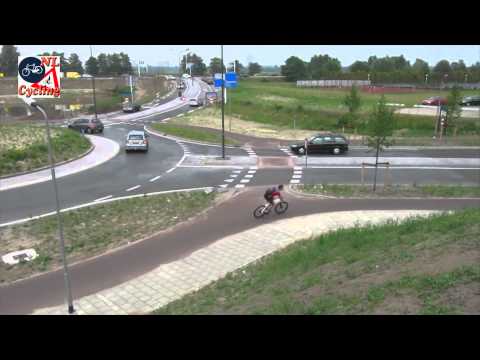
A short BicycleDutch episode showing how Dutch protected intersections continue cycle paths through the junction without needing extra street width.
HN uses it as the standard reference for how the Netherlands solves cyclist and driver conflicts at intersections.
Up next
 3 mo on HN
Sustainable Energy - Without the Hot Air with David MacKay
Harvard University
3 HN recommender · 2015–2017
 1 mo on HN
Junction design in the Netherlands
BicycleDutch
1 HN recommend · 2015–2020
 3 mo on HN
The NCAA: Last Week Tonight with John Oliver (HBO)
LastWeekTonight
3 HN recommender · 2015–2019
 12 mo on HN
How Self-Driving Cars will Destroy Cities (and what to do about it)
Not Just Bikes
17 HN recommender · 2024–2026
 11 mo on HN
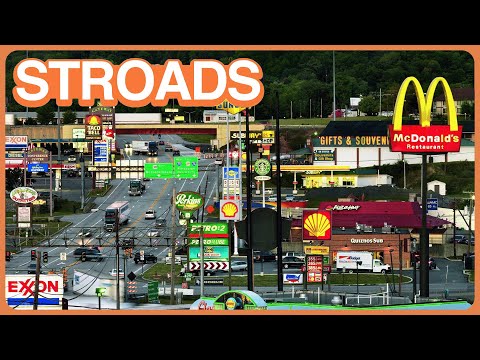
Stroads are Ugly, Expensive, and Dangerous (and they're everywhere) [ST05]
Not Just Bikes
12 HN recommender · 2021–2025
 10 mo on HN
Why This Channel Exists (and why I hate Houston)
Not Just Bikes
11 HN recommender · 2021–2025
 10 mo on HN
Why American Cities Are Broke - The Growth Ponzi Scheme [ST03]
Not Just Bikes
14 HN recommender · 2021–2024
 9 mo on HN
The Wrong Way to Set Speed Limits [ST06]
Not Just Bikes
9 HN recommender · 2021–2025
 9 mo on HN
Cities Aren't Loud: Cars Are Loud
Not Just Bikes
10 HN recommender · 2021–2025
 10 mo on HN
Why Canadians Can't Bike in the Winter (but Finnish people can)
Not Just Bikes
10 HN recommender · 2021–2026
 9 mo on HN
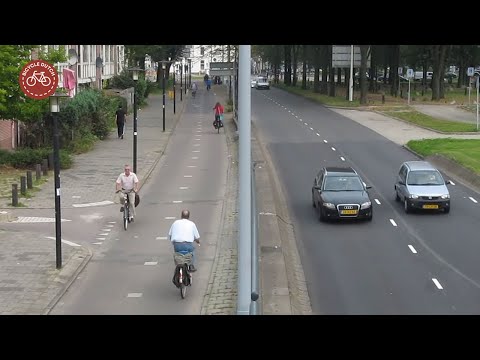
How the Dutch got their cycle paths
BicycleDutch
9 HN recommender · 2013–2022
 9 mo on HN
Why Japan Looks the Way it Does: Zoning
Life Where I'm From
8 HN recommender · 2021–2026
11 comments from Hacker News
Welcome :) There's quite a few interesting videos on traffic design in the Netherlands, junction design is a big topic, as well as separating lanes. Videos like these might be fun to watch: ▶ this video If it piques your interest, there's more comprehensive videos too like this one which is still only 5 minutes: link
People not familiar with the US may not realize just how hostile US cities are to cyclists (and pedestrians). Some examples: 1. Turning right at red lights. Legal in most of the US. This is a huge safety issue for pedestrians and cyclists; 2. Many streets don't even have widewalks; 3. Many major roads don't even have any form of pedestrian crossings. For example, I had Google Maps tell me to just run across an 8 lane highway (at least there was somewhere safe to stand in the middle) where the speed limit was 45mph. Why? There was absolutely no alternative. In comparison, many freeways or highways in other countries will regularly have dedicated pedestrian crossing bridges. 4. In cities with a dedicated cycling lane in many US cities it gets used as extra parking, forcing cyclists out onto the road. Some I have sympathy for (eg delivery drivers) but many other people just don't give a shit they're blocking a lane of traffic and creating a safety issue. 5. Many Americans never walk anywhere so are an annoyance (if not an outright safety hazard) on any space shared with cyclists. I routinely see runners refuse to get out of the way in a dedicated cycle path . Many are oblivious and will just walk onto a cycle path without looking. I've had many near-misses this way. So there are a lot of things you can do to improve this situation, most of which doesn't take exttra room. For example: 1. Netherlands style intersections designed to improve cyclist safety [1]; 2. Suburbia is domina
It's one of the things Copenhagen can learn from the Netherlands, where it's a solved problem at most intersections: link ▶ this video Also see link from 6 minutes on for right turns in Copenhagen.
The Dutch have that figured out, too. There’s so many bicycles around that you practically have to expect them everywhere any time. More bicycles make all bicycles safer. Intersections of car lanes and bike lines should also be designed in such a fashion that the lanes meet mostly at a right angle. Sharp turns and buffer spaces. A sharp turn slows the car traffic and the right angle at the intersecting point makes it easy to check for crossing (cycle) traffic. See for example this video ▶ this video
The impression I got from Amsterdam is that the city (and by extension the Dutch) has simply accepted all the behaviors that cyclists will do in a less cyclist friendly environment (run stop signs, ignore pedestrians, turn without signing and so on), and then just built infrastructure to support that natural behavior. As a pedestrian unfamiliar with the city, at first I found it hugely annoying that so little space was left to pedestrians, but once I figured out where not to stand, I started to have a much better appreciation for how it contributes the functioning of the city. In fact, I was kind of surprised at how little boat traffic there is these days. Having read and watched some videos on how the Netherlands does road planning for safety, the approach seems to be a much more "descriptive" approach to adapting road shapes and forms and cycle lanes to the natural behavior of people using those modes of transportation. For example, squeezing the width of lanes down naturally causes car drivers to slow rather than covering the area with signs telling drivers to slow down. This approach is slowly being adopted elsewhere ( link ). Lots of thought also into mixed-mode junction design link ▶ this video
OP makes some good points but should go on vacation in the Netherlands. Way ahead in road safety. For example: ▶ this video Or more extensively: link
As a Dutchman living in Stockholm I can tell you one thing: they should fix their goddamn bike lanes. Sure, they have them, which makes them better than 90% of the rest of the world. They're still shit. There's no separation of car- and bike traffic. To turn left a cyclist first has to cross parallel car traffic, making this unsafer for cyclists (and annoying for the people in cars, for that matter). Key issues: - the cyclist and driver should meet at a (near) 90 degree angle, so neither requires eyes in the back of their head - separate the goddamn lanes so neither car nor cyclist feels uncomfortably close to the other - don't require extra space because every square meter counts in a big city Well guess what, we've figured this out decades ago in the Netherlands: ▶ this video link link
As a Dutchman, the first two paragraphs were quite infuriating to read; a list of arguments similar to the now-classic "Schödinger's immigrant"-joke ("simultaneously too lazy to work and stealing your job"). > Well, no wonder: Roads are built for buses, cars, and trucks, not for people on bikes. Well good to see that the 1920s auto-industry propaganda[0] still has it's firm grip on American society! Roads were not made for cars, the cars claimed the roads once they got on the scene. You can choose to design them in a way that accomodates all[1]. The only reason I'd hate leaving the Netherlands is because no other country comes close in bike-friendliness at the moment (simply put: good bike infrastructure is so common it's barely noticed by the locals, because it's the norm[2]). I do hope that changes soon. [0] link [1] ▶ this video [2] link
This site is brilliant, and thank you for that link. I followed some of the citations. The video on the site makes it seem like it's an experimental idea, but to be clear, here is this dutch video showing that exact design in use - today - ▶ this video I can only dream of living in a place where I could bike with such safety. I regularly get honked at/shouted at in Philadelphia --- for biking in bike lanes, because, apparently, drivers in Philly believe that it is their sovereign right to drive in green painted bike lanes when they wish to turn right. Maybe I should revise my "move to Canada" life plan, and make it "move to Amsterdam".
In short, build bike lanes like the dutch. [1] Big, physically separated, omnipresent bike lines. Ensure that bikes are first class citizens on intersections. Compare the 2-stage turn with the dutch design [2] [1] link [2] ▶ this video
To Encourage Biking, Cities should do two things, and two things only: - Bike lanes. Physically separated bike lanes. This is not rocket science. Trains have rails, airplanes have a nice bit of tarmac and bikes should have a space tailored to their specific needs as well. Typically in the Netherlands, bikes are banned from roads that are 50km/h and up. And they don't need to battle it out with fast traffic, for there are bike lanes. And the limited space in this country means that something truly has to give when adding them. This how the dutch design an intersection. Note the absence of the ridiculous ASL boxes, and most important, no crossing of lanes. ▶ this video - Traffic laws that protect the weaker participant in traffic. Again, case in point, the Netherlands where in a (civil) dispute after a bike-car accident the burden of proof lies with the car. Not to mention the dreaded article 5 that broadly states that endangering traffic is a felony. This helmet discussion imho is just a way to deviate from arguably more costly and difficult choices when it comes to embracing the bicycle. And while we are are at it. I am convinced that making helmets, 4 point harnesses and leathers mandatory in cars for all occupants would save lives as well. What perhaps surprises me the most in the car-bike entanglement is the seemingly bad engineering. Cities like Londen, Geneva, all (claim) to cater for bikes, have rental programs, paint the odd lane, but their intersections tell a different st