The Hidden Rules of Conversation
Tom Scott1 HN recommender · recommended in 1 month, 2020–2026
explainer · general · evergreen · 2020–2026 on HN
Tom Scott explains Gricean maxims, the unwritten guidelines that shape how we understand each other. He uses examples such as why 'asbestos-free cereal' sounds suspicious.
HN uses it as a short, clear explanation of implied meaning in conversation and the cooperative principle.
Up next
 3 mo on HN
State of GPT | BRK216HFS
Microsoft Developer
6 HN recommender · 2023–2025
 12 mo on HN
George Lakoff: Moral Politics
University of California Television (UCTV)
3 HN recommender · 2016–2024
 6 mo on HN
Stephen Fry Kinetic Typography - Language
Built By Matt
4 HN recommender · 2012–2025
 6 mo on HN
What Languages Sound Like To Foreigners
Sara Forsberg
6 HN recommender · 2014–2021
 6 mo on HN
Adriano Celentano - Prisencolinensinainciusol
Le Pietre Rotolanti
6 HN recommender · 2016–2024
 5 mo on HN
Irving Finkel | The Ark Before Noah: A Great Adventure
The Institute for the Study of Ancient Cultures
4 HN recommender · 2021–2025
 5 mo on HN
Cracking Ancient Codes: Cuneiform Writing - with Irving Finkel
The Royal Institution
3 HN recommender · 2020–2024
 5 mo on HN
How to learn any language in six months | Chris Lonsdale | TEDxLingnanUniversity
TEDx Talks
5 HN recommender · 2014–2019
 5 mo on HN
The Unanswered Question 1973 1 Musical Phonology Bernstein Norton
cagin
4 HN recommender · 2018–2023
 4 mo on HN
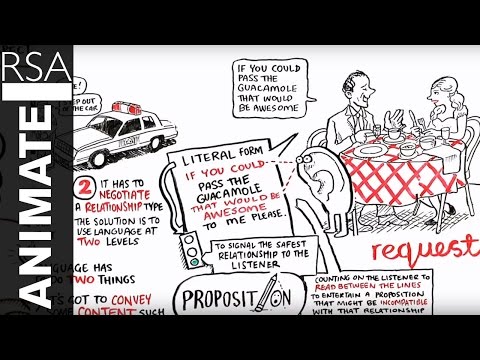
RSA ANIMATE: Language as a Window into Human Nature
Royal Society of Arts
2 HN recommender · 2011–2022
 3 mo on HN
Jorge Luis Borges: This Craft of Verse Lectures - thepostarchive
thepostarchive
3 HN recommender · 2019–2022
 4 mo on HN
The US Has More Tribes Than the World Has Countries
CGP Grey
4 HN recommender · 2020–2026
6 comments from Hacker News
This video covers the concept pretty well: ▶ this video It is pretty normal to try to incorporate the extranneous details into the reply.
I can play this game too: I never actually said they are a bad judge of what comments are botted, just merely suggested it as a possibility. Otherwise: link ▶ this video Suffice to say, I'd thus kindly reject being a "bad comprehender of what words mean", thank you very much. It was a perfectly reasonable initial reading of their comment as far as I'm concerned. It's ambiguous. Happens. The fact that "is this AI? this is AI." is a damn near fixture of every thread these days, doesn't help.
Embracing Grice’s maxims may help here [0]? Being a pit of cynicism isn’t a particularly nuanced take, please do better than that. 0: ▶ this video
There are these things called Grice's Maxims of Conversation, and this one is called the "Maxim of Quantity." The extra unneeded information is strange because it would normally be assumed. Tom Scott's example[0] is "vegan tomato." Felt like sharing because it's kinda neat to see it described by someone in the wild. [0]: ▶ this video
> Ignorance is not an excuse. Taking it that you aren't trolling (which I'm not certain you aren't) ignorance is an excuse. It is not a good excuse when knowledge is common but it is a great excuse when knowledge is uncommon (as is the case here, at least to Americans). Unless you expect everyone to be omniscient then this is exceedingly disingenuous and will just lead to people thinking you're being a jerk. The other part I need to add is that this is also how we typically talk. "The British...", "The Irish...", "Americans...", etc. I'll admit that we could have more nuance and better communication by being more specific but what is stated here follows the Cooperative Principle[0][1]. It is implied in all these examples that what is meant is the government of the country and not the people of the country. Typically we'd say interpreting it as the latter would be in bad faith. Not that people don't do this (and that this isn't becoming more common) but that this is how people typically use language. But if you're trying to just get people to yell at one another and feel angry (i.e. trolling) I'd ask that you please take your comments elsewhere because that's not the environment we are trying to create at Hacker News. [0] link [1] ▶ this video
> I believe it is deeply unethical, inefficient and really a complete waste of everyone's time and energy to assume based on some weak superficial heuristic rhetorical cues that they are simply repeating a divisive talking point that you've heard elsewhere. I'm sorry, I was trying to convey something else. That language itself has limitations and that we imply things naturally. I think Tom Scott did a good video[0] explaining the high level aspects of this, but it seems like you might be aware of this. But there's much more. Language is full of cues and a priori assumptions. You cannot avoid this. The idea that "what you mean, what you say, and what is heard" being different things is not a contentious statement in linguistics and communication. Lewis Carrol's Mad Hatter's tea party scene is all about this actually. For reference[1]. What I am trying to say is that communication is hard and emphasizing that it is even harder in our current cultural/political climate. An example is priming[2], which is the exact point of things like slogans. No one expects one to write a novel to discern all the nuance of their statements, so we naturally take shortcuts and a priori assumptions are a necessity. If you ignore that these shortcuts exist then communication is difficult. (As to dog whistling[3], that is exactly the point. To exploit this feature of language. Otherwise these phrases wouldn't be coded) A perfect example is your interpretation of my comment. I can take it one of two