OpenAI Plays Hide and Seek…and Breaks The Game! 🤖
Two Minute Papers2 HN recommenders · recommended in 2 months, 2020–2021
explainer · general · 2020–2021 on HN
Two Minute Papers covers OpenAI's multi-agent hide-and-seek experiment, in which agents learned emergent tool use and found ways to break the game's rules. It summarizes the 'Emergent Tool Use from Multi-Agent Interaction' paper.
HN mentions it as a fun and slightly worrying example of AI systems behaving in unintended ways when optimizing.
Up next
 5 mo on HN
Special Topics - The Kalman Filter (1 of 55) What is a Kalman Filter?
Michel van Biezen
5 HN recommender · 2017–2025
 16 mo on HN
The spelled-out intro to neural networks and backpropagation: building micrograd
Andrej Karpathy
17 HN recommender · 2022–2025
 14 mo on HN
But what is a neural network? | Deep learning chapter 1
3Blue1Brown
16 HN recommender · 2017–2025
 10 mo on HN
AlphaGo - The Movie | Full award-winning documentary
Google DeepMind
10 HN recommender · 2020–2025
 10 mo on HN
Transformers, the tech behind LLMs | Deep Learning Chapter 5
3Blue1Brown
13 HN recommender · 2024–2026
 10 mo on HN
USENIX Security '18-Q: Why Do Keynote Speakers Keep Suggesting That Improving Security Is Possible?
USENIX
10 HN recommender · 2018–2026
 11 mo on HN
Lecture 1 | Machine Learning (Stanford)
Stanford
11 HN recommender · 2008–2020
 10 mo on HN
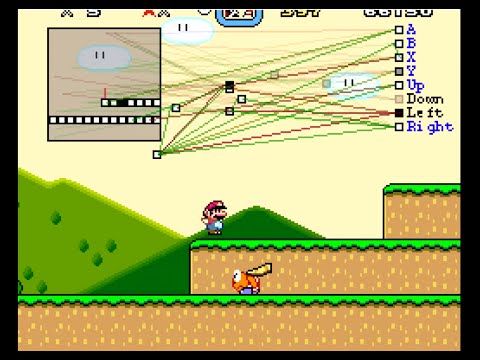
MarI/O - Machine Learning for Video Games
SethBling
10 HN recommender · 2015–2026
 8 mo on HN
Deep Dive into LLMs like ChatGPT
Andrej Karpathy
10 HN recommender · 2025–2026
 10 mo on HN
Computer program that learns to play classic NES games
suckerpinch
9 HN recommender · 2015–2025
 9 mo on HN
RL Course by David Silver - Lecture 1: Introduction to Reinforcement Learning
Google DeepMind
9 HN recommender · 2017–2026
 8 mo on HN
Let's build GPT: from scratch, in code, spelled out.
Andrej Karpathy
14 HN recommender · 2023–2025
3 comments from Hacker News
Two minute papers has many fun examples of AIs with unexpected behavior, OpenAI's hide and seek is one of my favorites: ▶ this video
"Two Minute Papers" ▶ this video GTC 2020 Part 2 was pretty good link Mostly I'm in a rut as well
One of the problems we have to be conscious about with self supervised learning is that the already existing problem of transparency and understandability gets worsened by orders of magnitude. If current billion parameter models are opaque, the result of SSL is, or will be, the equivalent of a black hole. How do you understand what the model has learned? Why has it learned that way? What things could have possible gone completely, horribly wrong in its quest to optimize its loss function? This somewhat humorous but also worrying paper comes to mind: ▶ this video I think we really need to consider how we can mitigate the risk of raising completely ununderstandable yet scarily capable machines.