Safe Cycling Showdown - Good vs. Bad City Design - Plus 1 Minus 2
Not Just Bikes4 HN recommenders · recommended in 3 months, 2021–2022
explainer · general · evergreen · 2021–2022 on HN
Not Just Bikes compares the same cycling trip to a hardware store in Calgary and in Amsterdam, using a 'plus 1 minus 2' format. It shows how street design shapes how safe and practical cycling is.
HN recommends the channel for understanding why North American road design makes cycling dangerous and how the Dutch approach differs.
Up next
 6 mo on HN
All the Numbers - Numberphile
Numberphile
6 HN recommender · 2019–2025
 9 mo on HN
The Wrong Way to Set Speed Limits [ST06]
Not Just Bikes
9 HN recommender · 2021–2025
 4 mo on HN
4.5 Billion Years in 1 Hour
Kurzgesagt – In a Nutshell
4 HN recommender · 2023–2025
 4 mo on HN
How to Move the Sun: Stellar Engines
Kurzgesagt – In a Nutshell
3 HN recommender · 2020–2025
 1 mo on HN
Throwing Good Money After Bad Car Infrastructure - Wonderland Road
Not Just Bikes
1 HN recommend · 2021–2023
 1 mo on HN
How to (Quickly) Build a Cycling City - Paris
Not Just Bikes
1 HN recommend · 2022–2022
 5 mo on HN
Why don't Americans use electric kettles?
Technology Connections
5 HN recommender · 2022–2025
 4 mo on HN
iPhone 1 - Steve Jobs MacWorld keynote in 2007 - Full Presentation, 80 mins
Protectstar Inc.
4 HN recommender · 2020–2025
 12 mo on HN
How Self-Driving Cars will Destroy Cities (and what to do about it)
Not Just Bikes
17 HN recommender · 2024–2026
 11 mo on HN
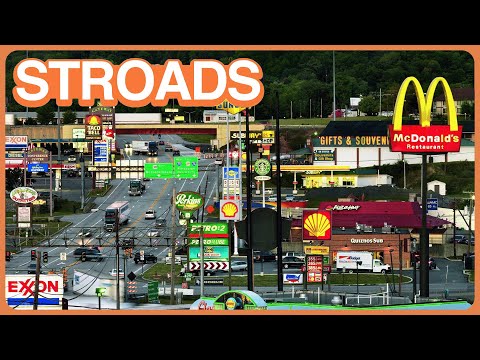
Stroads are Ugly, Expensive, and Dangerous (and they're everywhere) [ST05]
Not Just Bikes
12 HN recommender · 2021–2025
 10 mo on HN
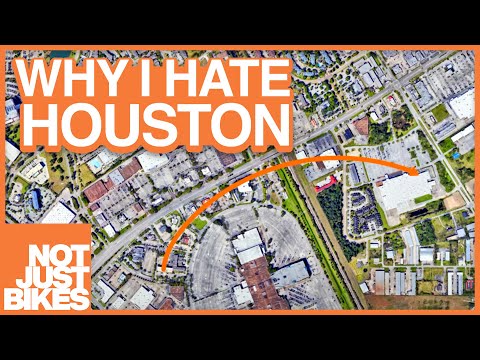
Why This Channel Exists (and why I hate Houston)
Not Just Bikes
11 HN recommender · 2021–2025
 10 mo on HN
Why American Cities Are Broke - The Growth Ponzi Scheme [ST03]
Not Just Bikes
14 HN recommender · 2021–2024
6 comments from Hacker News
> The best option is to just take the lane and follow the rules of the road for drivers of vehicles. You get noticed and you don't have conflicts at intersections. You don't need to be physically fit to do it (other than be physically capable of riding a bike). Most people won't be comfortable doing this for the simple reason that they'll be going slower than surrounding traffic and it will piss of drivers, which is scary when you're on a bike and they have two tons of metal right beside you. If the safest way to do something is mildly terrifying and generally viewed as antagonistic, we can't be surprised that most people will avoid doing that thing. I've really been inspired lately by watching the videos on this channel about urban design in the Netherlands: link I didn't realize how much urban cycling raises my blood pressure until I watched this video that compares a journey in Canada to a journey in the Netherlands, it's hard to imagine cycling being so safe and easy outside a college campus: ▶ this video
Not Just Bikes on YouTube covers road/pedestrian/bike safety extensively. link Specific videos: Crossing the street should be safer: link How to quickly build a cycling city: link Wasting money on car infrastructure: link The wrong way to set speed limits: link Safe cycling: ▶ this video "Stroads" are dangerous: link
Cycling is normally very dangerous in North America (outside of certain urban cores and small towns), due to the road design and zoning laws. This channel is helpful in understanding the problem: ▶ this video
Watch the bicycle infrastructure get better as he get out into the Amsterdam suburbs. Cycling showdown, Amsterdam vs. Calgary ▶ this video
> Most things we take for granted like being able to get a week's worth of groceries home in one trip or going to enjoy a restaurant that specializes in a niche style, or buying cheap goods at a warehouse store, or being able to get to a hospital within half an hour all require automobile infrastructure It's possible to do these things without a car if your city has prioritized making that a reality. The exact mode depends on the city. Some examples: * In the Netherlands, cycling infrastructure is strong enough that you can bike to a big box store outside the city and load up your bike with what you need [0]. You can fit a week's worth of goods in a cargo bike [1] if that's your style. There is also an argument to be made that you don't need to buy groceries weekly if your city is dense and you have a store nearby. * In Pittsburgh, there are flyer (fast track) busses that will take you to malls in the northern car-oriented suburbs as well as light rail to the southern suburbs. So you can reach most niche stores in the metro area by bus/light rail. Although it's pedestrian hostile in the northern burbs. In the city proper, bus coverage is good enough to get basically anywhere including all the niche restaurants. Though light rail is more frequent and pleasant. Bus frequency and reliability is just OK, not great. Could be improved by changing priorities. My point here is that Pittsburgh's urban form is not great but they still came up with transit solutions that work for averag
No, 25km/h is the normal maximum speed for a normal person cycling. > On my road bike I sustain 20 mph for most of the ride. A few people manage 32km/h in the Netherlands or Denmark, but only if they have a long commute through the suburbs or a rural area, often for recreation/leisure/exercise. In towns, other people aren't expecting Lance Armstrong to appear, and can step/swerve into your path. You can see from [1] (at the linked point) that there's no way you'll be going fast through the centre of Amsterdam. The path isn't wide enough, there are far too many other cyclists and pedestrians, and the car drivers yielding at the junctions would be startled, at best. The same at 4m32s (a park). At 9m37s it looks like the kind of place you'd get some road/fast cyclists (in fact the narration says so). People who want to go as fast as you would usually select a different route, where possible. [1] ▶ this video