strandbeest evolution
theo jansen1 HN recommender · recommended in 1 month, 2016–2022
demo · general · evergreen · 2016–2022 on HN
Theo Jansen shows many of his Strandbeests, wind-powered walking kinetic sculptures, set to Khachaturian's Spartacus. It presents his work since 1990 on creating new forms of life on beaches.
HN links it in Strandbeest threads as a showcase of the eerily smooth, wind-driven walking creatures.
Up next
 15 mo on HN
Around The Corner - How Differential Steering Works (1937)
US Auto Industry
17 HN recommender · 2013–2024
 12 mo on HN
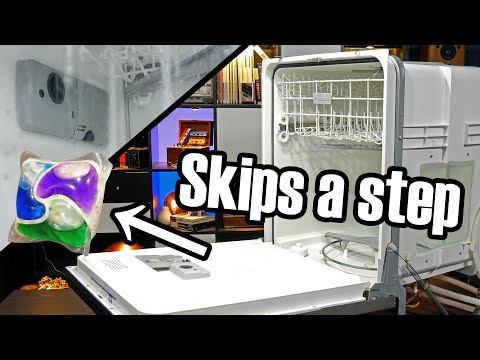
Detergent packs are kinda wishy-washy (Dishwashers Explained)
Technology Connections
15 HN recommender · 2021–2025
 12 mo on HN
Mechanical Computer (All Parts) - Basic Mechanisms In Fire Control Computers
Excelsior10000
13 HN recommender · 2014–2025
 11 mo on HN
The Antique Toaster that's Better than Yours
Technology Connections
12 HN recommender · 2019–2025
 11 mo on HN
U.S. NAVY BASIC MECHANISMS OF FIRE CONTROL COMPUTERS MECHANICAL COMPUTER INSTRUCTIONAL FILM 27794
PeriscopeFilm
11 HN recommender · 2018–2026
 9 mo on HN
The Ingenious Design of the Aluminum Beverage Can
engineerguy
9 HN recommender · 2016–2026
 9 mo on HN
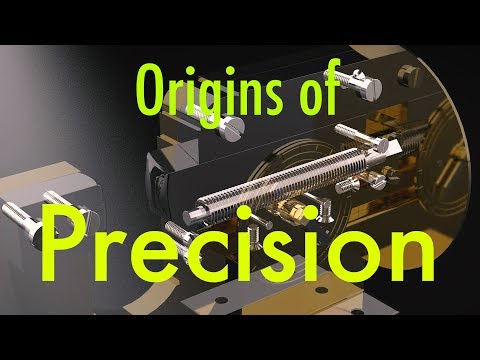
Origins of Precision
Machine Thinking
11 HN recommender · 2019–2025
 7 mo on HN
Elevator Hacking: From the Pit to the Penthouse
DeviantOllam
9 HN recommender · 2014–2026
 6 mo on HN
(1/4) Intro/History: Introducing a 100-year-old mechanical computer
engineerguy
6 HN recommender · 2015–2023
 6 mo on HN
The Hyperloop: BUSTED!
Thunderf00t
7 HN recommender · 2016–2023
 6 mo on HN
DEF CON 22 - Deviant Ollam & Howard Payne - Elevator Hacking - From the Pit to the Penthouse
DEFCONConference
5 HN recommender · 2016–2026
 5 mo on HN
[HOPE X] Elevator Hacking: From the Pit to the Penthouse
themarimbaincident
4 HN recommender · 2014–2023
3 comments from Hacker News
I'd been watching a lot of visual effects content on YouTube and assumed that's what this was when it popped up on my feed, initially -- eerily smooth, seemingly impossible walking exoskeletons : ▶ this video Wikipedia page on a linkage the inventor uses for the legs: link
I'm sure it would be possible. Theo Jansen himself created a wind-powered one out of cardboard: ▶ this video
>> “give me a big enough computer and the relevant initial conditions, and I’ll simulate the brain atom-by-atom.” Nuh-huh. You can't keep blaming it all on the hardware. Every year there's bigger and bigger computers and more and more people who claim they'll do better next year, when there's bigger computers. Well, it just ain't gonna happen. Fascinating intelligence that eats our most powerful artificial one for breakfast is all around us, and it runs on as little as five ganglia. Look at insects. They don't even have brains. They may not know calculus, they may be completely incapable of even acquiring the concept of a mathematical operation, but they are autonomous and viable in a harsh, hostile world that the most powerful machines we've built are completely incapable of inhabiting. If recreating insect-level intelligence artificially was just a matter of computing power, we 'd have done it already: we got more than enough of it. Five ganglia? My calculator is more powerful than that! But we don't have a single machine that can do what the lowliest fruit fly can do: survive on its own, and thrive, in the real world [1]. So- why is human-level intelligence just a matter of more computing power, but insect-level one is not? Is there some kind of secret ingredient? Is there some kind of magic involved? Will some sort of -gasp- singularity occur when the number of gates on a processor reaches a critical mass? Will the machine suddenly acquire a S.O.U.L. [2] when we stuff eno