Windows Vista Speech Recognition Tested - Perl Scripting
scrubadub1Cited 8× on HN, 2018–2023
comedy · general · evergreen · 2018–2023 on HN
A 2007 video of someone trying to write Perl scripts using Windows Vista speech recognition, with comically bad results. The footage shows the recognizer repeatedly mangling commands.
Cited as the classic, unintentionally hilarious example of early voice recognition failing, and of how dictation used to feel.
Up next
 7 mo on HN
Bay Area Vision Meeting: Unsupervised Feature Learning and Deep Learning
Google TechTalks
9 HN recommender · 2011–2013
 6 mo on HN
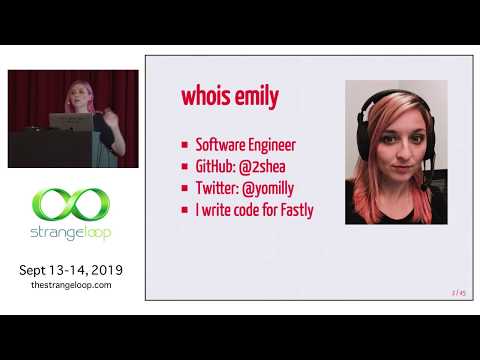
"Voice Driven Development: Who needs a keyboard anyway?" by Emily Shea
Strange Loop Conference
5 HN recommender · 2020–2023
 6 mo on HN
Andrej Karpathy - AI for Full-Self Driving at Tesla
Matroid
4 HN recommender · 2020–2022
 5 mo on HN
Tensorflow and deep learning - without a PhD by Martin Görner
Devoxx
6 HN recommender · 2017–2020
 6 mo on HN
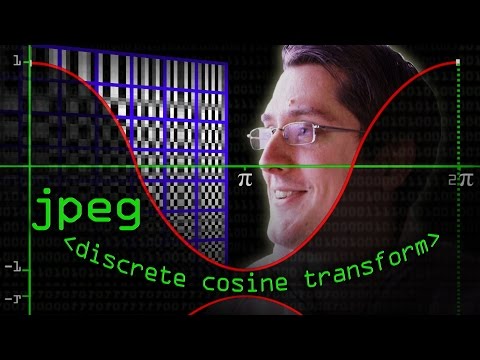
JPEG DCT, Discrete Cosine Transform (JPEG Pt2)- Computerphile
Computerphile
6 HN recommender · 2015–2026
 5 mo on HN
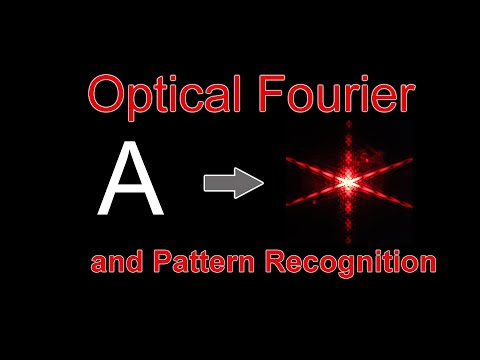
Fourier Optics used for Optical Pattern Recognition
Huygens Optics
5 HN recommender · 2021–2025
 5 mo on HN
Let's build the GPT Tokenizer
Andrej Karpathy
5 HN recommender · 2024–2025
 4 mo on HN
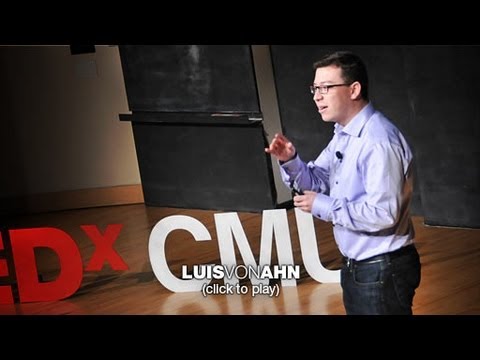
Massive-scale online collaboration | Luis von Ahn
TED
4 HN recommender · 2012–2022
 4 mo on HN
Breaking The Creepy AI in Police Cameras
Benn Jordan
6 HN recommender · 2025–2026
 4 mo on HN
!!Con 2017: HDR Photography in Microsoft Excel?! by Kevin Chen
Confreaks
4 HN recommender · 2017–2025
 4 mo on HN
Dasher: information-efficient text entry
Google TechTalks
2 HN recommender · 2016–2025
 4 mo on HN
LSTM is dead. Long Live Transformers!
Seattle Applied Deep Learning
4 HN recommender · 2020–2023
8 comments from Hacker News
As the excellent video "Windows Vista Speech Recognition Tested - Perl Scripting" hilariously demonstrates. (I trust that technology has improved over the last 13 years, though Siri is fairly similar.) ▶ this video
Related: ▶ this video It does look like we've made some progress in the 15 years since. I do wonder how this would work in an office setting though - so much noise, so much distraction, and so much crosstalk between programmers...
One of the funniest video on YouTube in my opinion is this 2007 demonstration of voice recognition on Windows Vista for Perl programming. The lad spends the first 4.5 minutes trying to enter „open (INFO“ before typing it out. Absolute classic. „Thank you... delete thank you“ ▶ this video
Here is a very early(2007) and unintentionally humorous attempt to script in Perl with voice recognition. ▶ this video
While not a demo of Dragon's NaturallySpeaking, I think of this video when someone mentions 90/00's-level consumer dictation software. For me, the video absolutely captured what it felt like to use those products. ▶ this video
I guess things have moved on from this Perl-Vista nightmare, I was personally looking forward to having all the coders around me screaming at their desktops in a fit of frustration and rage. ▶ this video
You're seeing text input demos because conventional english dictation systems have been horrible at fast and precise technical text input. This is a classic example: ▶ this video I believe it's far easier to solve navigation than text input. I will gladly record for you (or anyone here who has an idea) a synthetic (pre-planned) demo video of some more complex task. Want to come up with a specific workflow for to test? Like maybe "find <some project> on github, fork, clone it to my machine, perform <some specific refactor> / code editing task, commit, push" all without my hands, and I upload the first take. The underlying systems are far more powerful than the article covered, e.g. in Talon you can write an editor plugin that collects filenames and turns them into commands in realtime to switch between files. Someone did a PoC with Talon's eye tracking to specify a symbol for insertion by looking at it. There have been demos of scope-based navigation / selection. Personally I heavily optimized my alphabet/number input case (there's a specially designed alphabet that can do about 280 letters per minute at 100% accuracy), and use Vim commands directly, but many of the users use more conventional editors. I plan to get into the habit of live streaming hands-free coding at some point so people can get a better idea of what it looks like to use this sort of thing, and so I can go back and watch and realize that I could be doing some things much better.
This one is old, but I don't think things have improved much since then: ▶ this video It's worth a watch. Hilarious, despite the bad sound quality.