Bay Area Vision Meeting: Unsupervised Feature Learning and Deep Learning
Google TechTalks9 HN recommenders · recommended in 7 months, 2011–2013
talk · intermediate · 2011–2013 on HN
Andrew Ng presents unsupervised feature learning and deep learning, showing how algorithms can learn representations from unlabeled data instead of hand-designed features. He gives examples in vision and audio, including visualizations of features learned by…
HN commenters recommended it for years as a simple, exciting overview of the deep learning wave.
Up next
 5 mo on HN
Brains, Sex, and Machine Learning
Google TechTalks
7 HN recommender · 2012–2017
 13 mo on HN
MIT's Pathway to Fusion Energy (IAP 2017) - Zach Hartwig
MIT Plasma Science and Fusion Center
16 HN recommender · 2017–2023
 10 mo on HN
Transformers, the tech behind LLMs | Deep Learning Chapter 5
3Blue1Brown
13 HN recommender · 2024–2026
 6 mo on HN
What Alcohol Does to Your Body, Brain & Health
Andrew Huberman
7 HN recommender · 2022–2023
 16 mo on HN
The spelled-out intro to neural networks and backpropagation: building micrograd
Andrej Karpathy
17 HN recommender · 2022–2025
 14 mo on HN
But what is a neural network? | Deep learning chapter 1
3Blue1Brown
16 HN recommender · 2017–2025
 10 mo on HN
AlphaGo - The Movie | Full award-winning documentary
Google DeepMind
10 HN recommender · 2020–2025
 10 mo on HN
USENIX Security '18-Q: Why Do Keynote Speakers Keep Suggesting That Improving Security Is Possible?
USENIX
10 HN recommender · 2018–2026
 11 mo on HN
Lecture 1 | Machine Learning (Stanford)
Stanford
11 HN recommender · 2008–2020
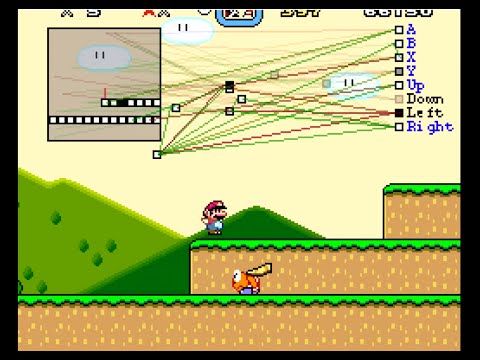 10 mo on HN
MarI/O - Machine Learning for Video Games
SethBling
10 HN recommender · 2015–2026
 8 mo on HN
Deep Dive into LLMs like ChatGPT
Andrej Karpathy
10 HN recommender · 2025–2026
 10 mo on HN
Computer program that learns to play classic NES games
suckerpinch
9 HN recommender · 2015–2025
11 comments from Hacker News
Andrew Ng has a fantastic example of visualizing deep belief nets: ▶ this video The example starts at about 18:20. You really need to have watched the previous material to understand it, but the basic idea is that he's plotting the hierarchy of features learned by successive layers of a deep neural net (a sparse autoencoder, IIRC, it's been a while since I watched it).
the one overview I've found the most useful is ▶ this video (Bay Area Vision Meeting: Unsupervised Feature Learning and Deep Learning by Andrew Ng in April 2011).
Thanks for pointing this out. Here is a similar awesome by Andrew Ng ▶ this video who teaches the original Coursea Machine Learning class.
This seems very related to this ▶ this video speak by Andrew Ng. It is a 40min speak, but he explains very simply how all this works for images and some examples about the audio case. It is incredible how using this deep learning techniques we can teach this "neural networks" to recognize such complicated patterns. It is like reverse engineering the brain's algorithms. BTW I took his Coursera's course about Machine Learning and it was great! I also recommend it A LOT to gather basic ML knowledge.
Check out this (awesome) talk: ▶ this video There are a number of areas in which unsupervised feature learning outperforms the hand-programmed models we have been fine-tuning for decades.
A good intro page with lots of links: link A lot of the newest work is under a few different names: "deep learning", "convolutional deep networks", "unsupervised feature learning", etc. Here's a great talk by Andrew Ng of Stanford, who's a recent convert to this area: ▶ this video (Note that this is quite a one-sided view of things, but it does convey the excitement of deep-learning researchers and the potential of what might be possible.) Although I'm not in deep learning myself (I'm a computer vision researcher), here's a TL;DR as I understand it: rather than having people in specific domains such as computer vision or speech processing create their own features, the idea is to take raw inputs (pixels in the case of images) and train multi-layer neural net architectures that "learn" the relevant higher-level features in an unsupervised way (i.e., without labeled training data). Some of these seem to be pulling out interesting features and perform competitively on a few benchmarks in vision and other fields. I'm not sold on this yet, because it seems like the complexity of designing features has merely been traded in for the complexity of designing different learning architectures, but it's certainly becoming quite popular these days (mostly led by Geoff Hinton of Toronto, Yoshua Bengio of Montreal, and Yann LeCunn of NYU).
Andrew Ng has set many state of the art results on various data sets using similar approaches as the one described in the paper. Here is a reasonably approachable talk he gave about it. ▶ this video
They kind of hint at it in the article, but sounds like automatic feature detection really helped here. That's really the future (or present): learning algos discovering better features automatically, significantly cutting down the labor involved in feature engineering. Pretty neat. Here's a video talking about current research into this at Stanford: ▶ this video
Here is a more in-depth presentation he gave on the same subject at a Google Tech Talk: ▶ this video (April 11, 2011)
> By definition, a computer is a machine that processes and stores data as ones and zeroes. No, of course thats only true for digital computers. Otherwise, what would be the point of the headline? Not a great article but interesting news. I could imagine specialized computer for artificial neural networks (ANN) being commercially successful in the future. Not sure if this is what the people in this DARPA project are working on. As far as I can tell, there are a lot of breakthroughs in ANN's at the moment, especially in the realms of pattern (e.g. image) recognition: Ng: ▶ this video Hinton: link
Indirectly, yes. The Coursera course teaches K-means clustering as an example of an unsupervised learning algorithm, along with a technique to work with larger data sets in a more manageable way (e.g. PCA to reduce dimensionality). With the basic building blocks from the ML course you have a much better understanding of what Google and Stanford did. Andrew Ng is also the course instructor for the Coursera ML course[1]. I am presuming that supplemental readings and Youtube videos by Prof. Ng (e.g. ▶ this video ) allows a sufficiently motivated individual to at least partially replicate the results in the OP. [1] Andrew Ng is also a co-founder of Coursera.