Rutger Bregman tells Davos to talk about tax: 'This is not rocket science'
Guardian NewsCited 6× on HN, 2019–2024
news · general · 2019–2024 on HN
A short Guardian clip of historian Rutger Bregman at Davos telling attendees that the real issue is tax avoidance, not philanthropy schemes.
Cited as an example of calling out billionaire philanthropy and tax avoidance in threads on wealth inequality.
Up next
 11 mo on HN
What Happened to Horses Is Happening to Us
CGP Grey
11 HN recommender · 2014–2026
 10 mo on HN
Winners Take All | Anand Giridharadas | Talks at Google
Talks at Google
9 HN recommender · 2018–2026
 10 mo on HN
The Coming Collapse of the Middle Class with Elizabeth Warren
University of California Television (UCTV)
10 HN recommender · 2008–2022
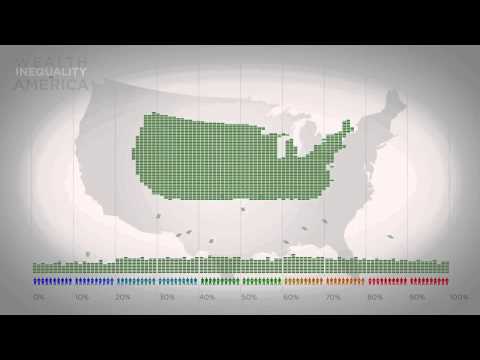 8 mo on HN
Wealth Inequality in America
politizane
8 HN recommender · 2013–2025
 8 mo on HN
Roblox Pressured Us to Delete Our Video. So We Dug Deeper.
People Make Games
9 HN recommender · 2021–2026
 7 mo on HN
Immigration, World Poverty and Gumballs
NumbersUSA
7 HN recommender · 2013–2024
 6 mo on HN
Democracy at Work: Curing Capitalism | Richard Wolff | Talks at Google
Talks at Google
6 HN recommender · 2017–2026
 6 mo on HN
I Tried To Make Something In America (The Smarter Scrubber Experiment) - Smarter Every Day 308
SmarterEveryDay
6 HN recommender · 2025–2026
 6 mo on HN
Where in the world is it easiest to get rich? | Harald Eia | TEDxOslo
TEDx Talks
5 HN recommender · 2016–2023
 6 mo on HN
Milton Friedman - The Negative Income Tax
LibertyPen
7 HN recommender · 2012–2022
 5 mo on HN
Why Louisiana Stays Poor
Together Louisiana
6 HN recommender · 2018–2024
 4 mo on HN
The Insane Battle To Sabotage a New Apartment Building Explains San Francisco's Housing Crisis
ReasonTV
3 HN recommender · 2019–2025
6 comments from Hacker News
Good luck moving the needle faster than the total fertility rate declines. Based on the evidence, this is unlikely to occur even though it is the only path to success. It’ll take decades for the old folks with their ideas age out [1], and young folks can get leverage. [1] ▶ this video
This is a a false dilemma. Force corporations to raise wages, continue to provide social safety nets (so basic needs are met), and if there is a gap, raise taxes in a progressive fashion. There is enough wealth to not configure the system in this manner; to continue to do so is a choice. It's just a big spreadsheet, you're arguing over a cell or two, I'm arguing over the function result and working backwards from there. Otherwise, we admit we're just fine with the current setup and that is who we are. We prefer the human suffering for magic numbers in a database. ▶ this video link
I feel like you have to be pretty far from reality to think that if this would impact the wealthy in any meaningful way, that they would also let it happen. This person's view of "voluntary spending" vs. "involuntary taxation" is so whacky also. 1st off, if the gov't makes you sell it after 100 years, it's not "voluntary". 2nd, in what world would you not just... transfer it to another person you know, and have them transfer it back. 3rd, How many wealthy families actually own the same piece of property for >100 years? Wealth = Power, if you want money from the wealthy to leave the hands of the wealthy, the gov't is just going to have to take it from them. Now, you can decide what you want to tax, OR you can do what we've done in America, and just pretend this isn't a problem. Some possible 'what's (in rough order of how much I think they actually solve the problem): 1. Treat Capital Gains, and Stock compensation like the income it is and tax it accordingly (I know this won't be popular on hacker news, but this is how CEOs get overpaid). 2. Increase Marginal income tax back to what it was when the US had less wealth inequality (1965 had 70%) 3. Change the inheritance tax over $5M to be like 95% (you get $0.05 on the dollar for every dollar you inherit past $5M) 4. Wealth Tax (probably strictly worse than every other option, cause "stonks", but it's not nothing) How to make this change is the real '?', because while we could enact this change it won't happen as long as the peo
People don't want to be told the world is a meritocracy when it's roulette (born to the right people in the right place), but so much of the system operates under the meritocracy/exceptionalism belief system (American dream, effort and skill will lead to success, anyone can succeed), and if people see it for what it is, lots of people are not a fan of the changes that will occur. "They live" [1] for a suboptimal economic arrangement. "You aren't successful? Have you tried working harder? Being smarter? Knowing the right people? Getting a better job?" [2] [3] Wealthy people want to stay wealthy, powerful people don't want to give up power. Everything else is a struggle over the collective spreadsheet. "Should life be more fair? If so, what does that look like?" is what keeps all of this in perpetual tension. [1] link [2] ▶ this video [3] link
The author of this article, speaking about Davos: ▶ this video This article is an excerpt from Chapter 2 one of his latest book. The book, Humankind, seems to be making the argument that humans are essentially trustworthy and industrious and are thus proper candidates for UBI. UBI is more or less the topic of his first book. Here is a review of his first book, Utopia for Realists: link From an interview about the book: "OK, so basic income is all about the freedom to say no. That's a privilege for the rich right now. With a basic income, you can say no to a job you don't want to do. You can say no to a city in which you no longer want to live. You can say no to an employer who harasses you at work . . . that's what real freedom looks like." "This is not about AI," he insists. "You go back to the 1960s, and all the economists, all the philosophers, all the sociologists said we're going to be working less and less and less and less and boredom is going to be the great challenge of the future. Didn't happen . . . mostly because we have this ideological obsession with creating new jobs." Some other articles he has written for The Guardian: link link link
It also parallels the billionaire philanthropy complex (and related tax avoidance) that Rutger Bregman called out at Davos, ruffling the feathers of the billionaires attending. ▶ this video