Why you DON'T want Perfect Pitch
Adam Neely6 HN recommenders · recommended in 4 months, 2021–2025
explainer · general · evergreen · 2021–2025 on HN
Adam Neely explains what perfect (absolute) pitch is, how it differs from relative and quasi-absolute pitch, and why he would not want it. He covers its drawbacks, including drift with age.
HN links it in threads on absolute pitch as a musician's useful summary of its downsides and age-related decline.
Up next
 2 mo on HN
Inner Game of Tennis
TheCoach
2 HN recommender · 2015–2016
 3 mo on HN
27c3: Reverse Engineering the MOS 6502 CPU (en)
Christiaan008
2 HN recommender · 2014–2021
 11 mo on HN
Music Theory and White Supremacy
Adam Neely
11 HN recommender · 2020–2024
 8 mo on HN
Music Software & Bad Interface Design: Avid’s Sibelius
Tantacrul
8 HN recommender · 2019–2026
 8 mo on HN
Trackers: The Sound of 16-Bit
Ahoy
7 HN recommender · 2021–2026
 6 mo on HN
Functional Composition - Chris Ford
ClojureTV
6 HN recommender · 2013–2023
 6 mo on HN
Intro to Synthesis Part 1 - The Building Blocks of Sound & Synthesis
matrixsynth
3 HN recommender · 2018–2022
 6 mo on HN
The Marvel Symphonic Universe
Every Frame a Painting
6 HN recommender · 2017–2026
 6 mo on HN
Notation Must Die: The Battle For How We Read Music
Tantacrul
6 HN recommender · 2023–2026
 5 mo on HN
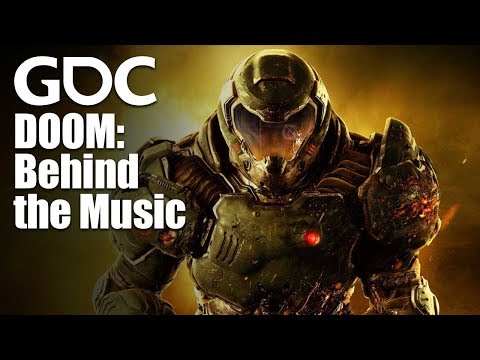
DOOM: Behind the Music
GDC Festival of Gaming
4 HN recommender · 2017–2023
 5 mo on HN
ORCA Sequencer Intro (Experimental Livecoding!)
Allieway Audio
4 HN recommender · 2019–2025
 5 mo on HN
How I Designed a Free Music Font for 5 Million Musicians (MuseScore 3.6)
Tantacrul
5 HN recommender · 2021–2024
8 comments from Hacker News
This is currently happening to me: I’m starting to be off by a half step when I guess what key something is in. I’m 40 now, and I started noticing it a few years ago. Maybe it started early because I don’t play much music so I wasn’t using it much. This video by Adam Neely was helpful: ▶ this video
Maybe someone can correct me, but I don't think this is absolute pitch. It is pseudo-perfect pitch, based on pitch memory, and it was already known that it can be trained. As an amateur musician myself, I understand the desire to have perfect pitch, but it seems that the problem of perfect pitch is seldom mentioned. Usually, people talk about the common annoyances, such as transposed music, non-standard tuning, choruses that drift in pitch, etc... but the actual hard one is that it fades away with age. First, it starts "shifting," and people will start to believe that a note is actually a semitone higher or lower than it actually is, and then eventually, it is completely lost. There is research that indicates that this is very common, and people with perfect pitch are more likely to lose it than to keep it. This is a huge blow—imagine a whole life relying on this one skill to support all your music-related activities, and suddenly, it's completely gone. I think this video gives a nice summary of all this from the point of view of a musician: ▶ this video
It seems more cognitive than due to physical effects in the ear. Adam Neely had a good YouTube video on it ▶ this video
> For example singers, musicians playing bowed stringed instruments or a trombone benefit from perfect pitch. The benefit is rather small if you look at ear training for professional musicians and what properly trained relative pitch looks like. It basically doesn't matter anymore as soon as a professional musician holds his/her instrument. In short: There is basically no difference anymore as soon as the trained musician without perfect pitch gets provided 1 reference tone (which is why perfect pitch gets commonly attributed to people that do not have it). It is more like a "shortcut" when it comes to ear training, but ultimately a professional musician with perfect pitch and a professional musician without pefect pitch arrive at basically the same destination in practice, making the advantage minimal when it comes to the things a musician actually does. Rick Beato has a certain kind of obsession with the topic that makes it seem so much more important than it actually is in the real world. Also noteworthy that there are disadvantages to perfect pitch (transposing instruments, losing it with age, etc.), and interesting video on that topic by Adam Neely [1] was already linked. [1]: ▶ this video
Adam Neely also has a video about age-related degradation of perfect pitch and about perfect pitch in general: ▶ this video . Relative pitch is certainly learnable.
The good news for people without perfect pitch who feel bad about it is that people who learn relative pitch retain it for life while perfect pitch declines precipitously with age. It has other drawbacks. Video on the subject: ▶ this video
It gets worse than that. It can drift over time so that even if you're in the right key, you end up as much as a half step out of tune. ▶ this video
There are some downsides of perfect pitch. For one, choral singers with perfect pitch sometimes have a hard time re-tuning if the rest of the choir shifts pitch. (This can happen naturally over a long piece that has no accompaniment.) Another downside is that almost all people with perfect pitch lose it when they hit a certain age. Imagine being an accomplished painter. One day, you wake up and see leaves as blue-ish green instead of green. It might be difficult to adjust to no longer being able to see the world in color. ▶ this video