Daniel Henry Holmes Ingalls Jr.: The Live Web. Drag 'n drop in the cloud
JSConf3 HN recommenders · recommended in 3 months, 2016–2026
demo · intermediate · evergreen · 2016–2026 on HN
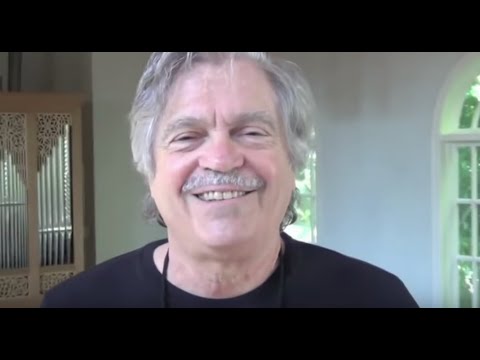
Smalltalk pioneer Dan Ingalls presents the Lively Kernel at JSConf US 2012, a live, direct-manipulation programming environment running in the browser. He shows drag-and-drop building of live objects on the web.
Commenters link it as a demo of what a live, inspectable, Smalltalk-style environment in the browser can be, in threads about Alan Kay, Smalltalk and web limitations.
Up next
 1 mo on HN
How we can use light to see deep inside our bodies and brains | Mary Lou Jepsen
TED
1 HN recommend · 2018–2024
 6 mo on HN
HD Feynman: FUN TO IMAGINE complete (with optional Chinese subtitles)
Christopher Sykes
4 HN recommender · 2021–2025
 6 mo on HN
How to Invent the Future II - Stanford CS183F: Startup School
Stanford Online
3 HN recommender · 2017–2024
 7 mo on HN
How to Invent the Future I - Stanford CS183F: Startup School
Stanford Online
3 HN recommender · 2018–2024
 9 mo on HN
Mike Monteiro: F*ck You, Pay Me
CreativeMornings HQ
12 HN recommender · 2015–2026
 3 mo on HN
The complete FUN TO IMAGINE with Richard Feynman
Christopher Sykes
3 HN recommender · 2019–2022
 11 mo on HN
Alan Kay - Normal Considered Harmful
powerfuloutlet
10 HN recommender · 2012–2026
 2 mo on HN
Rethinking CS Education | Alan Kay, CrossRoads 2015
Infosys Foundation USA
2 HN recommender · 2016–2019
 11 mo on HN
Bret Victor - Inventing on Principle
Rui Oliveira
12 HN recommender · 2013–2025
 11 mo on HN
Bret Victor The Future of Programming
Joey Reid
12 HN recommender · 2017–2026
 10 mo on HN
A Tour of the Acme Editor
Russ Cox
11 HN recommender · 2012–2026
 10 mo on HN
Alan Kay's tribute to Ted Nelson at "Intertwingled" Festival
TheTedNelson
7 HN recommender · 2016–2025
6 comments from Hacker News
I will not invest any time in improving badly designed software. You can't fix a broken wheel. Your HN newsreader app tries to improve the broken wheel. The least you could have done is make the comment edit field WYSIWYG, make it modeless, see what the text will look like while you type, not after you click update or when you click edit in the tread reader. Your code is just a very limited webbrowser. The webbrowsers, html are a very broken wheel. Alan Kay, the designer of personal computing, explains why link This lecture Alan aimed at this audience, the computer science (programming) students at University of Illinois, where they programmed this broken wheel 20 years after Alan had showed them how do do it better. Paul Graham should not have based HN (Hacker News) on the web and html but on WYSIWYG, then you would not have had to fix it with your app. The Lively Kernel would be another way to fix html but retain the web. Two demos says it all: link ▶ this video Dan Ingalls implemented most of Alan Kay's invention of the personal computer, in these demo's he shows how to fix the webbrowsers broken wheel a bit. Their Squeak, Etoys and Croquet fixed it completely.
You can't fix a broken wheel. This web link post, the original NEXT webbrowser, tries to celebrate and revive the reinvention of the broken wheel. The World Wide Web, browser and html standards are a very broken wheel. Alan Kay, the inventor of personal computing, explains why: link Some of the comments of youtube are fun too. This lecture Alan aimed at this particular audience, the computer science (programming) students at University of Illinois, where they programmed the second browser, the second broken wheel 20 years after Alan and Dan had showed them how do do it better. Dan Ingalls implemented most of Alan Kay's invention of the personal computer, in the following demo's he shows how to fix the webbrowser's broken wheel a bit. The Lively Kernel would be another way to fix html but retain the web. Two demos says it all: link ▶ this video Their Squeak, Etoys and Croquet fixed it completely: Early Croquet demo: link Croquet in webbrowser: link Demo of webbrowser replacement: link Squeak and all its predecessors: link Etoys: link
Dan Ingalls himself presenting his continued work in the browser at JSConf US 2012 (whole conf was packed in, standing-room only): ▶ this video Surprised that video has so few views!
It's difficult at this point to come up with an example, since we don't have it yet (that I know of), but to give you an idea, take a look at Lively Kernel link If you want a demo, you can take a look here: ▶ this video
I have been using Emacs as my daily driver for about a decade. It's the closest thing we have to a "popular" Smalltalk environment. The desire to bring everything into Emacs is the same desire I felt after experiencing what computing could be in Smalltalk. One of the really striking things that you're confronted with in a modern Smalltalk is the Morphic UI system. Imagine that, with one click, you could drop into a new window with a live inspector and a (very freeform, repl-ish that's not a repl) REPL loaded into the internal context of any button, window, pane, scrollbar, you name it that you can see right now. (Even my own vocabulary is stifled with the traditional UI/UX we have now!) Now imagine you can do that on any application on your computer. Now imagine you can drag those subcomponents around, rearrange them, drag them onto new windows, modify their code, spawn new ones, and so on all while the thing keeps running and functioning . If you break something, it's okay. The debugger pops up and allows you to do the same thing that you did when you inspected the widget for any point in the frame in the stack trace . Yes, you can debug, live, multiple levels of your stack trace at the same time, that have live, editable versions of the code as well. You don't have to imagine it. You can see it here [1] or just download a Smalltalk system yourself. If the Smalltalk community focused on building some tooling to allow you do develop other languages inside a Smalltalk image ba
Sounds more like "the challenge of using a mish-mash of non-integrated tools with no interface". Developers could definitively solve this by moving away from 70+ year old abstractions (files, terminal) towards things more in line with Smalltalk ideas. But I guess it's better to make thousands of beginners suffer each year, instead of admitting that the current way of doing things is conceptually flawed and outdated. link link ▶ this video link (And no, there is nothing special about copy-pasting commands and Unix pipelines that cannot be easily recreated in UI if the UI is designed to be programmable. )