Ptolemy and Homer (Simpson)
Santiago Ginnobili3 HN recommenders · recommended in 3 months, 2013–2022
demo · general · evergreen · 2013–2022 on HN
A short animation reconstructing a planet's looping orbit using Ptolemy's epicycles and deferents, with the epicycles tracing out the face of Homer Simpson. It shows how enough circles can reproduce nearly any shape.
HN uses it as a vivid demonstration that Fourier series and epicycles can fit anything, and as a warning about models with too much wiggle room.
Up next
 2 mo on HN
Keynote - Karen Sandler
Linux.conf.au 2012 -- Ballarat, Australia
2 HN recommender · 2012–2016
 4 mo on HN
K Lars Lohn - Keynote - PyCon 2016
PyCon 2016
4 HN recommender · 2016–2021
 8 mo on HN
Brown; color is weird
Technology Connections
8 HN recommender · 2020–2026
 6 mo on HN
Old-fashioned rice cookers are extremely clever
Technology Connections
6 HN recommender · 2020–2025
 18 mo on HN
Vectors | Chapter 1, Essence of linear algebra
3Blue1Brown
17 HN recommender · 2018–2026
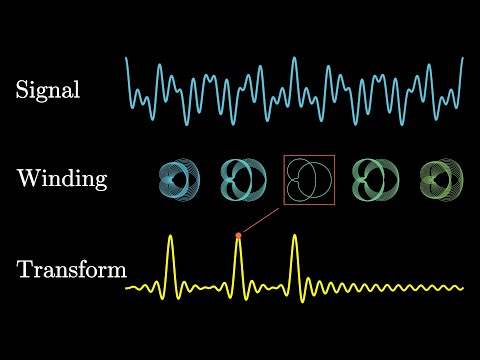 15 mo on HN
But what is the Fourier Transform? A visual introduction.
3Blue1Brown
16 HN recommender · 2018–2025
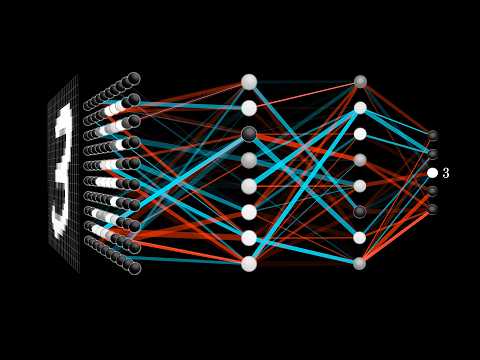 14 mo on HN
But what is a neural network? | Deep learning chapter 1
3Blue1Brown
16 HN recommender · 2017–2025
 13 mo on HN
The Beauty of Bézier Curves
Freya Holmér
16 HN recommender · 2021–2026
 11 mo on HN
The Continuity of Splines
Freya Holmér
10 HN recommender · 2022–2026
 13 mo on HN
Jim Simons (full length interview) - Numberphile
Numberphile2
11 HN recommender · 2015–2024
 11 mo on HN
But how does bitcoin actually work?
3Blue1Brown
15 HN recommender · 2017–2024
 10 mo on HN
Conway's Game Of Life in APL
Dyalog
11 HN recommender · 2010–2024
9 comments from Hacker News
I tl;dr'ed the article (sorry), but I wanted to say one thing about epicycles. They are not wrong and certainly can be used to explain motion, but the problem with them is that you can keep adding epicycles to fit any continuous orbit at all (this actually is because a Fourier series can converge to any continuous periodic function). This is my favourite visualisation of this fact: ▶ this video
I'm only seeing an image, with no explanation, and it took me a while to realise what it was showing; so, in case anyone else is puzzled by it, each image is the sum of the previous one with a new factor (indicated by the "wheels upon wheels"). I think that the reconstruction of Homer Simpson's face (which I think I originally saw thanks to OP ColinWright!) may be a more convincing demonstration of the power of Fourier transforms: ▶ this video . There's a Nautilus article about it, too: link (EDIT: and an HN post discussing that: link ).
These guys are one of the reasons I love mathematics. Check this out too: ▶ this video Edit: Didn't realize that this was also linked to in another thread on the front page as well.
> This is not an assumption, there is no circular reasoning. Of course it is an assumption. A star moving across the sky is not a proof by any means. > And we observe different parallaxes for different stars, meaning that stars are not all on the same distance from earth. No, we don't measure different parallaxes for different stars. We measure different trajectories for different stars across our night sky and then, using the assumption that Earth rotates and that it is on an orbit around the sun, we conclude that there must be a parallax effect involved in the observed trajectory of the star which we can then use to estimate its distance to us. > So, this way you prove that the earth moves and stars have different parallaxes and are not all attached to a crystal sphere. I don't see a problem here. To see that what you're referring to as "proof" is no proof at all, consider that Ptolemy's epicycles (i.e. the elaborate version of the crystal spheres) are just a Fourier series and can therefore be used to describe any periodic movement across the sky. (Without you having to know anything about whether Earth rotates or not.) For a very impressive example see ▶ this video .
This isn't an elephant but it demonstrates the principle: ▶ this video Epicycles were originally considered a good idea because it takes exactly two circles to make an ellipse, and Kepler's laws were satisfied by such an ellipse. They were "falsified,", in the two-cycle form, when closer observations revealed that Kepler's laws were not obeyed exactly. At that point, the choice was to either add more epicycles (working your way up to an elephant), or for Newton to discover universal gravitation.
If your model has a lot of wiggle room it can be consistent with anything. Maybe the solar system really does move in epicycles ▶ this video
I cannot edit my post any more , but I can still reply to it, and it seems the answer is yes: ▶ this video - but you need eccentricity to get the speeds right: link (10 minutes in.) Furthermore, the result is not equivalent to the heliocentric model because it has many more parameters.
The characteristic of metaphorical epicycles is that the make simple, testable predictions that are then wrong , which are fixed with another epicycle. Another more subtle aspect of epicycles, real ones this time, is that they are too powerful and can be used to prove anything. You can predict the motion of the planets with epicycles, it's just that the required series is very long or infinite. And with very long series of cycles, you can "predict" anything: ▶ this video Thus, one of the problems with epicycles both real and metaphorical is that they are indeed not refutable. Because epicycles can predict anything, they aren't that useful; they exclude far less than meets the eye at first. It isn't hard to see that characterist showing up in string theory. The theory has for a very long time had problems with excluding possibilities, and each new metaphorical "epicycle" seems to come with more parameters than the last, rather than fewer. Now, this isn't unique to string theory since all the current theories seem to have that problem, but then, the point is, why does this problematic theory have so much more support and money than the other problematic theories?
Huh, so I never though about it this way. The reason you can use epicycles to draw anything is because the trig functions form a complete orthonormal system. Because you can write a Fourier series for any piecewise continuous function, you can also draw Homer Simpson: ▶ this video