Dan Tepfer: NPR Music Tiny Desk Concert
NPR Music2 HN recommenders · recommended in 2 months, 2020–2023
demo · general · evergreen · 2020–2023 on HN
A Tiny Desk concert in which pianist Dan Tepfer plays with a Disklavier player piano driven by a program he wrote that responds to his playing. He performs four pieces from his Natural Machines project.
HN points to it as an example of algorithmic, reactive live music that blends programming with jazz performance.
Up next
 3 mo on HN
Put Your Name on Your Game, a Talk by Bennett Foddy and Zach Gage
GDC Festival of Gaming
3 HN recommender · 2020–2025
 4 mo on HN
Datacenters Behaving Like Acoustic Weapons
Benn Jordan
5 HN recommender · 2026–2026
 11 mo on HN
Video explains the world's most important 6-sec drum loop
Landon Proctor
15 HN recommender · 2011–2026
 10 mo on HN
Fear the Boom and Bust: Keynes vs. Hayek - The Original Economics Rap Battle!
Radical Discourse
10 HN recommender · 2010–2024
 6 mo on HN
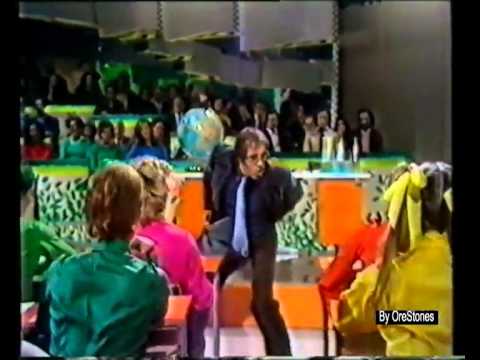
Adriano Celentano - Prisencolinensinainciusol
Le Pietre Rotolanti
6 HN recommender · 2016–2024
 4 mo on HN
Youtube duet: Miles Davis improvising on LCD Soundsystem
Alessandro Grespan
4 HN recommender · 2021–2024
 5 mo on HN
The Caretaker - Everywhere At The End Of Time - Stages 1-6 (Complete)
vvmtest
5 HN recommender · 2020–2025
 5 mo on HN
Steve Reich, "Music for 18 Musicians" - FULL PERFORMANCE with eighth blackbird
Vic Firth
4 HN recommender · 2016–2025
 5 mo on HN
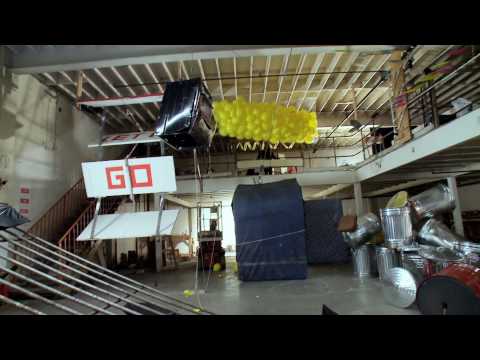
OK Go - This Too Shall Pass - Rube Goldberg Machine - Official Video
OK Go
5 HN recommender · 2010–2026
 5 mo on HN
MC Frontalot - It Is Pitch Dark
MC Frontalot
5 HN recommender · 2012–2026
 4 mo on HN
Danny Carey | "Pneuma" by Tool (LIVE IN CONCERT)
Vic Firth
3 HN recommender · 2021–2026
 5 mo on HN
William Shatner - Common People
dsjkhd
6 HN recommender · 2013–2023
3 comments from Hacker News
I also enjoy Dan Tepfer's visualizations of audio and audio decay. This was his tiny desk concert: ▶ this video
Are you familiar with Magenta? [0] It's not real-time, but definitely an important area of research. Also check out Dan Tepfer [1] who is doing amazing work with an algorithmic approach to reactive live performances, with great call and response tactics. I myself am slowly prototyping a fully artificial AI band which can be orchestrated using very high-level musical ideas and a big helping of intelligent randomization and algorithms based on music theory. I've been prototyping in Andrew Sorensen's Extempore [2] and have laid much of the groundwork like melody/harmony/rhythm generation as well as basic modulation of these elements to create longer musical structures which utilize motifs in multiple ways Currently it is a matter of shedding pre-computed tables of "nice" sounding progressions or purely random progressions, and creating a more fundamental approach which can derive the appropriate progressions from the given user parameters. I am also expanding the program's ability to generate aesthetically pleasing and unique singular motifs which drive these algorithmic compositions. I have a band leader / conductor module which provides cues and other synchronized data, which even without advanced motif generation and modulation still allows for things not currently possible in any non-code musical production software such as global dyamics, timing changes, progression sharing, (eventually) directing impromptu solos, etc. Reach out via email if you'd like to discuss more! [0]
Hi everyone, Dan Tepfer here, co-creator of FarPlay. As a skeptic myself, I appreciate the skeptical tone of this thread. And I'd like to address a few points made here about FarPlay and low-latency audio. First, a little about me: I've been coding for most of my life (see ▶ this video for my NPR Tiny Desk Concert of my improvised algorithmic music project Natural Machines) but I'm first and foremost a musician. I make my living playing concerts around the world as a pianist. During the pandemic, I used JackTrip to perform remote livestream concerts with some of the greatest musicians in jazz: Christian McBride, Cécile McLorin Salvant, Ben Wendel, Gilad Hekselman, Fred Hersch, Antonio Sanchez, Melissa Aldana, Miguel Zenon, Linda May Han Oh and others. This is just to say that music, and particularly rhythm, is very important to me, and that I care about low-latency audio as an active practitioner. Someone in this thread wrote that for rhythmic (groove) music, latencies of 3ms are noticeable, and latencies higher than 6ms are prohibitive. This isn't the case. Sound travels in air at about 1ft per ms, so a latency of 3ms is equivalent to playing with someone 3ft away from you, which is obviously unnoticeable. 6ms is equivalent to playing with someone 6ft away, which is also unnoticeable. James Brown grooved his ass off with his band spread out over a relatively wide area on stage, long before in-ear monitors, which confirms what the research says: even for advanced professional musi