Fear the Boom and Bust: Keynes vs. Hayek - The Original Economics Rap Battle!
Radical Discourse10 HN recommenders · recommended in 10 months, 2010–2024
explainer · intro · evergreen · 2010–2024 on HN
A rap battle in which John Maynard Keynes and F. A. Hayek debate the causes of boom and bust, stimulus, and bailouts. It was produced by Econstories to teach the two schools of thought.
HN recommends it as a funny, accurate and easy primer on Keynesian versus Austrian views of the business cycle.
Up next
 5 mo on HN
Fight of the Century: Keynes vs. Hayek - Economics Rap Battle Round Two
Radical Discourse
5 HN recommender · 2011–2024
 11 mo on HN
Principles for Dealing with the Changing World Order by Ray Dalio
Principles by Ray Dalio
10 HN recommender · 2022–2025
 5 mo on HN
Our democracy no longer represents the people. Here's how we fix it | Larry Lessig | TEDxMidAtlantic
TEDx Talks
4 HN recommender · 2017–2024
 5 mo on HN
Timothy Snyder: The Making of Modern Ukraine. Class 1: Ukrainian Questions Posed by Russian Invasion
YaleCourses
6 HN recommender · 2022–2025
 2 mo on HN
DEF CON 19 - Artem Dinaburg - Bit-squatting: DNS Hijacking Without Exploitation
DEFCONConference
2 HN recommender · 2018–2023
 9 mo on HN
We the People, and the Republic we must reclaim | Lawrence Lessig
TED
8 HN recommender · 2013–2026
 2 mo on HN
LESSON 1: Do Not Obey In Advance
Timothy Snyder
2 HN recommender · 2023–2025
 3 mo on HN
Timothy Snyder Speaks, ep. 14: Politics of Eternity, Politics of Inevitability
Timothy Snyder
2 HN recommender · 2018–2025
 17 mo on HN
How The Economic Machine Works by Ray Dalio
Principles by Ray Dalio
18 HN recommender · 2014–2026
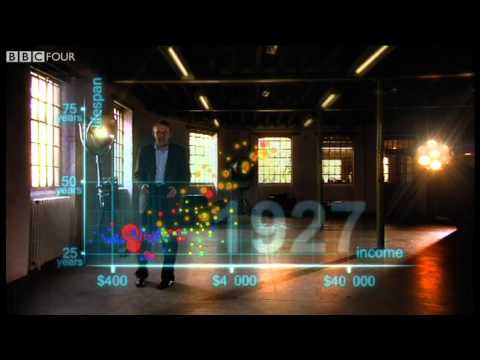 12 mo on HN
Hans Rosling's 200 Countries, 200 Years, 4 Minutes - The Joy of Stats - BBC
BBC
10 HN recommender · 2010–2023
 10 mo on HN
Why American Cities Are Broke - The Growth Ponzi Scheme [ST03]
Not Just Bikes
14 HN recommender · 2021–2024
 8 mo on HN
The Spider's Web: Britain's Second Empire | The Secret World of Finance
Independent POV
6 HN recommender · 2019–2024
12 comments from Hacker News
For a hilarious and sharp rap-battle comparison of Keynes vs. Hayek (which... is basically the framework for all competing conversations on this topic) check out: Just a reminder - this is a rap-battle music video about economic policy. This is why the internet is amazing: Fear the Boom and Bust: Keynes vs. Hayek - The Original Economics Rap Battle!(Youtube)[0] [0]: ▶ this video
You take the Keynesian view. It's difficult to discuss this in more than a soundbite, but the Hayekian view is well explained by these two videos: ▶ this video link Well worth watching if you haven't seen them. In short, the opposite/Hayekian view contends that taxation is seizure of resources from profitable/efficient entities and redistribution towards unprofitable/inefficient entities. We saw this in extremis in the bank bailout, and more controversially in microcosm with individual redistribution. If you accept this -- that "profitable" correlates with "efficient", and conversely, though the correlation is not perfect -- then taxation is not a Robin Hood sort of thing that increases well being, but rather a move that ties the legs of the efficient sectors of the economy -- those that can post a profit even in tough times -- to those that are already underwater.
At least Glenn Beck is attempting to educate himself/his audience. Although, he'd probably do better to show everyone this (it's educational, hilarious and very well done): ▶ this video
If anyone wants a fun quick summary of Hayek this throwback to the 2008 crisis is an easily consumed primer on Keynes vs Hayek: Keynes vs Hayek rap battle 1: ▶ this video Keynes vs Hayek rap battle 2: link
There have been a number of Hayek posts, though sadly few of them gained much traction: link For those new to Hayek, here is an entertaining overview: Fear the Boom and Bust: Keynes vs. Hayek ▶ this video Fight of the Century: Keynes vs. Hayek link
These are important books but obviously not a comprehensive list. * John Locke's Two Treatises of Government - It's political philosophy but it's hard to understand Classical Liberalism without having read some Locke. * Adam Smith's Wealth of Nations - He and Locke are the two main guys to read for a solid start on Classical Liberalism, which is completely different than modern political liberalism. It's like having two features in an app with nearly the same name. Confusing as fuck. * E. F. Schumacher's Small Is Beautiful: Economics as if People Mattered - This book will shift your perspective, useful to avoid becoming an a mindless advocate for one school of thought or another. * Marx is a tough one as Capital is massive and unreadable and The Communist Manifesto is a propaganda pamphlet but I think you need to at least find some articles that summarize the basics. * Keynes and Hayek - This hip hop battle is a decent start: ▶ this video then read Keynes' The General Theory of Employment, Interest and Money and Hayek's The Road to Serfdom. * Milton Friedman's - Yes, read Capitalism and Freedom. I hesitated to include it as the guy's so good at making the case that it can turn you into a market advocate bot. Please resist that. Can someone help me on this, is there a book balance Hayek and a book to balance Friedman? I'm sorry but Keynes doesn't do it for me. Look at the difference in titles between Hayek and Keynes. It's hard to motivate to read the Keynes book but nobody ever ha
What you describe is part of the Keynesian economics. There is a great deal of resources about the criticism of Keynesian economics especially from Austrian School. But i like the rap battle the most :) ▶ this video
> The single most destructive force in a crash is deflationary pressure which can quickly feed on its self and spiral out of control. Well, that's part of the Keynesian view yes. I'm personally of the belief that currency-fuckery causes crashes in the first place, and that more currency-fuckery isn't the answer [1]. But let's just say Keynes is right for now. That still doesn't explain why the healthy Clinton/Bush economies had crazy-low interest rates, which was the main cause of this mess. [1] While it has a humorous spin, the Keynes vs. Hayek rap is incredibly well informed about both positions, and it's pretty easy to follow and entertaining - ▶ this video
This is a Keynesian and Monetarist view of budgets. The idea is that IF you balance the budget (they often don't think this is ever a great idea anymore) then it should be balanced over the ups and downs of the business cycle. So let's say a business cycle starts up again and somehow the government doesn't spend all that extra money before it comes in and there is surplus. Now booms are followed by an inevitable bust no matter what anyone tells you when the next one starts up. Keynes argued that you should spend during busts to keep aggregate demand up and let the economy recover. So you run a deficit during this time. If you consider a balanced budget then they might argue that you should balance it with consideration to short term gains and losses. If you're interested this video is a fun and very accurate way to learn about two different views of the business cycle: ▶ this video For the record I'm with Hayek in this video :)
I think an economic hip-hop video is relevant here: "Fear the Boom and Bust" - a Hayek vs. Keynes Rap Anthem ▶ this video
Well is it possible that an Alan Sokal kind of trick be pulled of in economics if it is a social science. Relevant : ▶ this video link
The boom gets started with an expansion of credit. The fed sets rates low, are you starting to get it? That new money is confused for real loanable funds, but it’s just inflation that’s driving the ones who invest in new projects, like housing construction. The boom plants the seeds for its future destruction. The savings aren’t real, consumption’s up too! And the grasping for resources reveals there’s too few. ▶ this video The claim being that to back a loan with new “printed” money is necessarily inflationary. Loans backed with saved/invested funds are non-inflationary, because the saver gives up their ability to consume with those funds, in proportion with the consumption the borrower takes on.