Imaginary Numbers Are Real [Part 1: Introduction]
Welch Labs7 HN recommenders · recommended in 7 months, 2017–2025
course · intro · evergreen · 2017–2025 on HN
The first part of Welch Labs' series on imaginary numbers, presenting them as the natural extension of the number line into two dimensions. It covers the history and the math with strong visuals.
HN commenters rate the series as some of the best visual teaching on complex numbers and recommend it for building intuition.
Up next
 3 mo on HN
Lecture 1: Probability and Counting | Statistics 110
Harvard University
3 HN recommender · 2017–2018
 1 mo on HN
Jim Keller - Moore's Law in the age of AI Chips
Matroid
1 HN recommend · 2020–2020
 3 mo on HN
Pachelbel Rant from 2006 [Official High Quality Re-Post]
RobPRocks
3 HN recommender · 2022–2024
 4 mo on HN
Interactive notebooks ~ Pluto.jl | Fons van der Plas | JuliaCon 2020
The Julia Programming Language
6 HN recommender · 2020–2021
 4 mo on HN
Verbatim: What Is a Photocopier? | Op-Docs
New York Times Opinion
4 HN recommender · 2017–2025
 3 mo on HN
Spherical Geometry Is Stranger Than Hyperbolic - Hyperbolica Devlog #2
CodeParade
3 HN recommender · 2021–2026
 2 mo on HN
No Body Steering Bike of the California Superbike School
superbikeschool
2 HN recommender · 2021–2022
 3 mo on HN
Infinite fractions and the most irrational number
Mathologer
3 HN recommender · 2019–2026
 18 mo on HN
Vectors | Chapter 1, Essence of linear algebra
3Blue1Brown
17 HN recommender · 2018–2026
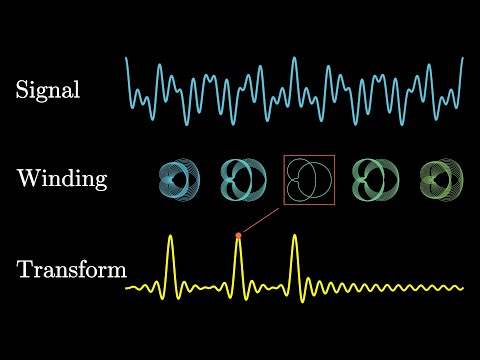 15 mo on HN
But what is the Fourier Transform? A visual introduction.
3Blue1Brown
16 HN recommender · 2018–2025
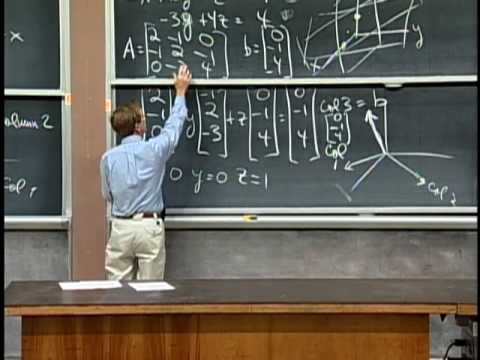 12 mo on HN
Lec 1 | MIT 18.06 Linear Algebra, Spring 2005
MIT OpenCourseWare
11 HN recommender · 2011–2020
 10 mo on HN
The Most IMPORTANT Video You'll Ever See (part 1 of 8)
wonderingmind42
13 HN recommender · 2010–2025
9 comments from Hacker News
Yes, the name imaginary does it no favours. I was confused for so long about i, as it was never explained on classes, and it wasn't until 3blue1brown and other math youtubers showed me the light. I really like this series on it by Welch Labs - loads of easily digestible videos, and a history lesson to boot: ▶ this video
Welch labs has an amazing series on complex numbers called “imaginary numbers are real”. Great explanations, engaging content and high production value. ▶ this video
Welch Labs has a wonderful series on youtube on imaginary numbers, "Imaginary Numbers Are Real": ▶ this video I like to tell my kids that imaginary numbers aren't really imaginary .. that in many ways they're more real than the Reals.
The greatest audiovisual content on the topic I have ever seen: Part 1 - ▶ this video Part 2 - link Part 3 - link Part 4 - link Part 5 - link Part 6 - link Part 7 - link Part 8 - link Part 9 - link Part 10 - link Part 11 - link Part 12 - link Part 13 - link
I really like the welch labs series on imaginary numbers which covers the first part of what you talk about -- leveling up the notion of what a complex number is. Though his focus was more on solving simple equations with no real roots, but really detailing how/what is really going on. It is a great precursor to then thinking about quaternions ▶ this video
Regarding imaginary numbers, I found this YouTube series really helpful to understand basics of imaginary numbers. ▶ this video
I really enjoyed this video series on imaginary numbers. Went through the history as well as the math: ▶ this video
For a small buffet of abstract math topics (with lots of exposition putting ideas into historical context and an emphasis on building geometric intuition) try Courant & Robbins "What is Mathematics?". Covers number theory, number systems, geometry, topology, optimization, algebra, and knots, among others. You could also play around with branches of math like Knot and Braid Theory, which are interesting in their own right, give insight into lots of different branches of math, and many interesting problems are still accessible to lay people. Number theory is also like this I think it can also be helpful to learn some things about the history of math and the historical context that different ideas came from. Here's a nice example covering complex numbers ▶ this video Maybe tangential to your ends, but the Crest of the Peacock is a nice book on non-European mathematical traditions, which provides some insight into how the process of establishing and validating mathematical knowledge works in other cultures. You might try books written by physicists or that are about mathematical physics (an author to look out for depending on your level is VI Arnold), since arguments will be of a more geometric or physical nature and appeal more to intuition. Stillwell is another author (not a physicist) that tends to write books that give context and geometric intuition You might like playing around with Pinter & Humphreys for Algebra, or Jänich for Topology (fantastic book for building intuition aro
I agree that for most of advanced math, VR won't help, however there are a lot of mathematical concepts that are easier to grasp when visualized. link ▶ this video link