Google Self-Driving Car Project | SXSW Interactive 2016
SXSWRecommended by 2 HN commenters across 7 months, 2016–2018
talk · general · 2016–2018 on HN
Chris Urmson's SXSW 2016 talk on Google's self-driving car project, covering 1.3 million self-driven miles and the gap between hype and reality. It shows sensor visualizations and playbacks of hard situations the cars met, and discusses failures such as the l…
HN returns to it repeatedly as one of the best candid talks on how a real self-driving system sees the road and where it struggles.
Up next
 2 mo on HN
The Matrix Awakens: An Unreal Engine 5 Experience
Unreal Engine
Recommended 2× on HN · 2021–2023
 1 mo on HN
Kiva Systems Warehouse Automation at Quiet Logistics
KivaDirector
Recommended 1× on HN · 2014–2021
 11 mo on HN
Children Of The Magenta Line
Mossie Fly
Recommended 11× on HN · 2021–2026
 3 mo on HN
Miniatur Wunderland *** official video *** largest model railway / railroad of the world
Miniatur Wunderland
Recommended 3× on HN · 2017–2022
 5 mo on HN
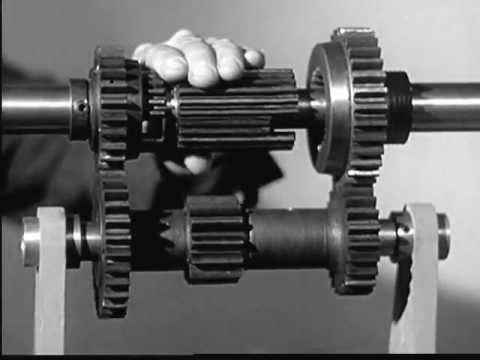
Spinning Levers - How A Transmission Works (1936)
US Auto Industry
Recommended 5× on HN · 2018–2026
 4 mo on HN
Festo - SmartBird
Festo
Recommended 4× on HN · 2011–2021
 3 mo on HN
Driving Amazon’s ELECTRIC Delivery Vehicle: Rivian EDV
Friday Adventure Club
Recommended 3× on HN · 2022–2023
 6 mo on HN
Why Electric Bikes are More Dangerous than Motorcycles
FortNine
Recommended 5× on HN · 2021–2025
 12 mo on HN
How Self-Driving Cars will Destroy Cities (and what to do about it)
Not Just Bikes
Recommended 17× on HN · 2024–2026
 6 mo on HN
Andrej Karpathy - AI for Full-Self Driving at Tesla
Matroid
Recommended 4× on HN · 2020–2022
 5 mo on HN
George Hotz: Comma.ai, OpenPilot, and Autonomous Vehicles | Lex Fridman Podcast #31
Lex Fridman
Recommended 7× on HN · 2019–2026
 6 mo on HN
Traffic Has a Perfect Solution. Humans Are the Problem.
CGP Grey
Recommended 6× on HN · 2016–2026
12 comments from Hacker News
That's Chris Urmson's talk at SXSW in 2016 [1], which has been widely viewed. It's one of the best talks on the subject. He said "How quickly can we get this into people's hands? If you read the papers, you see maybe it's three years, maybe it's thirty years. And I am here to tell you that honestly, it's a bit of both." Then he showed video of Google cars dealing with various challenging conditions. This included the famous scene where a Google self driving car encountered a woman in a powered wheelchair using a broom to chase a turkey. The software recognized this as something to avoid, even though it didn't classify it further. [1] ▶ this video
On a related note, here's Chris Urmson's long talk at SXSW on how Google does automatic driving.[1] This is worth watching. He shows what Google cars sense and gives an overview of how they analyze the data. This is the first time Google has released this level of detail. If you're going to comment on automatic driving, you need to see this. Urmson goes into great detail on Google's 2mph collision with a bus. The sensor data from the Google car is shown. The video from the bus (it had cameras, too) is shown. Exactly what the software was trying to do is discussed. The assumptions the software made about what the bus driver would do are discussed. What they did to prevent this from happening again is mentioned. Most of the talk is about the hard cases. In the beginning, Google developed a highway driving system, but that was years ago. Now they're working hard on dealing with everything that can happen on a road, including someone in an electric wheelchair chasing ducks with a broom. [1] ▶ this video
Watch Chris Urmson's self-driving car talk at SXSW 2016.[1] Especially the part where the Google car encounters someone in a powered wheelchair chasing a duck with a broom. Google can handle that. [1] ▶ this video
Compare Chris Urmson's SXSW talk from 2016 about Google's system.[1] Look carefully at the graphics which show what the sensors are detecting, and compare with Tesla's. Watch Urmson discuss hard cases, problems, and failures. Not seeing that with Tesla. Or Uber. Or Cruise. Or Otto. [1] ▶ this video
Except that Google was able to handle construction sites, traffic cones, and people directing traffic last year. Watch Urmson's video from SXSW.[1] Google has put a lot of effort into handling unusual situations. Those cars driving on residential streets in Mountain View and Austin have accumulated data on the hard cases. The California DMV continues to publish autonomous vehicle crash reports. The last one was in October.[2] A Google vehicle was rear-ended at 3mph when it was entering an intersection with poor visibility, detected cross-traffic, and stopped. I'm looking forward to the 2016 self-driving disengagement reports appearing on on the California DMV site.[3] Those were due January 1, covering the year ending 1 December 2016. Then we'll have comparative info on how all the players are doing. [1] ▶ this video [2] link [3] link
This article seems to be a summary of Chris Urmson's talk at SXSW.[1] That's worth a watch. It gives a good overview of how Google does it. [1] ▶ this video
This was a good presentation by the Google team: ▶ this video I believe they say in there that they got highway driving down really early on. They have been focusing on urban driving for the last few years.
> Why not the other way around? You do the driving, and the computer is the backup in case you mess up? Unfortunately having the computer takeover has the same issues. If it thinks you're following the wrong lane it could choose to steer you into a barrier, for example. Chris Urmson's team at Google ran user tests at the start of their autonomous vehicle program and found that users misbehave [1] when behind the wheel of semi-autonomous vehicles, despite having been given instruction to pay attention. We're seeing that scenario play out in slow motion in Teslas and perhaps other driver-assistance programs that get less press. [1] ▶ this video
Link to actual report.[1] (When you're posting a link to something important, post the link to the real document, not some pundit blithering about it. Yes, you may have to do some digging to find it when the pundit outlet doesn't provide a link.) There's not much new here if you've been following what Waymo is doing. Chris Urmson's SXSW talk from 2016 [2] covered most of this material in more detail. This is more of a PR-level version of that content. The new material covers mainly the limitations Waymo is imposing on their system. It works only where they have very detailed maps of the road system, with more information than even StreetView. This is conservative, but not a bad decision for initial release. They have a button to call customer service. (That's so unlike Google.) [1] link [2] h ▶ this video
Can you give an actual example? Because, not being able to identify something is not necessarily an issue as long as the car notices something is there and it should not hit it. EX: I am sure the car had no idea what this was: ▶ this video but as long as it can tell it's bigger than a bread box and so it should not to hit it that's enough.
What this really reflects is that Tesla has painted itself into a corner. They've shipped vehicles with a weak sensor suite that's claimed to be sufficient to support self-driving, leaving the software for later. Tesla, unlike everybody else who's serious, doesn't have a LIDAR. Now, it's "later", their software demos are about where Google was in 2010, and Tesla has a big problem. This is a really hard problem to do with cameras alone. Deep learning is useful, but it's not magic, and it's not strong AI. No wonder their head of automatic driving quit. Karpathy may bail in a few months, once he realizes he's joined a death march. If anything, Tesla should have learned by now that you don't want to need to recognize objects to avoid them. The Mobileye system works that way, being very focused on identifying moving cars, pedestrians, and bicycles. It's led to at least four high speed crashes with stationary objects it didn't identify as obstacles. This is pathetic. We had avoidance of big stationary objects working in the DARPA Grand Challenge back in 2005. With a good LIDAR, you get a point cloud. This tells you where there's something. Maybe you can identify some of the "somethings", but if there's an unidentified object out there, you know it's there. The planner can plot a course that stays on the road surface and doesn't hit anything. Object recognition is mostly for identifying other road users and trying to predict their behavior. Compare Chris Urmson's talk and videos at
It's in his SXSW talk.[1] It's the Google/Waymo and Volvo position, those being the two companies closest to a product. [1] ▶ this video