Traffic Has a Perfect Solution. Humans Are the Problem.
CGP Grey6 HN recommenders · recommended in 6 months, 2016–2026
explainer · general · evergreen · 2016–2026 on HN
CGP Grey explains how traffic jams come from human driving behavior such as tailgating and reaction delays, and how leaving gaps and smoothing speed would reduce congestion. It also touches on self-driving cars.
HN cites it as a concise, well-illustrated explanation of traffic flow, in threads on congestion, self-driving cars and driving habits.
Up next
 2 mo on HN
Free To Choose 1980 - Vol. 01 The Power of the Market - Full Video
Free To Choose Network
2 HN recommender · 2023–2024
 5 mo on HN
Exponential Growth Arithmetic, Population and Energy, Dr. Albert A. Bartlett
Hiroob
5 HN recommender · 2019–2021
 5 mo on HN
Arithmetic, Population and Energy - a talk by Al Bartlett
lXlSalemlXl
6 HN recommender · 2016–2023
 3 mo on HN
ADHD & How Anyone Can Improve Their Focus
Andrew Huberman
3 HN recommender · 2022–2024
 6 mo on HN
How we fit an NES game into 40 Kilobytes
Morphcat Games
6 HN recommender · 2019–2026
 4 mo on HN
How Wolves Change Rivers
Sustainable Human
4 HN recommender · 2014–2022
 2 mo on HN
Thiel: Google has $50B, doesn't innovate
CNN
2 HN recommender · 2017–2023
 3 mo on HN
The Classroom Only Works for One Kid in the Room
CGP Grey
3 HN recommender · 2013–2024
 12 mo on HN
How Self-Driving Cars will Destroy Cities (and what to do about it)
Not Just Bikes
17 HN recommender · 2024–2026
 11 mo on HN
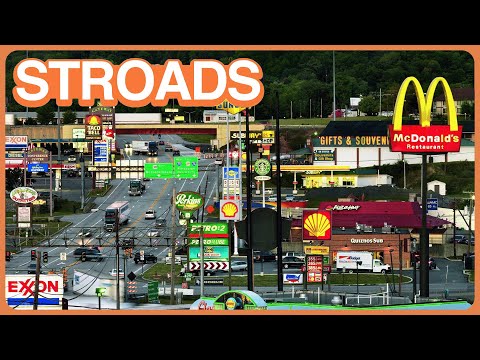
Stroads are Ugly, Expensive, and Dangerous (and they're everywhere) [ST05]
Not Just Bikes
12 HN recommender · 2021–2025
 10 mo on HN
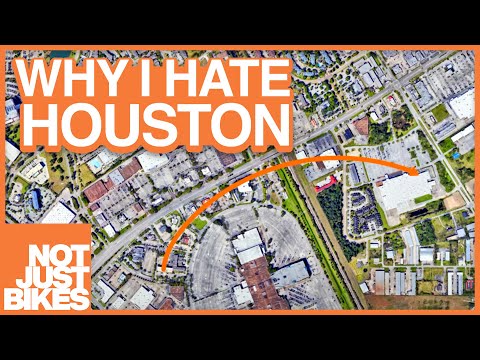
Why This Channel Exists (and why I hate Houston)
Not Just Bikes
11 HN recommender · 2021–2025
 10 mo on HN
Why American Cities Are Broke - The Growth Ponzi Scheme [ST03]
Not Just Bikes
14 HN recommender · 2021–2024
12 comments from Hacker News
> You don’t own the asphalt in front of you. Correct, but you _need_ the asphalt in front of you for both safe driving and also to avoid cascading hard braking events. I also don't own the asphalt under me or behind me too, so it's kinda a silly statement tbh. This youtube talks about it: ▶ this video
This video illustrates the principle: ▶ this video Basically, people following too closely cause more braking, which cascades to more braking for an obstacle that was never actually there.
CGP Gray's simple solution to traffic and good visuals. ▶ this video The real simple solution to traffic is no more monkeys driving cars. Also, implicitly, fully isolate cars from human powered forms of transportation.
CGP Grey did a really nice, concise video on the topic of traffic and he addresses your point in the first 30 seconds. Coordination, not cars, is the problem. ▶ this video
[CGP Grey did a video on this]( ▶ this video ). Your goal, as a driver, should be to try to maintain equivalent distance between your car and cars in front of you and behind you.
Stop/go is bad. Gliding is better for the collective and for your fuel efficiency. CGP Grey has a great video on traffic flow: ▶ this video
It brings me peace to see other people thinking this way. You should be an active participant on the highway, making decisions to maximize flow. Leaving space so people can merge, controlling speed to smooth slowdowns, anticipating traffic patterns, etc. All of the people tailgating are contributing to the congestion. ▶ this video
if you think about the speeds involved, a single additional car in front of you on the freeway (or even any additional cars) adds pretty miniscule time to the total commute. Let's compare a few situations. In the baseline you're tailing the car in front of you with a focus on not letting anyone cheat and get in front of you, let's say 50 feet away. Your commute is 30 miles, and in this frictionless sphere of traffic you're going 60mph the whole time. You get to work in 30 minutes flat. In the second scenario you're following the 3-second rule[0]. This would put you ~285 feet behind the car in front of you. Let's say over the course of your commute 20 cars move in front of you. If the average car length is 15 feet, and they all are 50 feet away from each other, when all 20 cars are in place you're a net -(20 * 65) feet away from the original car, or 1300 feet total. At 60 mph that adds ~15 seconds to your total commute time. Well worth having an easier time avoiding a potential crash IMO! Also has the benefit of helping prevent traffic to begin with[1] 0: link . 1: ▶ this video
In addition to increasing the gap, you have to drive steadily, with no braking. This makes you become the most predictable car on the road, people behind you can follow steadily instead of constantly accelerating & braking. This leads to reduced congestion. This CGP video covers some of this ▶ this video
The video that the above animation is from [1] is about how bad (or alternatively, "selfish") driving behaviors where individuals inch up as close to the car in front of them as quickly as possible (only to have to slam on their brakes) actually lead to worse and slower traffic than if everyone just left a buffer of space in front of them and drove at a moderate pace. So it's actually a lot more analogous than you'd think. [1] ▶ this video
This isn't what they studied, but a simple thought experiment shows a limited use case where traffic absolutely can be helped by speeding things up. Let's imagine a world where self driving cars are required for freeway driving; this allows them to respond in a predictable and timely manor with respect to directives to avoid lanes (and not jump the line) as well as to go at an exact speed. An event (accident, whatever) obstructs One of Five possible lanes for use (including the HOV lane) on a section normally rated at 60 MPH. This reduces the capacity of the road by 1/5th, or alternately, one lane of flow should be re-distributed across 4 lanes (1/4th per lane). Idealized solution: A temporary bypass zone is communicated to the self-driving cars. There is a lead up zone where the speed is expected to ramp up to the new target, followed by a merge zone where the lanes reduce and the flow is re-shaped to balance traffic evenly. The cars would then pass the incident zone in this higher speed lane-compressed flow, before expanding out and then slowing back down to normal speed. Due to the unexpected nature of the incident there has also been a buildup of volume before the incident, so to alleviate that slightly higher flow will be allowed to drain the high pressure area. In the above hypothetical case, for 4 out of 5 lanes nornally at 60MPH, I would prefer to imagine: (1 + 1/4) * 60MPH => 75, but round up another 5 MPH for the bypass flow for a total of 80MPH in the corrected flo
People always talk about driving with gaps[1], but I've yet to see a simulator show how detrimental/beneficial these strategies are to individual drivers. It feels like a hawks and doves style ESS (evolutionary stable strategy) problem. It appears to me that the strategy that eliminates the overall negative affect for the group (avoid creating phantom stop signs, by gapping or "always in the middle" strategies) is necessarily unstable. The benefit to any single driver who does not follow that rule becomes increasingly high as more and more others do follow the rule. Even to the point of ignoring a beeping car I should think. I certainly feel the negative effect driving behind someone who creates a gap as more and more cars merge in front of them. In the pathological case the driver who insists on a safe interval between cars will make no progress at all. 1: (CGP Grey) ▶ this video