2. Behavioral Evolution
Stanford3 HN recommenders · recommended in 3 months, 2016–2021
lecture · intro · evergreen · 2016–2021 on HN
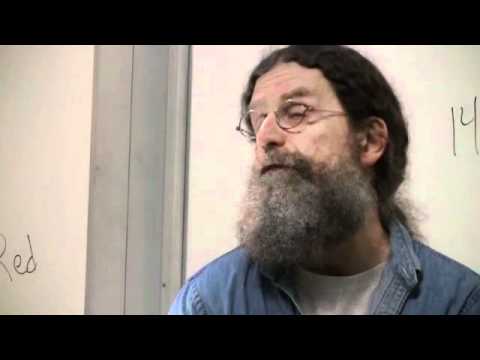
Stanford biologist Robert Sapolsky lectures on the evolution of behavior, including the Prisoner's Dilemma and tit-for-tat strategies in animals. It is part of his Human Behavioral Biology course.
Recommended in game-theory and cooperation threads, with the whole lecture series endorsed.
Up next
 5 mo on HN
Timothy Snyder: The Making of Modern Ukraine. Class 1: Ukrainian Questions Posed by Russian Invasion
YaleCourses
6 HN recommender · 2022–2025
 15 mo on HN
1. Introduction to Human Behavioral Biology
Stanford
15 HN recommender · 2012–2026
 4 mo on HN
Entanglement and Complexity: Gravity and Quantum Mechanics
Stanford Institute for Theoretical Physics
4 HN recommender · 2015–2023
 8 mo on HN
DEF CON 25 - John Sotos - Genetic Diseases to Guide Digital Hacks of the Human Genome
DEFCONConference
11 HN recommender · 2017–2023
 8 mo on HN
Once you understand game theory, you understand the world.
Veritasium
10 HN recommender · 2023–2026
 8 mo on HN
DNA animation (2002-2014) by Drew Berry and Etsuko Uno wehi.tv #ScienceArt
WEHImovies
9 HN recommender · 2020–2026
 7 mo on HN
I Genetically Engineered *MYSELF* to Fix Lactose Intolerance
The Thought Emporium
8 HN recommender · 2018–2026
 7 mo on HN
mRNA Translation (Advanced)
DNA Learning Center
4 HN recommender · 2014–2025
 7 mo on HN
Michael Levin: The electrical blueprints that orchestrate life | TED
TED
7 HN recommender · 2021–2026
 6 mo on HN
The Intense 8 Hour Hunt | Attenborough Life of Mammals | BBC Earth
BBC Earth
6 HN recommender · 2010–2024
 6 mo on HN
Jack Szostak (Harvard/HHMI) Part 1: The Origin of Cellular Life on Earth
Science Communication Lab
6 HN recommender · 2016–2021
 6 mo on HN
Bret Weinstein on "The Portal" (w/ host Eric Weinstein), Ep. #019 - The Prediction and the DISC.
Eric Weinstein
5 HN recommender · 2020–2023
4 comments from Hacker News
Besides the gut flora being capable of some neurological effects it has demonstrated to be psychoactive. Professor Robert Sapolsky[1] has an amazing course on Behavorial Evolution. The toxoplasmic gondii comes from the rat -> cat -> gut -> brain, it is profound that side effects in the brain are chemically constructed from the stomach. Considering that most animals do not even have a brain,but usually have a stomach, it is evident that the gut is underestimated in the evolutionary tree. [1] ▶ this video
> Looking at the long history of evolution, I'd say no. This entire lecture series on Human Behavioral Biology is worth watching from the beginning, but I've linked to a moment where Sapolsky describes tit-for-tat strategies arising in animals. First example: Vampire Bats. []: ▶ this video
There is a great lecture from Robert Sapolsky/Stanford [2010] about behavioral evolution / prisoner's dilemma / tit for tat strategy: ▶ this video
I think the tournament vs. pair-bonding spectrum [1] might be very insightful with regards to this debate. The observation is basically that animals have different manifestations of sexual dimorphism and that there are very clear behavioral patterns that correlate with them. In some species, e.g. gorillas, males are big and muscular and you reliably get a lot of aggression and males that care little about their offspring. In tournament species also only few alpha males have reproductive success. On the other hand, in other species, e.g. bonobos, there is very little sexual dimorphism, little aggression, females select partners that display parenting behavior and most males reproduce. It turns out that humans are somewhere in between tournament and pair-bonding species and this is probably root of a lot of confusion. The rules are not as clear as in the two extremes, and in addition there is a lot of variability in behavior anyway because the generality of the neocortex basically allows us to adopt arbitrary rules. Some cultures are more puritanical, some are less. Some males get more excited about parenting and cute animals, while others are rather focused on achieving high status and thus fare well with traditional gender roles to achieve that. But what status means is itself variable, e.g. high status can include the appeal to some egalitarian paternal parenting meme. A lot of the results, e.g. gender-specific appreciation of good jobs, high incomes might reflect both cultu