Entanglement and Complexity: Gravity and Quantum Mechanics
Stanford Institute for Theoretical Physics4 HN recommenders · recommended in 4 months, 2015–2023
lecture · advanced · evergreen · 2015–2023 on HN
Leonard Susskind lectures at Stanford on how gravity and quantum information theory have merged into a new way of thinking about physics. He covers entanglement and complexity, with applications from black holes to strange metals and the foundations of quantu…
Commenters recommend it as a clear, characteristically engaging Susskind lecture for people trying to grasp the entanglement and gravity connection.
Up next
 5 mo on HN
Timothy Snyder: The Making of Modern Ukraine. Class 1: Ukrainian Questions Posed by Russian Invasion
YaleCourses
6 HN recommender · 2022–2025
 15 mo on HN
1. Introduction to Human Behavioral Biology
Stanford
15 HN recommender · 2012–2026
 3 mo on HN
2. Behavioral Evolution
Stanford
3 HN recommender · 2016–2021
 3 mo on HN
the sham legacy of Richard Feynman
Angela Collier
5 HN recommender · 2024–2025
 2 mo on HN
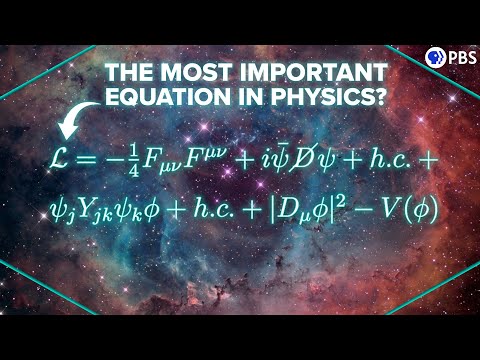
The Equation That Explains (Nearly) Everything!
PBS Space Time
2 HN recommender · 2022–2024
 8 mo on HN
Once you understand game theory, you understand the world.
Veritasium
10 HN recommender · 2023–2026
 5 mo on HN
But why would light "slow down"? | Visualizing Feynman's lecture on the refractive index
3Blue1Brown
5 HN recommender · 2023–2026
 2 mo on HN
Strange Spheres in Higher Dimensions - Numberphile
Numberphile
2 HN recommender · 2020–2025
 15 mo on HN
The Quantum Conspiracy: What Popularizers of QM Don't Want You to Know
Google TechTalks
11 HN recommender · 2012–2025
 9 mo on HN
Quantum Entanglement & Spooky Action at a Distance
Veritasium
9 HN recommender · 2015–2022
 6 mo on HN
Quantum Fields: The Real Building Blocks of the Universe - with David Tong
The Royal Institution
5 HN recommender · 2019–2025
 6 mo on HN
The Physics and Philosophy of Time - with Carlo Rovelli
The Royal Institution
5 HN recommender · 2018–2022
5 comments from Hacker News
I'm definitely into the "it's an emergent phenomena" camp. I think it's inherently relational, as that's a more efficient way to encode geometry rather than space itself being a quantized "thing". Afaik this theory is the "leading"/imho most promising theory of "quantum gravity", that being the "gravity = entanglement" conjecture and the related ideas of "Complexity= action/volume/whatever" that susskind and many others have been developing for the past 20 so years. All that said I'm nowhere near a physicist and am probably just spewing a total misunderstanding of the situation from my armchair. That said, I've been incessantly watching lectures in this space to try to beat an understanding into my dumb dumb brain because it's super, super fucking cool. - link - link - ▶ this video - link - link I'm also fascinated by the idea of phase transitions, which seems to be how the laws of physics have "evolved" so far. It's crazy how much quantum computation is coming into play with this stuff, ex last year's Nobel prize with the bell inequality. That said I'm sure being a programmer I'm biased to think the universe is inherently computation/math.
How about another lecture by Leonard Susskind? I'm just repeating his ideas! The gist of it is that the connectivity of space is related to the patterns of entanglement between particles in the quantum foam. If you were to break that entanglement, you could disconnect two regions of space. ▶ this video
I found these lectures by Leonard Susskind very insightful: - Leonard Susskind on The World As Hologram ( link ) - Leonard Susskind | "ER = EPR" or "What's Behind the Horizons of Black Holes?" ( link ) - Entanglement and Complexity: Gravity and Quantum Mechanics ( ▶ this video )
Mr.Susskind has a Stanford lecture on this topic detailing the physics in his own unique & awesome way ▶ this video
A black hole is a fast scrambler and very quickly comes to thermal equilibrium (max entropy). However, the complexity continues to increase long after thermal equilibrium, and that's what is thought to be analogous to the length of the wormhole growing (at the speed of light, no less). [0]: ▶ this video