Stanford Seminar - Concatenative Programming: From Ivory to Metal
Stanford Online2 HN recommenders · recommended in 3 months, 2020–2022
talk · intermediate · evergreen · 2020–2022 on HN
Jon Purdy's Stanford EE380 seminar giving an overview of concatenative programming, from function composition theory and history down to low-level implementation and correctness benefits.
HN recommends it as the best talk on concatenative languages and their mathematical properties.
Up next
 8 mo on HN
Václav Smil at Driva Climate Investment Meeting 2019
Nysnø Klimainvesteringer
3 HN recommender · 2019–2024
 11 mo on HN
Treating the Farm as an Ecosystem with Gabe Brown Part 1, The 5 Tenets of Soil Health
Living Web Farms
12 HN recommender · 2019–2025
 3 mo on HN
Should Google Go Nuclear? Clean, cheap, nuclear power (no, really)
GoogleTalksArchive
2 HN recommender · 2012–2019
 1 mo on HN
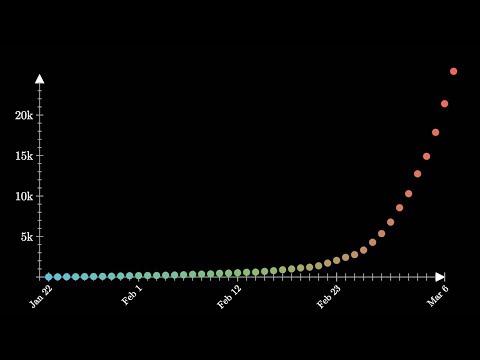
Exponential growth and epidemics
3Blue1Brown
10 HN recommender · 2020–2020
 7 mo on HN
The Future of Mathematics?
Microsoft Research
9 HN recommender · 2019–2025
 1 mo on HN
That scene from War Games
Greg Granito
1 HN recommend · 2010–2025
 1 mo on HN
NYC Tech Talk Series: How Google Backs Up the Internet
Google TechTalks
1 HN recommend · 2014–2021
 4 mo on HN
[4k, 60 fps] San Francisco, a Trip down Market Street, April 14, 1906
Denis Shiryaev
3 HN recommender · 2020–2023
 16 mo on HN
How Python was Shaped by leaky Internals, Armin Ronacher, Flask framework
Видео с мероприятий {speach!
15 HN recommender · 2017–2025
 12 mo on HN
Why Isn't Functional Programming the Norm? – Richard Feldman
Metosin
12 HN recommender · 2019–2025
 11 mo on HN
Maybe Not - Rich Hickey
ClojureTV
14 HN recommender · 2018–2025
 10 mo on HN
Conway's Game Of Life in APL
Dyalog
11 HN recommender · 2010–2024
4 comments from Hacker News
I didn't see it linked from the article, Jon Purdy has a great talk about this too: "Concatenative Programming: From Ivory to Metal" (2017) ▶ this video There's also "A Conversation with Manfred von Thun" link which is worth reading (IMO) if you're interested in concatenative languages. He's the creator of Joy. I've been working with Joy over the last few years now and I really think there's something there. It seems to combine the best features of both Forth and Lisp.
Hear, hear! Wise words from the genius who created Turing Drawings. It's becoming more and more important to treat complexity as a kind of technical debt that has the potential at any moment to metastasize into eldritch horror. I've been playing with what you could call a minimalist programming language: Joy created by Manfred von Thun (who was a philosophy professor! See "A Conversation with Manfred von Thun" link ) It combines features of Lisp and Forth, and I suspect it may be the simplest useful language. The syntax is enormously simple, and the semantics are likewise simple. It's easy to reason about functions and derive them in a mathematical way using simple algebra, so it's hard to introduce bugs. I recently found a very good 2017 talk by Jon Purdy describing concatinative programming and it's quirks and (potential) advantages: Stanford Seminar - "Concatenative Programming: From Ivory to Metal" ▶ this video Anyway, it's made me "allergic" to complexity. I tried Rust. Wrote the beginning of a Joy interpreter. I paused for a month and came back to it and it had become Greek to me, and I can't read Greek. :( Now part of that is just I 'm getting old, but a lot of it is the complexity of Rust. I don't want to pick on Rust though, complexity itself is the enemy (Rust is, if anything, an improvement on most of what has come before it, eh? I think only Ada can really be said to be Rust's peer?)
I don't know if it's Baader-Meinhof or what, but I'm seeing concatenative languages all over the place now. Which is great, because now I'm planning to write my own! My gut says that a concatenative language could be ideal for competitive programming, where you want to quickly apply various transformations to your input and immediately see the result. Here's a talk I watched recently describing some of the neat mathematical properties of concatenative languages: ▶ this video
It comes from Linear Logic, where there's no inference A&B->A. I think the point of the name is "there's always progress". This talk explains some other origins as well as the connections between different logics to different type systems (though the focus is on stack languages) ▶ this video