21. Chaos and Reductionism
Stanford1 HN recommender · recommended in 1 month, 2017–2024
lecture · intermediate · evergreen · 2017–2024 on HN
Robert Sapolsky's Stanford lecture on chaos and reductionism, which he calls one of the hardest of the course. It examines the limits of breaking systems into parts to understand them and introduces chaotic systems.
Pointed to as a clear statement of irreducible complexity, the limits of reductionism, and why simple neuron-level explanations fall short.
Up next
 4 mo on HN
Do Your Buses Get Stuck in Traffic? (The Downs-Thomson Paradox)
Not Just Bikes
4 HN recommender · 2021–2023
 2 mo on HN
Jaron Lanier – Who is Civilization for? (+ Q&A with Ulrich Kelber) Willy Brandt Lecture 2018
Bundeskanzler-Willy-Brandt-Stiftung
2 HN recommender · 2021–2024
 16 mo on HN
How to Speak
MIT OpenCourseWare
17 HN recommender · 2020–2025
 15 mo on HN
1. Introduction to Human Behavioral Biology
Stanford
15 HN recommender · 2012–2026
 14 mo on HN
LEADERSHIP LAB: The Craft of Writing Effectively
UChicago Social Sciences
15 HN recommender · 2019–2026
 13 mo on HN
MIT's Pathway to Fusion Energy (IAP 2017) - Zach Hartwig
MIT Plasma Science and Fusion Center
16 HN recommender · 2017–2023
 12 mo on HN
Stanford's Sapolsky On Depression in U.S. (Full Lecture)
Stanford
14 HN recommender · 2009–2026
 12 mo on HN
Justice: What's The Right Thing To Do? Episode 01 "THE MORAL SIDE OF MURDER"
Harvard University
11 HN recommender · 2013–2025
 12 mo on HN
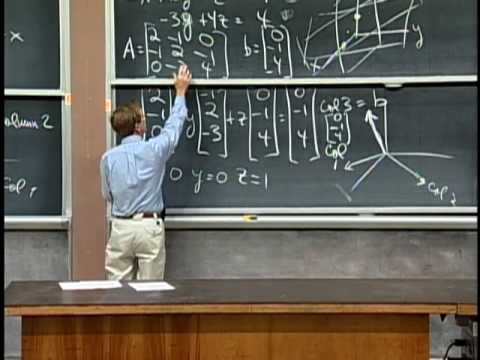
Lec 1 | MIT 18.06 Linear Algebra, Spring 2005
MIT OpenCourseWare
11 HN recommender · 2011–2020
 12 mo on HN
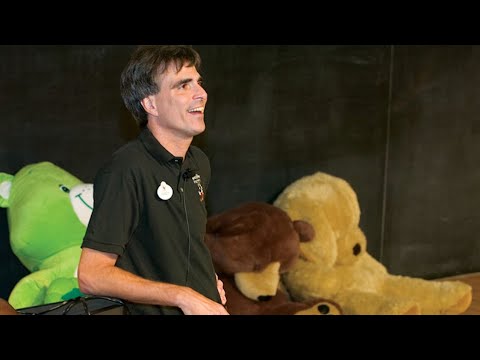
Randy Pausch's Last Lecture: Achieving Your Childhood Dreams
Carnegie Mellon University
12 HN recommender · 2008–2023
 10 mo on HN
Lecture 1A: Overview and Introduction to Lisp
MIT OpenCourseWare
10 HN recommender · 2019–2026
 9 mo on HN
Lecture 1A | MIT 6.001 Structure and Interpretation, 1986
MIT OpenCourseWare
11 HN recommender · 2012–2024
5 comments from Hacker News
I think its a good start to learn about chaotic systems instead. For most systems, minute parameter changes can have dramatic effects on the predictability of the system ▶ this video
Nit: It goes a bit deeper than that. Note this talk by another Pop Sci personality Robert Sapolsky, where he talks about the limitations of western reductionism. ▶ this video Yet his latest book on free will exclusively depended on an reductionist viewpoint. While I don't know his motivations for those changes, the fact that the paper he mentioned was so extremely unpopular that I was only one of a handful that read it surely provided some incentive: > "REDUCTIONISM AND VARIABILITY IN DATA: A META-ANALYSIS ROBERT SAPOLSKY and STEVEN BALT" Or you can go back to math and look at the Brouwer–Hilbert controversy, which was purely about if we should, universally, accept PEM a priori, which Church, Post, Gödel, and others proved wasn't a safe in many problems. Luckily ZFC helped with some of that, but Hilbert won that war of of words. Where even suggesting a constructivist approach produces so much cognitive dissonance that it is often branded as heresy. Fortunately with the Curry–Howard–Lambek correspondence you can shift to types or categories with someone who understands them to avoid that land mine, but even on here people get frustrated when people say something is 'undecidable' and then go silent. It is not that labeling it as 'undecidable' wins an argument, but that it is so painful to move on because from Plato onward PEM was part of the trinity of thought that is sacrosanct. To be clear, I am not a strict constructivist, but view this as horses for courses, with the reductionis
This is simply impossible. The premise that the brain is a big lookup table is appealing, and that sort of 1 neuron = 1 represented item concept certainly happens at the initial stages of the sensory pipeline, but if you attempt to scale it up and up to higher levels of abstraction, to the point where you have neurons that have rote memorized every orientation of your grandmothers face (and everyone else's face), you would need to have far more neurons than can possibly fit in any animals head, let alone yours. This concept is literally known as a "grandmother neuron", and its widely considered to be debunked. I refer you to this neuroscience lecture. ▶ this video Beyond the simplest, most common tasks where it pays to have a rote lookup table, you truly do need an algorithm.
Actually the opposite. The story of a single neuron on/off state for everything we experience is just that, a story. If you tried to build a skull large enough to hold all that, it would burst. The reality is that paradigm of hardwired neurons works well for the initial layers of processing (Eg recognizing lines and circles in visual stimuli), but that same model can't be repeated all the way up to the point of having a "grandmother neuron" for recognizing Grandmas face. There's just too many possible states of grandmas. There has been some evidence (like this study) that maybe sometimes there are "sparsely coding neurons" (Eg, some monkeys apparently have a brain cell that reliably responds to seeing Jenifer Aniston and nothing else). But such sparse coding (if it exists) is the exception not the rule. ▶ this video
Maybe, but assuming Shermer has correctly conveyed the contents of this part of the book, Sapolsky's got a lot of nerve asserting so confidently in this book that there is such a definitively deterministic core to humans behavior at the macro level while acknowledging irreducible complexity irrespective of scale as he did so clearly in one of his Stanford lectures: ▶ this video . I really like the guy as an educator, and I'm sure he's earned his scientific chops, but that doesn't qualify him to be even an amateur ethicist.