Hamming, "You and Your Research" (June 6, 1995)
securitylectures11 HN recommenders · recommended in 10 months, 2012–2023
lecture · general · evergreen · 2012–2023 on HN
Richard Hamming's 1995 recording of his talk 'You and Your Research', drawn from his graduate engineering course. He discusses how great scientists pick important problems and build careers, drawing on his years at Bell Labs.
HN recommends it as career and research advice on choosing important problems and doing first-class work.
Up next
 2 mo on HN
The Great 202 Jailbreak - Computerphile
Computerphile
2 HN recommender · 2015–2024
 3 mo on HN
Colossus - The Greatest Secret in the History of Computing
The Centre for Computing History
3 HN recommender · 2022–2024
 3 mo on HN
Look Around You: Season 1 Pilot - Calcium
DocShadow660
3 HN recommender · 2016–2024
 4 mo on HN
Characters, Symbols and the Unicode Miracle - Computerphile
Computerphile
4 HN recommender · 2014–2025
 13 mo on HN
MIT's Pathway to Fusion Energy (IAP 2017) - Zach Hartwig
MIT Plasma Science and Fusion Center
16 HN recommender · 2017–2023
 7 mo on HN
'Diablo': A Classic Game Postmortem
GDC Festival of Gaming
8 HN recommender · 2018–2023
 3 mo on HN
China is erasing its border with Hong Kong
Vox
4 HN recommender · 2018–2019
 2 mo on HN
Software Engineering's Greatest Hits
Greg Wilson
2 HN recommender · 2021–2022
 16 mo on HN
How to Speak
MIT OpenCourseWare
17 HN recommender · 2020–2025
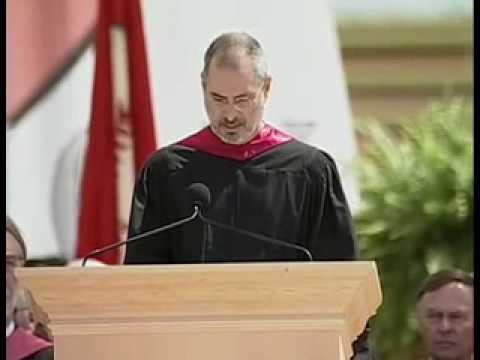 11 mo on HN
Steve Jobs Stanford Commencement Speech 2005
JoshuaG
13 HN recommender · 2007–2015
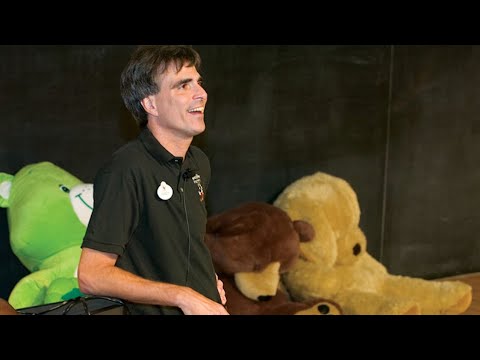 12 mo on HN
Randy Pausch's Last Lecture: Achieving Your Childhood Dreams
Carnegie Mellon University
12 HN recommender · 2008–2023
 10 mo on HN
Controlling Your Dopamine For Motivation, Focus & Satisfaction
Andrew Huberman
12 HN recommender · 2021–2024
12 comments from Hacker News
Richard Hamming: You and Your Research It's on picking the right problems. When I heard him give it I was shocked that he criticized Einstein for working on a unified field theory (of course unlike me, he was actually qualified to offer such criticism). His point for that example was that the necessary tools to attack the problem hadn't yet been developed so it was a fruitless endeavor. While many very important problems are tractable. ▶ this video He gave this talk several times (I heard it at NASA in 84). Here's a good transcript: link
Richard Hamming developed error-correcting codes while working along side Shannon at bell labs, his book The Art and Science of Engineering: Learning to Learn and the associated lectures he gave at the naval postgraduate academy are tremendous ▶ this video
It's been posted here before, but Hamming's talk "You and Your Research" is one for the ages. ▶ this video Hamming passed in 1998, this talk was given about three years earlier. So much sage advice as compiled over a very long and fruitful career.
Maybe a nitpick, but Aaron Swartz was probably quoting Richard Hamming: And I started asking, "What are the important problems of your field?" And after a week or so, "What important problems are you working on?" And after some more time I came in one day and said, "If what you are doing is not important, and if you don't think it is going to lead to something important, why are you at Bell Labs working on it?" ... If you do not work on an important problem, it's unlikely you'll do important work. It is the main idea behind his lecture/essay "You and your Research", which is worth reading: link or watching: ▶ this video
Fantastic recommendation! Hamming's writing is so clear and inspiring. Not a book but his speech "You and your research" is quite good: ▶ this video
Don Eyles' writing about programming the lunar module (which was something he did!) is fantastic [1]. There's also a gallery of photos on that site and he has a whole book! And, click around on Bret Victor's references page[2] -- it's a real treasure. Despite my constant fear that mentioning it will make it go away, it needs to be shared to be useful. It's a big collection of classic papers and interviews. Someone mentioned "As You May Think", which is on there, as is Bush's follow-up from ~20 years later, and Douglas Engelbart's own partly annotated version of the original! Also check out folklore[3], which is a great bunch of stories about working at Apple in its early days, by people who worked there (mostly Andy Hertzfeld, I'm pretty sure). Lastly, look up "Ignition!" by John Drury Clark[4], which is a tangent, but is amazing -- it's about the history of the design of rocket engines, largely about the wild experiments and chemical science involved, and is very well written. I didn't feel right finding a pdf to link straight to, but they aren't that hard to find. As a bonus, this isn't so much historical, but it's a great inspirational essay, Richard Hamming's "You and Your Research"(transcript[5], a video version[6]). Talks about working at Bell Labs and the different cultural elements there across people as part of analysing what makes certain people truly great. 1 - link 2 - link 3 - link 4 - link 5 - link 6 - ▶ this video
In his "You and Your Research" talk, Hamming focusses on the selection of the problem you should work on as a researcher. I believe it does apply even if you are not in academics : ▶ this video (transcript : link )
> I am eager to learn something new... Learning is a life-long process. As it relates to the industry, consider these questions. 1) What are the most important problems in your field? 2) Are you working on ONE of them? 3) Why not? On this subject, Richard Hamming offers excellent advice > ▶ this video
Complete luck. Timing to start out in the right industry, followed by vigorous effort, learning, and experimentation. I also built many relationships early on in my career that I've mostly kept alive throughout the last decades. I've changed careers twice when the old skills/industry lowered the value of those skills. Keep learning - read Richard Hamming's _You and Your Research_ [1]. Keep friends and work hard. [1] ▶ this video
Single best is difficult, here are some favourites of mine: "You and your research" by Richard Hamming: ▶ this video "How to design a good API and why it matters" by Joschua Bloch: link Google TechTalk on Git by Linus Torvalds: link All talks ever given by Alan Kay, for example: link
▶ this video > Intro: I have given a talk with this title many times, and it turns out from discussions after the talk I could have just as well have called it "You and Your Engineering Career," or even "You and Your Career." But I left the word "Research" in the title because that is what I have most studied"
Here's a recording from '95 entitled the same: ▶ this video I also highly recommend reading the Stripe Press book also with the same name: link