Neural Networks Demystified [Part 1: Data and Architecture]
Welch Labs3 HN recommenders · recommended in 3 months, 2015–2018
tutorial · intro · evergreen · 2015–2018 on HN
The first of a short series by Welch Labs on building a complete neural network in Python. It introduces the data and the architecture of a simple network before later parts cover forward propagation, gradient descent, and backpropagation.
HN commenters point beginners to this series as one of the clearest short walkthroughs of how neural networks and backpropagation work.
Up next
 5 mo on HN
Hello World - Machine Learning Recipes #1
Google for Developers
6 HN recommender · 2016–2017
 1 mo on HN
Anton: A Special-Purpose Machine That Achieves a Hundred-Fold Speedup in Biomolecular Simulations
NC State
1 HN recommend · 2014–2025
 4 mo on HN
Netflix JavaScript Talks - Async JavaScript with Reactive Extensions
Matt Marenghi
5 HN recommender · 2014–2016
 16 mo on HN
The spelled-out intro to neural networks and backpropagation: building micrograd
Andrej Karpathy
17 HN recommender · 2022–2025
 14 mo on HN
But what is a neural network? | Deep learning chapter 1
3Blue1Brown
16 HN recommender · 2017–2025
 10 mo on HN
AlphaGo - The Movie | Full award-winning documentary
Google DeepMind
10 HN recommender · 2020–2025
 10 mo on HN
Transformers, the tech behind LLMs | Deep Learning Chapter 5
3Blue1Brown
13 HN recommender · 2024–2026
 10 mo on HN
USENIX Security '18-Q: Why Do Keynote Speakers Keep Suggesting That Improving Security Is Possible?
USENIX
10 HN recommender · 2018–2026
 11 mo on HN
Lecture 1 | Machine Learning (Stanford)
Stanford
11 HN recommender · 2008–2020
 10 mo on HN
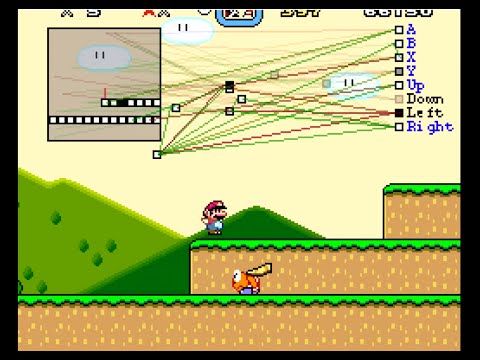
MarI/O - Machine Learning for Video Games
SethBling
10 HN recommender · 2015–2026
 8 mo on HN
Deep Dive into LLMs like ChatGPT
Andrej Karpathy
10 HN recommender · 2025–2026
 10 mo on HN
Computer program that learns to play classic NES games
suckerpinch
9 HN recommender · 2015–2025
4 comments from Hacker News
The gist of this is really the Backpropagation algorithm [1]. It appears as though everything else is a means to detect when to stop. One of the clearest walkthroughs I've seen online is a short series of very short videos by Stephen C Welch [2] [3]. If you're interested in this space, start with him. [1]: link [2]: ▶ this video [3]: link
Hello, my background is just like yours. Assuming you are a total noob I learned that AI is not like programming, where anyone with basic knowledge of computation can dive in. You can NOT just learn AI by reading other people's code. Its like Physics, there are solid principles you need to understand before you get in. The point: AI does not come with the "batteries included". If you are in deed a noob you MUST learn the prerequisites. Follow these steps in order and I guarantee you will be competent with AI in six months tops.(from my past experience) - 1. Know what AI actually is ▶ this video - 2. Write basic Machine Learning code link - 3. Understand the Mathmatics involved link - 4. Get some important concepts, link - 5. Finnish off. link
I also recommend Welch Labs’ Neural Network Demystified-series[0]. It is a combination of the Coursera course and the YouTube videos. It get’s into some of the math, while still keeping it basic. [0]: ▶ this video
Good post. I want to add several great resources. - Grokking Deep Learning link This is a fantastic book that assumes no prerequisites other than knowing python, and takes you through the fundamentals of DL. It has very intuitive and easy to follow explanations, and doesn't use any libraries other than NumPy, so you're building the whole thing yourself, from scratch. - Deep Learning With Python link This is kind of the opposite of the previous one, it doesn't go into math and theory, instead it guides you through building several practical projects with a very simple to use DL library(keras). It's a great way to gain practical experience in addition to theory from the previous book. Also has no prerequisites other than python, and makes it very easy to get started. - 3blue1brown videos on neural networks: link Extremely brilliant high-level concise overview of how ANNs work. I highly recommend you get started here. You should also check out his videos on calulus and linear algebra, they're fantastic way to learn the math you need. - Khan Academy videos - one of the easiest ways to learn the math prerequisites. Calculus: link Linear Algebra: link Probability and Statistics: link - Hands-On Machine Learning with Scikit-Learn and TensorFlow link I haven't read this one yet, but it looks very promising, and a lot of people seem to find it very useful. - Andrew Ng's Coursera course link Everyone knows about this one, I just think every article on AI resources shoul