Dutch Cities are Better for the Environment (and my sanity)
Not Just Bikes1 HN recommender · recommended in 1 month, 2022–2023
explainer · general · evergreen · 2022–2023 on HN
Not Just Bikes explains why living in a dense, bikeable Dutch city sharply reduced his family's environmental footprint and improved quality of life. It is a collaboration that continues on Climate Town.
HN cites it in threads on sprawl, density, and climate, especially for the point that everything is a short bike ride from downtown Amsterdam.
Up next
 4 mo on HN
How The Auto Industry Carjacked The American Dream | Climate Town
Climate Town
3 HN recommender · 2021–2025
 5 mo on HN
Parking Laws Are Strangling America | Climate Town
Climate Town
6 HN recommender · 2023–2025
 3 mo on HN
The Suburbs Are Bleeding America Dry | Climate Town (feat. @NotJustBikes)
Climate Town
2 HN recommender · 2022–2025
 12 mo on HN
How Self-Driving Cars will Destroy Cities (and what to do about it)
Not Just Bikes
17 HN recommender · 2024–2026
 11 mo on HN
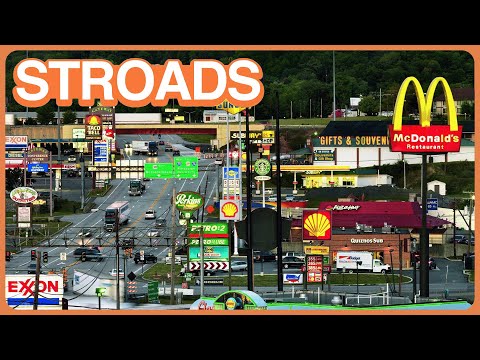
Stroads are Ugly, Expensive, and Dangerous (and they're everywhere) [ST05]
Not Just Bikes
12 HN recommender · 2021–2025
 10 mo on HN
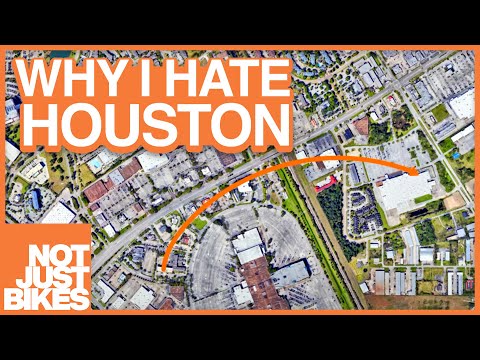
Why This Channel Exists (and why I hate Houston)
Not Just Bikes
11 HN recommender · 2021–2025
 10 mo on HN
Why American Cities Are Broke - The Growth Ponzi Scheme [ST03]
Not Just Bikes
14 HN recommender · 2021–2024
 9 mo on HN
The Wrong Way to Set Speed Limits [ST06]
Not Just Bikes
9 HN recommender · 2021–2025
 9 mo on HN
Cities Aren't Loud: Cars Are Loud
Not Just Bikes
10 HN recommender · 2021–2025
 10 mo on HN
Why Canadians Can't Bike in the Winter (but Finnish people can)
Not Just Bikes
10 HN recommender · 2021–2026
 9 mo on HN
How the Dutch got their cycle paths
BicycleDutch
9 HN recommender · 2013–2022
 9 mo on HN
Why Japan Looks the Way it Does: Zoning
Life Where I'm From
8 HN recommender · 2021–2026
12 comments from Hacker News
There are quite a few factors, I'd encourage checking out the following videos by Not Just Bikes and Climate Towns that cover a broad range of city planning and zoning in the US. Strong Towns Play List by Not Just Bikes (This heavily covers city planning issues in the US): link The Suburbs Are Bleeding America Dry by Climate Towns (This covers zoning): link How The Auto Industry Carjacked The American Dream (This covers the auto industries impact on US cities.): link Dutch Cities are Better for the Climate (and my sanity) by Not Just Bikes (Not super relevant to zoning, but it's part 1 of The Suburbs Are Bleeding America Dry so I figured I'd link it.): ▶ this video These are pretty snarky, but fun videos and the authors list their sources. Their video descriptions are worth checking out just to find a ton of reading material on each topic.
> Public. Transit. Non-car centric development. The Oh the Urbanity channel has a video on the (misguided) idea that "urban living" = Manhattan / Hong Kong apartment blocks : * link Want a front yard, back yard, and garage (attached to a laneway)? Plenty of that was built pre-WW2: * link * link Examples (Streetview): * link * link * link See also: * ▶ this video Fifteen minutes pedalling in one direction is downtown, fifteen minutes in the other is farm land.
> Convince people to live in smaller houses and share walls with their neighbors, and the parking situation would change dramatically. Completely unnecessary. Want a front yard, back yard, and garage (attached to a laneway)? Plenty of that was build pre-WW2: * link * link The Oh the Urbanity channel has a video on the (mistaken) idea that "urban living" = Manhattan / Hong Kong apartment blocks : * link Examples (Streetview): * link * link * link * link See also: * ▶ this video Fifteen minutes pedalling in one direction is downtown, fifteen minutes in the other is farm land.
> But there's a flip side to this coin. This isn't necessarily a desired "way of life", it's what naturally evolved due to severe space constraints. There is nothing 'natural' about the evolution of NL cities as demonstrated by the fact that (e.g.) Amsterdam started to go down the car-centric route: * link It was a policy choice to not go in that direction—or rather to stop and turn away—as opposed to some kind of physical law of the universe. Not Just Bikes uses Rotterdam as an example of how even in NL† policy can go in other directions: * link My dad used to work at the post office facility in this area: * link In the early 1990s there used to be strawberries fields across the street, and now the entire area is filled with generic suburb strip malls. Perhaps agriculture would have gone away eventually, but there's no reason why it had car-centric, low-density development that replaced it. How close is agriculture to some NL cities? * ▶ this video > Suburbia can be denser but than it must be cheap. Dense expensive suburbia is the worst of all worlds. No: low-density expensive suburbia is the worst of all worlds because it necessitates cars, which has leads to all sorts of externality costs. The total OpEx is also much more expensive with low densities: * link And just because you have sprawl doesn't mean you have cheap housing: * link See LA and even the Greater Toronto area (GTA) as examples: * link † I use "NL" in the international ccTLD sense, and not in my Canadi
> Improved density is worse for people and the environment. The higher the density the less actual Nature needs to be bulldozed over for development. See: * ▶ this video Fifteen minutes pedalling in one direction is downtown, fifteen minutes in the other is farm land. By have more people in a given land area, the remaining land area can be left alone.
Want a front yard, back yard, and garage (attached to a laneway)? Plenty of that was build pre-WW2 in ways that didn't depend on cars: * link * link The Oh the Urbanity channel has a video on the (mistaken) idea that "urban living" = Manhattan / Hong Kong apartment blocks , which is certainly not the case: * link Examples (Streetview): * link * link * link See also: * ▶ this video Fifteen minutes pedalling in one direction is downtown, fifteen minutes in the other is farm land.
> Humans shouldn't be living in shoeboxes stacked 40 floors high. You have a limited view of 'urban living'. Want a front yard, back yard, and garage (attached to a laneway)? Plenty of that was built pre-WW2, and there's no reason why it couldn't be again: * link * link The Oh the Urbanity channel has a video on the (misguided) idea that "urban living" = Manhattan / Hong Kong apartment blocks : * link Examples (Streetview) of urban tree-lined streets which can support transit and where cycling is practical (and where a car is an option versus a necessity): * link * link * link See also: * ▶ this video Fifteen minutes pedalling in one direction is downtown, fifteen minutes in the other is farm land.
> You live in an apartment and trade away personal space and still have to take a train to work where you get little personal space. You have a limited view of 'urban living'. Want a front yard, back yard, and garage (attached to a laneway)? Plenty of that was built pre-WW2, and there's no reason why it couldn't be again: * link * link The Oh the Urbanity channel has a video on the (misguided) idea that "urban living" = Manhattan / Hong Kong apartment blocks : * link Examples (Streetview) of urban tree-lined streets which can support transit and where cycling is practical (and where a car is an option versus a necessity): * link * link * link See also: * ▶ this video Fifteen minutes pedalling in one direction is downtown, fifteen minutes in the other is farm land.
I find this to be a bewildering opinion. I get that people are wired different, but I am surprised that you aren't capable of envisioning a situation where a huge percent of the world chooses to live in a city. > The city is obsolete in the era of WFH The first thing I did after negotiating WFH is to move to a dense neighborhood of NYC (soon). > Demand for nicer living conditions I am. I want to walk down to local markets & restaurants. I want to go anywhere in the city without exposing myself to the main cause of youth death (cars). When I am travel to another part of town, I'd rather absentmindedly read a book, than be stuck paying attention in bumper2bumper traffic. I want 100s of activities, cuisines & communities to be at my disposal when I want to access them. I don't want to have to ferry my future children around everywhere. I would much prefer a big bustling park with trees like Boston Common or Central Park, than a lousy unsustainable private mound of grass. I love fresh air & low noise pollution. I wonder what's causing them. Can't be the folks in cars commuting from their beautiful suburbs can it ? [1] [2] [3] Why do people think that cities have to concrete jungles with no social life & huge amounts of crime. Cities (esp. NYC) are safer than almost everywhere in the US. Having friends & tons of activities nearby encourages social behavior and having parks be in shared spaces means that they continue to be well funded and environmentally sustainable means you can
> Isn't it possible that people who live in beautiful neighborhoods with mature trees, nice big yards, and low traffic streets that are safe for kids to play around Basically how things were built pre-WW2? * link * link The Oh the Urbanity channel has a video on the (misguided) idea that "urban living" = Manhattan / Hong Kong apartment blocks : * link Examples (Streetview): * link * link * link See also: * ▶ this video Fifteen minutes pedalling in one direction is downtown Amsterdam, fifteen minutes in the other is farm land.
> Problem is that when you don't have a lot of space overall, cities start to sprawl and before you know it, the end of one city joins the beginning of another. Valuable open space and rural space is lost and often the housing it is replaced with is nothing near the same habitat for wildlife even if the gardens are big. A video of what's available via a fifteen minute bicycle ride from Amsterdam: * link See also: * ▶ this video
> I have no interest in living in shoeboxes. No need. See the concept of "streetcar suburbs" and how things used to be built pre-WW2: * link * link * link * link High(er) density does not mean Manhattan and Hong Kong levels of density. 50-100 people per hectare (Hamburg, Paris, Stockholm, London, Brussels) is not crazy high: * link A video of what's available via a fifteen minute bicycle ride from Amsterdam: * link See also: * ▶ this video Fifteen minutes pedalling in one direction is downtown, fifteen minutes in the other is farm land. > Nope. Some just think quality of life isn’t about accounting and ROI. Do enjoy your shoebox though. * link * link IMHO you have a myopic view of what "urban" means. Further, what will your quality of life be like if your municipality/county goes bankrupt: * link * link Or if taxes need to be raised over and over to keep things in a state of good repair and other services suffer. A growing portion of your income could end up going to taxes with less left over to discretionary spending because the place you're living in made bad financial decisions.