Balaji Srinivasan at Startup School 2013
Y Combinator1 HN recommender · recommended in 1 month, 2013–2020
talk · general · 2013–2020 on HN
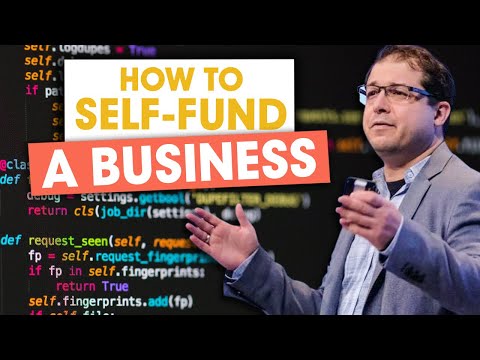
Balaji Srinivasan's Startup School 2013 talk on Silicon Valley's Ultimate Exit, arguing for building alternatives outside existing institutions. It is the primary source for a much-retold and much-distorted idea.
HN commenters link it as the original talk so people can judge it directly instead of through press retellings.
Up next
 11 mo on HN
Designing the Ideal Bootstrapped Business with Jason Cohen
Rob Walling
13 HN recommender · 2020–2024
 8 mo on HN
Shenzhen: The Silicon Valley of Hardware (Full Documentary) | Future Cities | WIRED
WIRED Investigations
8 HN recommender · 2016–2022
 9 mo on HN
Mike Monteiro: F*ck You, Pay Me
CreativeMornings HQ
12 HN recommender · 2015–2026
 8 mo on HN
David Heinemeier Hansson at Startup School 08
startupschool
8 HN recommender · 2010–2023
 7 mo on HN
Keynote: Paul Graham, YCombinator
Next Day Video
7 HN recommender · 2012–2023
 6 mo on HN
BOLTR: Juicero, Cold Press Juicer for Rich Weirdos
AvE
6 HN recommender · 2017–2026
 6 mo on HN
Darius Kazemi, Tiny Subversions - XOXO Festival (2014)
XOXO Festival
7 HN recommender · 2015–2024
 7 mo on HN
How to Invent the Future I - Stanford CS183F: Startup School
Stanford Online
3 HN recommender · 2018–2024
 6 mo on HN
The Patent Scam Intro
Austin Meyer
6 HN recommender · 2016–2022
 5 mo on HN
Competition is for Losers with Peter Thiel (How to Start a Startup 2014: 5)
Y Combinator
5 HN recommender · 2017–2025
 5 mo on HN
Pulling Power from the Sky: The Story of Makani [Feature Film]
X, The Moonshot Factory
6 HN recommender · 2020–2025
 6 mo on HN
How to Invent the Future II - Stanford CS183F: Startup School
Stanford Online
3 HN recommender · 2017–2024
12 comments from Hacker News
There are companies like teleport link that try to visualise this potential with data. Also recommend this YCombinator startup school talk by Balaji Srinivasan on this topic: Silicon Valleys Ultimate Exit ▶ this video
How does this post address network effects in the age of aggregation? Who has sufficient incentive to tie all those disparate blogs and newsletters together? Balaji likes to talk about exit plans. See this speech at YC startup school: ▶ this video In general, they strike me as deeply unrealistic.
Appreciate your analysis defgeneric, though we probably don't see eye to eye. In my view what you're calling Thiel's anti-political phrases are important. I know you see them as the spread of virus-capitalism, but I think without that kind of frontier building the world would be a much more boring place. I take it you're familiar with Patri Friedman's thesis. What did you think then of Balaji Srinivasan's Exit Ycombinator talk? ▶ this video I know presently the anti-Trumpists are getting a lot of airtime with their talk of secession, but to be honest there is something much deeper beyond the current election fallout which is worth looking at. From a right perspective I have been wondering for a long time whether Silicon Valley's interests are ultimately orthogonal to Washington but appear to be similar in the present because they're competing for the same thing. This is a strand of Rene Girard's philosophy, which Thiel is a big fan of (he knew Rene at Stanford I think), many of his ideas revolve around ideas of mimesis and scapegoating. Interestingly; he had a Girardian rationale for investing in Facebook. Never say reading philosophy doesn't pay off! I would love to have a photo of his library. John Strange is very wrong about Thiel's activities being random. I was asked to write essay on Medium which I called "Peter and the Wolfe", which was an attempt to explain the deeper undercurrents around some of his recent decisions. The main content of it was written before Trump got int
Sure. For clarification: by G-space I meant 'how to govern well' or 'how to solve problems about, with, or in governance'. This is obviously an enormous topic area. It is also a dangerous and highly contentious subject matter filled with many taboos, due to its nature and importance. That said political scholars, like economists, have come to many consensus realizations. This is kind of amazing since Hillary Clinton and Donald Trump are clones from a political science perspective, there exists a great diversity of thought. This means that there is not as much of a gap between somebody like Francis Fukuyama and Moldbug as is popularly imagined. If you have a sincere interest in outcomes you find unexpected allies. Here is a good start: Volume 1: The Origins of Political Order by Francis Fukuyama Volume 2: Political Order and Political Decay by Francis Fukuyama Seeing Like a State by James Scott Exit, Voice and Loyalty by Albert Hirschman The Problem of Political Authority by Michael Huemer The Collapse of Complex Societies by Joesph Tainter The majority of the time these authors are interested in outcomes, not in winning for whatever their home team is. Outside of academia Silicon Valley itself is having a serious discussion on this topic from our perspective: Balaji Srinivasan : ▶ this video Peter Thiel : link link Patri Friedman : link Larry Page : link Last but not least, the notorious Moldbug: Best explained by Scott Alexander : link If somebody is aware of an interes
>you can't really create a government around it You say that as if it's a bug and not a feature... In all seriousness, I'm not sure I understand your claim that it's an impossible form of society. I understand the argument that the US or other existing nation states aren't going to become libertarian societies, but I see no theoretical reason why the creation of such a society is impossible (particularly when sea and space colonies start opening up new frontiers). I think this Startup School presentation by Balaji Srinavasan is relevant: ▶ this video
> In that case, immigration is the only choice. That would be the "exit" from [0]. [0] - ▶ this video
Interesting that Balaji Srinivasan talked about this concept of Silicon Valley as the enemy at startup school last year. ▶ this video
> Silicon Valley ideologues are proposing secession I believe no one ever said this; it has been misreported by Gawker and others. If you're curious, the original talk is here with no mention of secession: ▶ this video
The talk "Silicon Valley's Ultimate Exit" that the article mentions was (also?) given at Startup School a few weeks ago: ▶ this video
Here's the original talk for anyone that prefers original content to the "journalist telephone" game ▶ this video
One of the speakers here. I found the online reaction to my talk pretty interesting as a case study in internet telephone. Here's the talk itself: ▶ this video First party viewers mostly seemed to like it: link CNET gave a second party writeup: link Then third party people started mischaracterizing it: link Finally, the Hill wrote a fourth party account, quoting these third party accounts, and that's what Washington DC saw: link Not everyone got it wrong; I think this account is closer: link But I encourage you to open up those tabs and go through them one by one to see a kind of pinball reflection of the tone of the talk. In microcosm it's an example of the emerging gap between Silicon Valley and DC, and gives a sense of how policy makers can inadvertently form their opinions from echoes of echoes. Doubly ironic and somewhat sad as we can use the internet to make direct connections between people these days. The good thing is that interested parties can see the primary source directly.
...and the website is not the worst part of the ACA ride we are now on. Part of me has been ignoring a lot of the chatter around the ACA as potential right wing fabricated drama. Too much noise and bilateral bullshit being thrown about these days. That was until a few days ago, when I would learn our insurance has both more than doubled in cost and is also scheduled for cancellation. Doubled and cancelled. All as a direct result of the ACA. Brilliant! To say this was shocking is an understatement. Our annual cost will go well past $15K. There's a tragedy of unintended consequences, side effects and direct effects, being played out in the background that hasn't completely come to the surface yet. We certainly can't be the last family to get news of this kind. That means in the coming months it is likely hundreds of thousands, if not millions, of additional individuals and families are going to receive these dreaded letters. Apparently hundreds of thousands already have. Last week was our turn. At one point this and other issues will be difficult to ignore. And they will dwarf the IT issues. The website, as much of a disaster as it is, is likely to pale in comparison to all of the other, non IT, issues. Some of what's happening is related to the incredible disconnect between Washington and technology. All you need to do is listen to some of these folks talk about the website issue to see how little they understand. I heard one senator say something akin to "they just have to re