Nuclear Propulsion in Space
US National Archives2 HN recommenders · recommended in 2 months, 2018–2020
documentary · general · 2018–2020 on HN
A 1968 NASA film from the US National Archives explaining why the US needed a nuclear rocket and how the engine works. It also shows combined nuclear and chemical stages for a manned Mars mission.
HN people link it as an old-timey explainer for nuclear thermal propulsion, and as evidence these engines were already built and tested.
Up next
 3 mo on HN
University of Texas at Austin 2014 Commencement Address - Admiral William H. McRaven
Texas Exes
3 HN recommender · 2017–2026
 13 mo on HN
The Century of the Self (Full Adam Curtis Documentary)
David Lessig
13 HN recommender · 2016–2026
 2 mo on HN
The Scientific Method-Richard Feynman
Sképseis
2 HN recommender · 2014–2023
 11 mo on HN
Light Years Ahead | The 1969 Apollo Guidance Computer
TNMoC
11 HN recommender · 2021–2026
 9 mo on HN
The Solar Gravitational Lens will Map Exoplanets. Seriously.
Launch Pad Astronomy
10 HN recommender · 2020–2025
 7 mo on HN
34C3 - The Ultimate Apollo Guidance Computer Talk
media.ccc.de
9 HN recommender · 2018–2025
 6 mo on HN
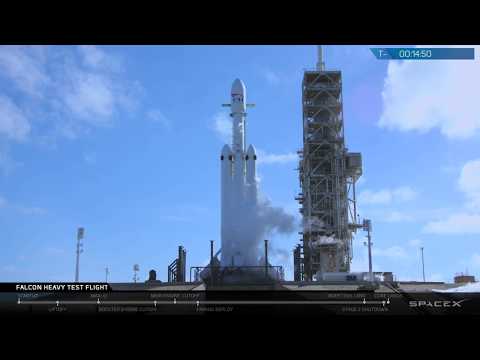
Falcon Heavy Test Flight
SpaceX
4 HN recommender · 2018–2026
 7 mo on HN
I Was SCARED To Say This To NASA... (But I said it anyway) - Smarter Every Day 293
SmarterEveryDay
9 HN recommender · 2023–2025
 8 mo on HN
Starbase Tour with Elon Musk [PART 1 // Summer 2021]
Everyday Astronaut
11 HN recommender · 2021–2024
 5 mo on HN
Carl Sagan - Pale Blue Dot
carlsagandotcom
5 HN recommender · 2011–2026
 6 mo on HN
Apollo Guidance Computer Part 1: Restoring the computer that put man on the Moon
CuriousMarc
8 HN recommender · 2019–2024
 5 mo on HN
Dr. Robert Zubrin with a brilliant answer to "Why Should We Go To Mars?"
Jamin Gray
3 HN recommender · 2016–2021
4 comments from Hacker News
This article didn't explain it at all, so you're right to ask. tl;dr: Gaseous propellant (I'm guessing hydrogen) is heated with fission then pointed in the opposite direction of intended travel. The uranium in this design is not a propellant, but a heat source. Aside: you can use photons/heat as a propellant, but it's thrust is very low link . Ideal propellants typically have a high exit velocity and low mass. That gives you the longest amount of "burn" time, and the greatest amount of control for the weight. link Back in the day when the US was building more of these nuclear rockets, the propellant of choice was typically hydrogen link . Old timey video explaining it ▶ this video . I'm assuming this proposed design would also use hydrogen, but I couldn't find any sources on the propellant for their design. Liquid hydrogen served to keep the reactor cool as it transitioned from liquid to gas as that phase change absorbs energy. The gas is the directed through the reactor core where the gas heats up. As gases heat up, they absorb energy, their average particle velocities increase. Eventually, the hydrogen molecules (mostly H2 or H-H gaseous hydrogen), makes it to the nozzle and is ejected. The high-velocity hydrogen is what actually provides the bulk of the thrust to the spacecraft. Compare this to Project Orion ( link ) which intended to detonate nuclear warheads and the craft essentially rode the shock wave into the stars. I would classify this method of propulsion, not s
aerospikes There’s a lot of reason why they haven’t been used yet, but I think most the compelling argument against them is that they won’t be used until fuel costs become the competitive factor in launch prices. link link Nuclear rockets are quite the concept but have their obvious limitations. This video is worth checking out if you haven’t seen it yet. ▶ this video
I don’t know if any real rockets were built, but according to this old video we’d see a reduction of weight due to the absence of heavy chemical fuel. ▶ this video
It's much more likely to look like NERVA than Orion. link These types of engines have already been run: ▶ this video