Stephen Krashen: Language Acquisition and Comprehensible Input
Tarek Hamza1 HN recommender · recommended in 1 month, 2020–2022
lecture · general · evergreen · 2020–2022 on HN
A lecture from the 1980s by linguist Stephen Krashen on how people acquire language. He explains his comprehensible input hypothesis for second-language acquisition.
HN language learners cite it as the source of the comprehensible input idea and apply it to vocabulary tools and other learning.
Up next
 7 mo on HN
What can Seattle learn from Dutch street design?
UniversityGreenways
3 HN recommender · 2014–2021
 12 mo on HN
George Lakoff: Moral Politics
University of California Television (UCTV)
3 HN recommender · 2016–2024
 6 mo on HN
Stephen Fry Kinetic Typography - Language
Built By Matt
4 HN recommender · 2012–2025
 6 mo on HN
What Languages Sound Like To Foreigners
Sara Forsberg
6 HN recommender · 2014–2021
 6 mo on HN
Adriano Celentano - Prisencolinensinainciusol
Le Pietre Rotolanti
6 HN recommender · 2016–2024
 5 mo on HN
Irving Finkel | The Ark Before Noah: A Great Adventure
The Institute for the Study of Ancient Cultures
4 HN recommender · 2021–2025
 5 mo on HN
Cracking Ancient Codes: Cuneiform Writing - with Irving Finkel
The Royal Institution
3 HN recommender · 2020–2024
 5 mo on HN
How to learn any language in six months | Chris Lonsdale | TEDxLingnanUniversity
TEDx Talks
5 HN recommender · 2014–2019
 5 mo on HN
The Unanswered Question 1973 1 Musical Phonology Bernstein Norton
cagin
4 HN recommender · 2018–2023
 4 mo on HN
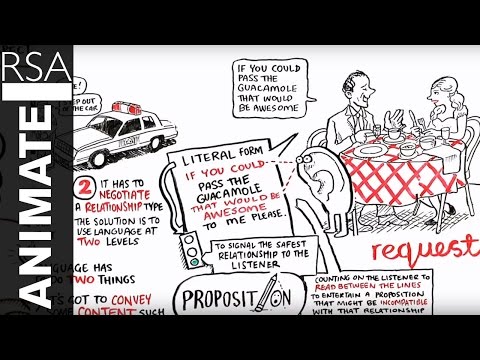
RSA ANIMATE: Language as a Window into Human Nature
Royal Society of Arts
2 HN recommender · 2011–2022
 3 mo on HN
Jorge Luis Borges: This Craft of Verse Lectures - thepostarchive
thepostarchive
3 HN recommender · 2019–2022
 4 mo on HN
The US Has More Tribes Than the World Has Countries
CGP Grey
4 HN recommender · 2020–2026
3 comments from Hacker News
Anki is fantastic for its flexibility, but for language learning I've found I reach a point of diminishing returns after a certain point. From personal experience, I've been pretty much sold on Stephen Krashen's theory of second language acquisition[1][2], which in practice focuses on comprehensible input. lingq.com is a pretty good way to learn a second language this way. I use it by uploading an ebook in my target language. The app keeps track of the words I've learned, and highlights the words and phrases I'm still learning or haven't encountered. I can click on the word/phrase as I'm reading to see a definition or translation in the sidebar, and then mark the level at which I've learned it just like in Anki. It's pretty slow going at the start, and the texts you have to use are very basic, but pretty quickly I was reading entire YA novels with only a handful of unknown words on each page. [1] link [2] ▶ this video
I like the answers in the last part. I literally had an interview today where I quoted a professor of mine from about a decade ago. He was very upset with me about some incorrect types in my javadoc comments and told me "The only thing worse than no documentation is wrong documentation!" :) For your answer on good documentation, that's a good general answer. As you say there are lots of layers to it. Some ideas just from my current viewpoint: - From my forays into foreign language learning I picked up the linguist's Stephen Krashen's research after learning about it from my language exchange partner. One of the main themes of his research is the idea of "Comprehensible Input"(CI). CI is the idea that you acquire knowledge via exposure to new language that is at a difficulty level where you understand most of what's being said. Then you acquire these new smaller pieces of knowledge via context. I would say this is most closely related to what you mean by structure of the documentation. Obviously with some overlap with the content itself. - There's also a stronger version of CI that adds an additional piece to this, the content must be of interest to the acquirer/learner. This property is I think the closest to what I think you mean in regards to content of documentation. In my opinion reaching the first goal, Comprehensible Input, where knowledge is able to be acquired efficiently is step 1. Resources of this type can be created much more easily as there is less subjectivity a
It's not a new idea being discussed in language learning circles, and 99% of the recent online discussion about this is based off of this youtube video [1] of Stephen Krashen (a linguist) talking about comprehensible input in the 80s. If I had to guess, most of the recent discussion has started again in the Japanese language learning community, as Japanese is a notoriously difficult language to acquire for anglophones. [1] ▶ this video