Hauntology, Lost Futures and 80s Nostalgia
Jonas Čeika - CCK Philosophy3 HN recommenders · recommended in 3 months, 2019–2026
explainer · intro · evergreen · 2019–2026 on HN
A video essay explaining hauntology, Mark Fisher's idea of lost futures, and 80s nostalgia. It uses the Fallout games and other media as examples of a retro-futurism that mourns futures that never arrived.
Recommended as a clear introduction to hauntology and lost futures in discussions of Mark Fisher and cyberpunk.
Up next
 12 mo on HN
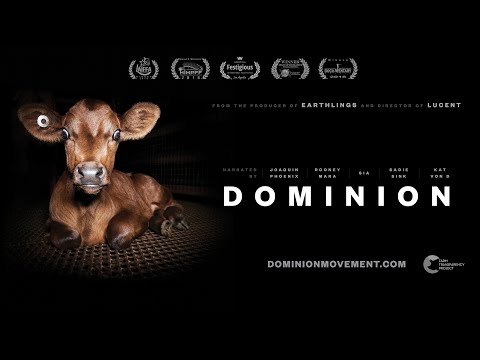
Dominion (2018) - full documentary [Official]
Farm Transparency Project
10 HN recommender · 2019–2024
 12 mo on HN
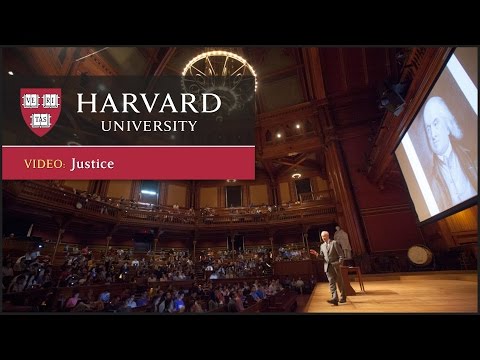
Justice: What's The Right Thing To Do? Episode 01 "THE MORAL SIDE OF MURDER"
Harvard University
11 HN recommender · 2013–2025
 11 mo on HN
We Were Taught to Call Death a Blessing
CGP Grey
12 HN recommender · 2018–2025
 11 mo on HN
Alain de Botton: Status Anxiety
Alain de Botton
4 HN recommender · 2015–2026
 11 mo on HN
Music and Life - Alan Watts
seandulac
11 HN recommender · 2010–2022
 7 mo on HN
The Egg - A Short Story
Kurzgesagt – In a Nutshell
7 HN recommender · 2020–2024
 7 mo on HN
The Machinery Of Freedom: Illustrated summary
bitbutter
4 HN recommender · 2012–2020
 7 mo on HN
Ep. 1 - Awakening from the Meaning Crisis - Introduction
John Vervaeke’s Lectern
6 HN recommender · 2019–2022
 6 mo on HN
Toward Rational, Authentic Food Choices | Melanie Joy | TEDxMünchen
TEDx Talks
3 HN recommender · 2015–2023
 5 mo on HN
Carl Sagan - Pale Blue Dot
carlsagandotcom
5 HN recommender · 2011–2026
 6 mo on HN
Debate Noam Chomsky & Michel Foucault - On human nature [Subtitled]
withDefiance
6 HN recommender · 2015–2026
 6 mo on HN
Optimistic Nihilism
Kurzgesagt – In a Nutshell
5 HN recommender · 2018–2022
4 comments from Hacker News
It's good to see the occasional Mark Fisher thread here. On the topic of Hauntology and lost futures, I think this guy does a great job of explaining it through the analogy of the Fallout videogame series: ▶ this video Analogies through pop-culture is something Mark Fisher also did very well to get his point across, and appeal to a broader audience.
One word: Hauntology. Jacques Derrida coined the neologism to describe narratives of the future. Hauntology is the idea that the present is "haunted" by lost futures, and refers to the return of elements of the past that "haunts" the present as a ghost. So imagined futures, instead of exploring new futures, itself becomes a form which is haunted by the exploration of past ideas of the future. This is the whole idea of retro-futurism that we often see these days. Here's a vid that talks about exactly what people here are trying to analyze. ▶ this video
Do checkout "Capitalist Realism: Is There No Alternative?", It's a concise book that talks about capitalism and its effects on culture and public thought. I haven't read lost futures yet but I found this really good video discussing Mark's idea by Cuck Philosophy called "Hauntology, Lost Futures and 80s Nostalgia" ▶ this video
Hypernormalisation - A. Curtis (2h46m) link //[a story of how] governments, financiers and technological utopians gave up on trying to shape the complex real world and instead established a simpler fake world for the benefit of multi-national corporations that is kept stable by neoliberal governments. The film was released on 16 October 2016// Curtis' signature style is to propose a thesis and develop it entirely via BBC News video archive segments arranged as an impressionistic, editorial montage. The news segments are bound together by V.O. (or text) narrative, and punctuated by a soundtrack of esoteric pop music to impose a personal perspective and stimulate a gestalt critique. Curtis' impressionistic style follows an approach popularized by H. Marshall McLuhan that McLuhan termed "probes" and gestalt, which combines the classically Greek intellectual features of the trivium with the tactile sensitivities of an artist to find a whole out of parts. The probe approach allows an interlocutor to transcend rational (Aristotelian) thought without abdicating the powerful tools of the trivium: grammar, logic, and rhetoric. The intellectual gesture utilized is Hegelian "aufheben": the transcendence of contradictions (thesis vs. antithesis) through a lifting-up into a higher order that accounts for the conflict and places the antagonistic precepts into a position of reconciliation (synthesis). Gestalt is the human capacity to perform aufheben over the entire range of our sensorium