Oculus Connect Keynote: John Carmack
Meta VR2 HN recommenders · recommended in 2 months, 2014–2021
talk · advanced · 2014–2021 on HN
John Carmack's keynote at Oculus Connect 2014 about the Gear VR and development stories from building it. He discusses mobile GPU optimization, latency, and display ideas like programmable interlacing.
HN recommends it for Carmack's detailed engineering insight into VR rendering and latency challenges.
Up next
 4 mo on HN
Sparks of AGI: early experiments with GPT-4
Sebastien Bubeck
7 HN recommender · 2023–2026
 2 mo on HN
Full interview: "Godfather of artificial intelligence" talks impact and potential of AI
CBS Mornings
3 HN recommender · 2023–2023
 1 mo on HN
Modos Paper Monitor Typing Demo
Modos
1 HN recommend · 2022–2024
 2 mo on HN
Joe Rogan Experience #1027 - Courtney Dauwalter
PowerfulJRE
2 HN recommender · 2017–2019
 4 mo on HN
RailsConf 2019 - Opening Keynote by David Heinemeier Hansson
Confreaks
3 HN recommender · 2019–2022
 7 mo on HN
QuakeCon 2012 - John Carmack Keynote
QuakeCon Official
6 HN recommender · 2012–2018
 6 mo on HN
RiftSketch: Live coding in VR with the Oculus Rift, Firefox WebVR, JavaScript and Three.js
Brian Peiris
5 HN recommender · 2014–2020
 5 mo on HN
The Future is a Dead Mall - Decentraland and the Metaverse
Folding Ideas
6 HN recommender · 2023–2025
 3 mo on HN
Head Tracking for Desktop VR Displays using the WiiRemote
Johnny Lee
3 HN recommender · 2010–2026
 3 mo on HN
John Carmack Tech Talk with UMKC-SCE
UMKC School of Science and Engineering
3 HN recommender · 2017–2023
 3 mo on HN
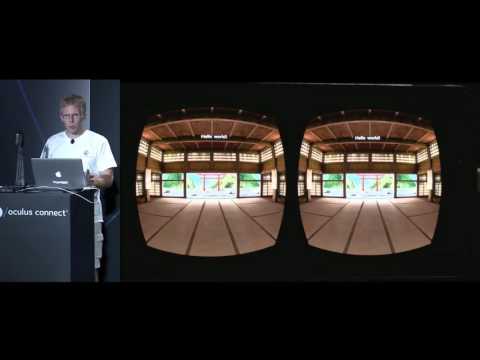
Oculus Connect 2: Live Coding Session with John Carmack
Meta VR
3 HN recommender · 2016–2023
 3 mo on HN
I could hardly believe my eyes! - Looking Glass Holographic Monitor
Linus Tech Tips
3 HN recommender · 2020–2024
5 comments from Hacker News
While this may be true for high fidelity gaming, for moving some textured triangles around, mobile GPUs are fine. Also, they can (and do) perform much better clock-for-clock vs a PC (and especially a Mac) thanks to the ability to optimize drivers. For a fascinating discussion of the optimizations possible, Carmack's 2014 Oculus Connect keynote is well worth watching: ▶ this video This talk was a slightly long but very informative discussion of the various challenges in reducing latency and dealing w/ PC rendering: link
> What was Carmack's development focus during Oculus? I'm not sure exactly but there's a bunch of keynotes from Carmack around Oculus Connect on YouTube. Here's one from 2014: ▶ this video , and another one from a year later where he's live coding in a VR environment link . You'll find a bunch more if you search too. I remember skimming through them years ago not because I'm into VR development but I've been a life long fan of Carmack's work and like listening to him talk about things.
Found where Carmack talked about it[1]. For VR, the consensus I've seen seem to push for multi-sample AA > full-screen AA > temporal AA (I feel like I've even seen no AA is better than temporal AA). I'm not quite sure if it's performance, architecture (they really prefer forward renderers instead of deferred renderers for low latency), or aesthetics. In the little bit I've done, when just playing with knobs temporal AA looks better to me. Without AA specular highlights are way too distracting and pop too much. This reference[2] talks about the extra velocity buffer needed for temporal AA and the fact it tends to over-blur which can fuzz out fine details (low resolution is a touchy subject in VR). There's a lot of moving pieces when making decisions. In talking about interlacing, he was ideally talking about not having to create a whole image buffer before sending data to the hardware--just rendering parts (well, scanline) of the image that moved. [1] ▶ this video [2] link
Excellent list of things to keep in mind. Of course, being The Statue is allowed, if you happen to be John Carmack, legs planted firmly on the stage like a colossus: ▶ this video
Speaking of "frameless" rendering, I noticed during Carmack's Oculus keynote ( ▶ this video ), he talks about trying to persuade Samsung to integrate programmable interlacing into their displays in order to give dynamic per-frame control over which lines are being scanned. This would give you the same "adaptive per-pixel updating" seen in your link, though primarily to tackle the problems with HMDs (low-persistence at high frame-rates).