Retirement Plans: Last Week Tonight with John Oliver (HBO)
LastWeekTonight3 HN recommenders · recommended in 3 months, 2016–2026
commentary · general · evergreen · 2016–2026 on HN
A Last Week Tonight segment on retirement plans, high fees and bad financial advice, with comedic sketches. It explains how fees eat into retirement savings and favors low-cost passive investing.
HN links it in personal finance threads as an entertaining explanation of how fees erode retirement savings.
Up next
 3 mo on HN
Brian Warner - Magic Wormhole- Simple Secure File Transfer - PyCon 2016.mp4
PyCon 2016
3 HN recommender · 2018–2023
 13 mo on HN
Jim Simons (full length interview) - Numberphile
Numberphile2
11 HN recommender · 2015–2024
 7 mo on HN
This is Financial Advice
Folding Ideas
9 HN recommender · 2023–2026
 6 mo on HN
The Psychology of Human Misjudgement - Charlie Munger Full Speech
BuffettMungerWisdom
6 HN recommender · 2014–2023
 7 mo on HN
The Simple Path to Wealth | JL Collins | Talks at Google
Talks at Google
7 HN recommender · 2019–2025
 6 mo on HN
All-In Summit: Bill Gurley presents 2,851 Miles
All-In Podcast
5 HN recommender · 2023–2026
 5 mo on HN
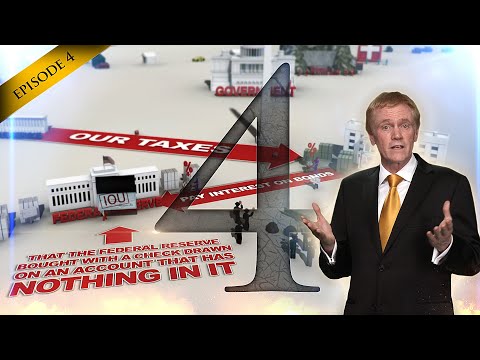
The IOU Machine: How Currency Is Created | Hidden Secrets of Money Ep. 4
GoldSilver
5 HN recommender · 2014–2023
 5 mo on HN
Margin Call (2011) - Senior Partners Emergency Meeting [HD 1080p] (Re-Upload / Audio Fixed)
Extractor
5 HN recommender · 2018–2024
 5 mo on HN
The Collapse of The American Dream Explained in Animation
doctordude
5 HN recommender · 2014–2025
 5 mo on HN
Renting vs. Buying a Home: The 5% Rule
Ben Felix
6 HN recommender · 2020–2026
 4 mo on HN
Exposing Tether - Bitcoin's Biggest Secret
Coffeezilla
7 HN recommender · 2021–2025
 4 mo on HN
Ses 1: Introduction and Course Overview
MIT OpenCourseWare
5 HN recommender · 2020–2023
5 comments from Hacker News
ETF aren't rocket science. They are not super easy either, maybe 2-4 weeks of research. It's quite probably they will literally DOUBLE your savings when you will retired. And you will be able to retire when you say so not when the governments tells you that you can. There are 2 types of pensions funds essentially. 1) The ones that do not save money. You pay pensions taxes now that just go to pay the people retired today. Believe it or not the vast majority of governments pension funds are like this. In Italy it's like this. You IRPEF money doesn't go in an investment, it pays the retirees of today. Now just wait and see what we'll happen with life expectancy increasing and population reduction. 2) The ones that buy things for you. And guess what they buy: usually 3 bonds and 2 ETFs. And they will take 1-2% for that. And you might think: "oh but 1-2% I can give awayt if I do not have to care about anything". In practice though ETFs return 5-8% per year when kept for decades and the earnings are averaged. So the pension fund takes 1-2% from 5-8% which is 20-30%. On top of that there is compounding interest. When you will have retired it's likely you will have given away half of your savings to the company managing the pension fund/retiring plan. Watch this video from Last Week Tonight with John Oliver that explains the last concept very well: ▶ this video AS USUAL, DO NOT JUST TRUST ME, RESEARCH WHAT I SAID (AND NOT ON TIK TOK)
John Oliver had a great bit on retirement plans [1] if you're interested in passive investing. I've pretty much only followed this advice since 2016, with minor changes accounting for my personal situation. My Vanguard portfolio has tracked the market, which means my annualized rate of return is about 12%, at an expense ratio of .1% (how much I pay in fees of that original 12%.) Of course that won't last forever, but it's a good balance of risk and return. A bank account usually pays around .25-1% a year. Active investors, on average, do as well as passive investors, but incur greater costs. [2] I only "actively invest" for fun, and as a way of connecting with my friends and family who also enjoy the stock market casino. [1] ▶ this video [2] Warren Buffett's side of link
You might like this: ▶ this video My personal method is to have a standard of living high enough that I don't have to really think about it much. A small amount of discomfort, but not much. I'm a naturally frugal person so it's not so bad. I have a single credit card, a single debit card, and various Vanguard accounts (IRA, Roth IRA, Brokerage). I keep a few months of cash liquid in the bank account, whenever it gets a couple thousand over that I transfer it to my Vanguard accounts. Vanguard is very easy to manage. About an 80/20 mix between US and international, and an 80/20 mix between stock index and bond index for both US and international. So only 4 index symbols to deal with and rebalance every 6 months or so. Increase the size of your bond holdings as you get older. I log into my bank's website to pay my balance every month, and to view my transactions for that month to make sure there's no fraud/stolen card. I look at my net worth in Mint every few months just out of curiosity. I used to use Mint for tracking budgets for stuff like food, but I found that my happiness went down drastically if I tried to artificially limit my spending because I feel like I'm already really frugal. This is enough for 95%+ of people assuming they're saving enough and making enough to save enough.
> Social Security replaced with an index Yes please! I learned just how bad of a deal Social Security is when an employer (a bootstrapped startup) offered a predatory 401k plan. It was free for my employer to setup but the employees were stuck with extremely high fees. It was so bad that John Oliver made an episode[0] about it! Yet, even for the worst 401K plan in America, the projected retirement returns were 1600% of the Social Security returns. Even America's worst 401K would be better for the average consumer than the federal debacle Uncle Sam should sunset SSI and allow citizens to select from and move freely between a number of accredited funds. [0]: ▶ this video
That's why I have a problem with someone else managing my money (outside of direct fund managers, of course, who take a fixed percentage fee and are incentivized to have the fund grow, not to fleece me). ▶ this video