Techniques for dealing with lack of motivation, malaise, depression
Jonathan Blow1 HN recommender · recommended in 1 month, 2017–2024
talk · general · evergreen · 2017–2024 on HN
Jonathan Blow gives a talk on techniques for dealing with lack of motivation, malaise and depression, originally on Twitch. He discusses observing and understanding negative emotions and thoughts.
HN cites it as the best motivation advice some commenters have heard, and it is often shared in procrastination threads.
Up next
 13 mo on HN
Essential Ideas for Parents
Jason Salotti
9 HN recommender · 2015–2025
 12 mo on HN
Stanford's Sapolsky On Depression in U.S. (Full Lecture)
Stanford
14 HN recommender · 2009–2026
 11 mo on HN
The great porn experiment | Gary Wilson | TEDxGlasgow
TEDx Talks
10 HN recommender · 2012–2023
 11 mo on HN
ADHD: Essential Ideas for Parents - Dr. Russell Barkely
ADHDtips
11 HN recommender · 2018–2025
 9 mo on HN
Mindfulness with Jon Kabat-Zinn
Google
11 HN recommender · 2009–2017
 8 mo on HN
30 Essential Ideas you should know about ADHD, 1A Intro, Chronic Developmental Disability
Adhd Videos
9 HN recommender · 2017–2024
 9 mo on HN
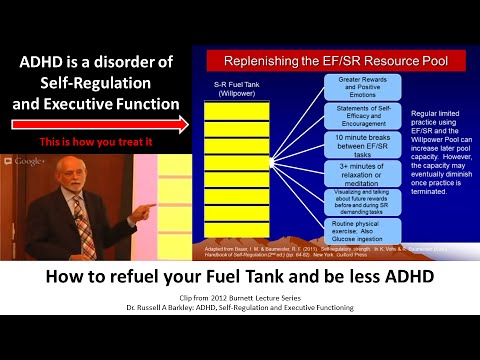
This is how you treat ADHD based off science, Dr Russell Barkley part of 2012 Burnett Lecture
Adhd Videos
10 HN recommender · 2015–2025
 8 mo on HN
TempleOS | Down the Rabbit Hole
Fredrik Knudsen
7 HN recommender · 2019–2022
 7 mo on HN
Guided Wim Hof Method Breathing
Wim Hof
10 HN recommender · 2020–2024
 7 mo on HN
MountainWest RubyConf 2013 Devs and Depression by Greg Baugues
Confreaks
7 HN recommender · 2013–2020
 6 mo on HN
What Alcohol Does to Your Body, Brain & Health
Andrew Huberman
7 HN recommender · 2022–2023
 6 mo on HN
Why Is It So Hard to Do Something That Should Be Easy? (Wall of Awful pt. 1)
How to ADHD
6 HN recommender · 2020–2022
5 comments from Hacker News
Best advice I heard was from Jonathan Blow: ▶ this video And Dr. Huberman: link Everything else didn't have enough data for me to latch onto. Life is difficult, and some tasks are not meant to be fun. You can't fix that. You can however reframe your minds' perspective on the manner. Instead of thinking "Man there are so many dishes to do, I'd rather be playing Helldivers 2 now" you can think "I can do 5 dishes... That was easy, I can do 5 more dishes... Look how many dishes i did! I can do 5 more". Even if it's clearly a lie to yourself that you enjoy it, you'll find that your brain will start to believe it. Over time, your brain will take on the new perspective. This is why "faking it until you make it" works.
In my view, The Witness is the best video game of all times. On the surface, it's a puzzle game. I bought it (for something ridiculous like €5 on the iPad I believe) expecting to enjoy a few logic puzzles and remembering the games of my childhood like Myst and The 7th Guest (and I was also happy that, unlike many games it wasn't about shooting people). But it ended up a much bigger deal than that. I found The Witness (which doesn't have dialog or a plot) immersive like no other game and I think about it every week, years after completing the game. If it's not about the puzzles, what is it about? To avoid spoilers, here are just a few hints: • The Witness is a game about learning and perception. And about meditation. (That's only my interpretation, though; like any work of art, you may have another valid interpretation). • The author, Jonathan Blow, is a "programmer's programmer", who built his own game engine for The Witness and is in the process of writing his own programming language for his next project. He's also an interesting speaker. Here he talks about depression: ▶ this video • The Witness is as close to a video game equivalent of "film d'auteur" as you can get (at least compared to most of the other games out there, which are commercial Hollywood productions) (Disclaimer: I'm not a gamer, and haven't played more than 2-3 games in the last decade.)
It seems his teachings are based on the teachings of Jiddu Krishnamurti. There are some good audio books by him on Youtube, like Freedom from the Known . On a slightly related note, Jonathan Blow also has a talk called Techniques for dealing with lack of motivation, malaise, depression ( ▶ this video ), where he also talks about the importance of observational skills as a means of understanding / "putting out" your (negative) emotions and thoughts.
> in four decades of living on this planet I don't think I've ever come across anything that fits that bill. Keep looking! But also, it's possible at 40+ that you may have already found it. Perhaps you've not given that thing the chance it needed for you to fall in love with it — the days and weeks of exploration and the obsessive iteration mentioned in the GQ article that it takes to grok something and absorb it until it feels like it's yours . I'm almost your age and now rewinding my career path. I kept chasing different tech career paths hoping to find something that “fit the bill”, which only showed me that nothing was as interesting to me than what I started my career doing (game design/animation). It took a couple of changes to realise that: - Reflecting on how I spend my free time and time on social media, and the speakers and personalities I'm fascinated by and naturally drawn to. (They are mostly game designers and devs.) - Looking back at the work in the past that has made me happiest and most fulfilled. From there it was a case of having the discipline to commit to it — I spend most mornings and evenings skilling up and having fun with game design and development, although my day job is still in front-end right now. On the motivation side of things you mentioned, I don't think it's a case of “find the right thing and you'll find your motivation.” It's more a case of discipline, projecting your self now to your future self, and knowing a few psychological techniques
Here's the YouTube mirror, since Twitch VODs often have janky buffering problems in my experience: ▶ this video + link