Emacs Rocks! Episode 13: multiple-cursors
emacsrocks1 HN recommender · recommended in 1 month, 2014–2026
demo · intermediate · evergreen · 2014–2026 on HN
A four-minute Emacs Rocks screencast demonstrating the multiple-cursors package for Emacs. It shows how editing at many places at once can replace repetitive manual edits.
Cited as the canonical demo of multiple cursors and of fluent, efficient Emacs editing.
Up next
 15 mo on HN
RailsConf 2014 - All the Little Things by Sandi Metz
Confreaks
15 HN recommender · 2015–2025
 11 mo on HN
"Testing Distributed Systems w/ Deterministic Simulation" by Will Wilson
Strange Loop Conference
12 HN recommender · 2014–2024
 11 mo on HN
🚀 TDD, Where Did It All Go Wrong (Ian Cooper)
DevTernity Conference
11 HN recommender · 2018–2024
 11 mo on HN
Bret Victor - Inventing on Principle
Rui Oliveira
12 HN recommender · 2013–2025
 11 mo on HN
Solving Problems the Clojure Way - Rafal Dittwald
Clojure/north
10 HN recommender · 2019–2025
 11 mo on HN
Debugging Under Fire: Keep your Head when Systems have Lost their Mind • Bryan Cantrill • GOTO 2017
GOTO Conferences
8 HN recommender · 2018–2025
 10 mo on HN
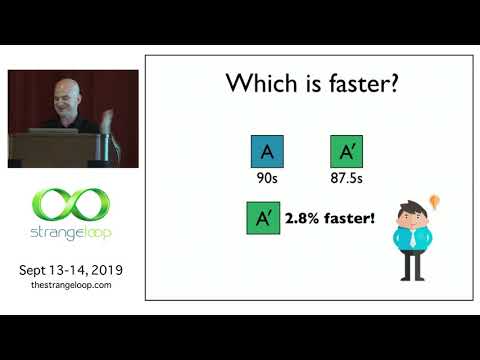
"Performance Matters" by Emery Berger
Strange Loop Conference
12 HN recommender · 2019–2025
 10 mo on HN
A Tour of the Acme Editor
Russ Cox
11 HN recommender · 2012–2026
 8 mo on HN
Tech Talk: Linus Torvalds on git
Google
9 HN recommender · 2007–2023
 9 mo on HN
"How NOT to Measure Latency" by Gil Tene
Strange Loop Conference
9 HN recommender · 2015–2026
 9 mo on HN
Ruby Conf 12 - Boundaries by Gary Bernhardt
Confreaks
8 HN recommender · 2015–2024
 9 mo on HN
Using Python to Code by Voice
Next Day Video
12 HN recommender · 2013–2025
3 comments from Hacker News
dot repeat is the wrong comparison. A closer one would be macros, but even then a good multiple cursors implementation is often faster, more intuitive, and requires less cognitive overhead. One of the better examples of the usefulness of multiple cursors is from Emacs Rocks (link goes to 0:23): ▶ this video
I have all commands I don't remember bound to leader keys. When in calc I have [leader key] m and then which-key pops up everything I have stored. Other than that, I use scratch in elisp mode and eval. Not as fluent as magnars, but this is a good example of what I mean (towards the end): ▶ this video
I don't know how much faster navigating a buffer can be than doing it in emacs or vim, both of which can switch buffers with the press of a single key and do fuzzy-matching of buffer/file names with a keystroke or two. They can also navigate by moving or clicking around tree-structured directory trees, through menus, and many other ways. Again, it would be nice if people offered specifics when they described something another editor could do that emacs or vim allegedly couldn't. How exactly do you navigate a buffer in Sublime that's allegedly "much quicker"? Can you give an example (including exactly which keys you press and exactly what it does in response)? Or can you at least show a video demonstrating this navigation? As for multiple cursors, both vim and emacs have had them for years.[1][2][3][4][5] [1] - link [2] - link [3] - link [4] - link [5] - ▶ this video