Jim Keller: Moore’s Law is Not Dead
UC Berkeley EECS7 HN recommenders · recommended in 8 months, 2019–2025
talk · intermediate · 2019–2025 on HN
Jim Keller gives a UC Berkeley EECS colloquium arguing that Moore's Law is not dead. He surveys upcoming technologies and the multiple innovation curves that can keep transistor density and performance scaling.
The go-to citation in Moore's Law threads, a convincing counterargument from a top CPU designer.
Up next
 3 mo on HN
Desert Storm - The Air War, Day 1 - Animated
The Operations Room
2 HN recommender · 2021–2026
 7 mo on HN
Peter Thiel on "The Portal", Episode #001: "An Era of Stagnation & Universal Institutional Failure."
Eric Weinstein
8 HN recommender · 2019–2024
 6 mo on HN
The Biggest Myth In Education
Veritasium
7 HN recommender · 2021–2024
 5 mo on HN
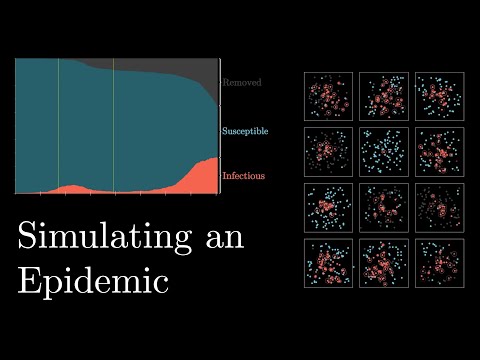
Simulating an epidemic
3Blue1Brown
8 HN recommender · 2020–2023
 6 mo on HN
How Much Do Rockets Pollute? Are They Bad For Our Air?
Everyday Astronaut
6 HN recommender · 2020–2023
 10 mo on HN
YouTube's copyright system isn't broken. The world's is.
Tom Scott
13 HN recommender · 2020–2024
 7 mo on HN
Joe Armstrong & Alan Kay - Joe Armstrong interviews Alan Kay
Erlang Solutions
6 HN recommender · 2016–2026
 2 mo on HN
Tesla AI Day 2022
Tesla
2 HN recommender · 2022–2026
 12 mo on HN
8-bit computer update
Ben Eater
14 HN recommender · 2017–2023
 11 mo on HN
Light Years Ahead | The 1969 Apollo Guidance Computer
TNMoC
11 HN recommender · 2021–2026
 11 mo on HN
“Hello, world” from scratch on a 6502 — Part 1
Ben Eater
11 HN recommender · 2019–2026
 10 mo on HN
Finding the Missing Memristor - R. Stanley Williams
The Qualcomm Institute
12 HN recommender · 2010–2024
12 comments from Hacker News
Someone always crawls out of the woodwork to repeat this supposed "fact" which hasn't been true for the entire half-century it's been repeated. Jim Keller (designer of most of the great CPUs of the last couple decades) gave a convincing presentation several years ago about just how not-true it is: ▶ this video Everything he says in it still applies today. Intel struggled for a decade, and folks think that means Moore's law died. But TSMC and Samsung just kept iterating. And hopefully Intel's 18a process will see them back in the game.
They've been saying Moore's law is dead for 20+ years. Reasons usually quoted for Moore's law's death are quite narrowly focused on a particular technology stack, whereas semiconductor fabrication happens on a complex web of technologies all moving forward with their own S-curves. It is worth watching Jim Keller's lecture at UC Berkeley literally titled "Moore's law is not dead". He talks on a different level alltogether and far more convincing than the pedantic look at the details that enable Moore's law. ▶ this video
> Moore's law is dead People have said this for decades. Jim Keller believes otherwise and brought receipts: ▶ this video
Jim Keller gave a talk at Berkeley titled "Moore's Law is not dead" (2019) where he summarized a bunch of up and coming technologies that will enable the continued scaling of transistor density - ▶ this video
I used to agree with you until I saw this presentation by Jim Keller, one of the biggest names in chip architecture. It really illustrates how many more options we have to improve performance. ▶ this video
There is this interesting talk by Jim Keller. Talks about new approaches (different transistor tech, architecture, etc) to keep moores law going for another decade or so. You should defintely check it out if have time. ▶ this video
Jim Keller recently spoke at UC, on the topic of Moore's law not being dead. Very impressive guy. ▶ this video
There's a good talk by him about how Moore's law isn't dead: ▶ this video . Obviously, people have different ideas about what they mean when they say "Moore's law is/is not dead", but I appreciate Jim's point that even if the current innovation curves we've been riding are slowing down, there are other innovation curves that we can take advantage of, and that the combination these curves mean that there's still plenty of innovation and improvement to be made in processor design. Of course, the question of whether the x86 architecture will be the foundation for that future improvement remains to be seen. ARM and RISC-V are both eating x86 from below, and the fact that both of the processor architectures allow for greater competition among processor implementations suggests to me that one (or both) may catch up with x86 at some point in the future.
Scaling laws are not dead. The number of people predicting death of Moore's law doubles every two years. - Jim Keller ▶ this video
We are ridiculously far from physical limits in our current artificial computers (both theoretical [1], and practical [2]). For more technical details see Jim Keller: [3] [4] [5]. [1] link [2] The ~12 watts computer inside each living human adult skull (and perhaps each eukaryote cell [6]) is still the state-of-the-art, for quite some time. [3] 2021, Jim Keller: The Secret to Moore's Law , link [4] 2019, Jim Keller: Moore’s Law is Not Dead , ▶ this video [5] 2023, Change w/ Jim Keller , link [6] Our computers aren't yet able of polycomputation, where the computation topology, data, and functions depend on the observer, instead of computation in a passive implementation, once done forever set in s̶t̶o̶n̶e̶ silicon, 2023, Michael Levin, Agency, Attractors, & Observer-Dependent Computation in Biology & Beyond , link
Jim Keller himself talks about this a little bit here ▶ this video I think I've listen to asianometry (YT channel) talk about this too, but I am unable to find any clip now where he explicitly talks about interference lithography...
According to Jim Keller, not dead: ▶ this video This isn’t the best recording on YouTube but it’s late and I couldn’t quickly find the other one.