Renting vs Buying a Home: How to Decide
Ben Felix2 HN recommenders · recommended in 2 months, 2022–2026
explainer · general · evergreen · 2022–2026 on HN
Ben Felix explains how to decide between renting and buying a home, weighing financial and non-financial factors. He argues that renting is often as good or better than owning, both financially and for well-being.
Cited in housing threads for his rule-of-thumb rent-versus-buy analysis and the view that it is often a financial wash.
Up next
 1 mo on HN
Alen Ladavac - Taking CI and automated testing seriously - WebCamp Zagreb 2018
WebCamp Zagreb
1 HN recommend · 2020–2022
 13 mo on HN
Jim Simons (full length interview) - Numberphile
Numberphile2
11 HN recommender · 2015–2024
 7 mo on HN
This is Financial Advice
Folding Ideas
9 HN recommender · 2023–2026
 6 mo on HN
The Psychology of Human Misjudgement - Charlie Munger Full Speech
BuffettMungerWisdom
6 HN recommender · 2014–2023
 7 mo on HN
The Simple Path to Wealth | JL Collins | Talks at Google
Talks at Google
7 HN recommender · 2019–2025
 6 mo on HN
All-In Summit: Bill Gurley presents 2,851 Miles
All-In Podcast
5 HN recommender · 2023–2026
 5 mo on HN
The IOU Machine: How Currency Is Created | Hidden Secrets of Money Ep. 4
GoldSilver
5 HN recommender · 2014–2023
 5 mo on HN
Margin Call (2011) - Senior Partners Emergency Meeting [HD 1080p] (Re-Upload / Audio Fixed)
Extractor
5 HN recommender · 2018–2024
 5 mo on HN
The Collapse of The American Dream Explained in Animation
doctordude
5 HN recommender · 2014–2025
 5 mo on HN
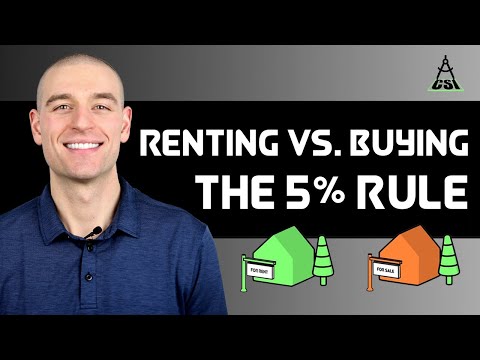
Renting vs. Buying a Home: The 5% Rule
Ben Felix
6 HN recommender · 2020–2026
 4 mo on HN
Exposing Tether - Bitcoin's Biggest Secret
Coffeezilla
7 HN recommender · 2021–2025
 4 mo on HN
Ses 1: Introduction and Course Overview
MIT OpenCourseWare
5 HN recommender · 2020–2023
5 comments from Hacker News
> But if you live in the house, then just considering appreciation and expenses leaves out a huge benefit: you have a place to live without spending any other money. What matters at the end of the day are the irrecoverable costs. When renting, it is just the rent. When owning, it is certainly not free: you're paying other irrecoverable costs (e.g. out of PITI+HOA, everything but P is irrecoverable; add on separate costs for when you must pay for repairs and it gets steeper). Sure, you have stability and can write off mortgage interest when you own (although the latter is an extremely unfair policy), but unless one is absolutely sure that one can stay in the home for close to ~7 years (the rough time it took for many HCOL cities in the US to recover their nominal prices from the GFC peak), it can be considered to be a risky time to make such a big financial commitment. Ben Felix has some videos on this concept of "irrecoverable costs" which I find helpful to illustrate this, such as this one [0]. Although I disagree with his idea that leasing cars is a good idea (expressed in some of his podcasts), I find his ideas on renting vs. buying to be quite sound. Personally speaking, I just doubled my compensation by moving from one HCOL city to another in the US because I was renting and not "locked in" to a mortgage. So many colleagues at my former place could not afford to come to the closing table with cash to close out their mortgage at a loss to move (the company I went to basic
> it's very hard to make a financially logical argument against sensible home ownership. No it isn't. Ben Felix has a great video talking about this: ▶ this video We can argue which is better in a specific situation, but there's definitely an argument for renting other than "people buy too big".
Ben Felix, a Canadian portfolio manager that does personal finance videos and podcast, has been arguing for years that rent versus buy is often a wash financially, and that you should make the decision for non-financial resasons. * recent 2026 video: link * 2025a: link * 2025b: link * 2021: ▶ this video * 2019: link The 2019 video goes over a handy "5% rule of thumb": start with the purchase price of home, take 5% of that: if your rent is less than that, better numbers-wise to continue renting (and investing the difference); if your rent is more, probably better numbers-wise to buy/own. The company he works for created a tool to examine the numbers: * link
> I find it interesting that house prices are kept out of inflation. > The reason, as I understand it, is that shelter costs are kinda funny in how they are added to this statistic. Housing prices are not considered in the CPI ("cost of living") because houses are mostly an asset: > House prices are an interesting case. Houses are considered capital investment by the [US] BLS. So, when the value of your home increases that's a good thing as you didn't consume the house. In other words, you don't need to replace the house. Consumption goods are different in that you need to replace the thing you bought. Inflation is very bad for consumption goods because it costs you more to replace that thing each time you need it (food, for instance). * link > The BLS views housing as a mostly “investment” item as opposed to a consumption item. So, for instance, when you consume a hot dog and have to replace it then the cost of replacement is a direct reflection on your well-being. A $1 hot dog that costs $2 one year later is a material change in living standards, all else equal, since the hot dog is an asset that you literally consume. A house is much more complex. […] > Of course, anyone who owns a house knows that it’s not that simple. You do basically consume your house over time. For instance, my home has appreciated substantially since I purchased it just 5 years ago and underwent a hellish remodel. At that time the cost of replacement was roughly $300 per square foot. But in the ens
> You don't need to purchase a home - but historically - if you did - you've been much better off financially. [citation needed] Per the The Credit Suisse Global Investment Returns Yearbook 2018 , the global return for real estate from 1900 to 2017 was 1.3%, while stocks returns 5.2%: * link Rent is often cheaper than mortgage payments, and is very more often cheaper than mortgage payments plus the cost of maintaining a home. If you take the difference and investment you can have just as must equity in a few decades. Preet Banerjee goes over the math in this ten minute video: * link He rents: * link If you want to know when it makes financial sense, the "5% Rule" by Ben Felix is a decent place to start: * ▶ this video * link Until recently he was a renter, but purchased a house 1-2 years ago. Not exactly happy with the decision though: * link