Capt. Grace Hopper on Future Possibilities: Data, Hardware, Software, and People (Part One, 1982)
National Security AgencyRecommended by 2 HN commenters across 2 months, 2024–2026
lecture · general · evergreen · 2024–2026 on HN
Part one of Capt. Grace Hopper's 1982 NSA lecture on the future of data, hardware, software and people. It includes her humor, her nanosecond demonstration and views on scaling and resisting old ways of doing things.
HN enjoys it as a funny, quotable lecture from a bygone era, with lines about horizontal scaling and change that still resonate.
Up next
 2 mo on HN
Thermoelectric cooling: it's not great.
Technology Connections
Recommended 3× on HN · 2025–2025
 5 mo on HN
Steve Jobs, "Computers are like a bicycle for our minds." - Michael Lawrence Films
Michael Lawrence
Recommended 5× on HN · 2010–2025
 3 mo on HN
Driving Amazon’s ELECTRIC Delivery Vehicle: Rivian EDV
Friday Adventure Club
Recommended 3× on HN · 2022–2023
 2 mo on HN
Stadiums: Last Week Tonight with John Oliver (HBO)
LastWeekTonight
Recommended 2× on HN · 2016–2022
 15 mo on HN
AT&T Archives: Similiarities of Wave Behavior (Bonus Edition)
AT&T Tech Channel
Recommended 12× on HN · 2014–2026
 14 mo on HN
Micro Men - 720p (2009)
gimpymoo
Recommended 15× on HN · 2015–2026
 11 mo on HN
Light Years Ahead | The 1969 Apollo Guidance Computer
TNMoC
Recommended 11× on HN · 2021–2026
 12 mo on HN
Mechanical Computer (All Parts) - Basic Mechanisms In Fire Control Computers
Excelsior10000
Recommended 13× on HN · 2014–2025
 12 mo on HN
Project Code Rush - The Beginnings of Netscape / Mozilla Documentary
The Documentary Network
Recommended 13× on HN · 2015–2026
 11 mo on HN
Bret Victor The Future of Programming
Joey Reid
Recommended 12× on HN · 2017–2026
 11 mo on HN
Alan Kay - Normal Considered Harmful
powerfuloutlet
Recommended 10× on HN · 2012–2026
 10 mo on HN
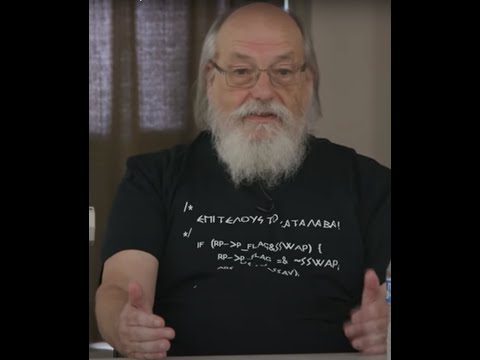
VCF East: Ken Thompson interviewed by Brian Kernighan
Vintage Computer Federation
Recommended 11× on HN · 2019–2025
7 comments from Hacker News
I find Grace Hopper's lectures very entertaining, even though they seem to come from a bygone era when viewed from today's perspective. ▶ this video link
I can't wait to watch this later. I watched just a few minutes starting at this timestamp [0] (it was linked in another comment) and it was gold, I love her sense of humor. [0] ▶ this video
> Light speed is ~3ns per metre, so maybe the lowered speed through the fibre? Obligatory Adm. Grace Hopper nanosecond reference: * ▶ this video
"Those satellite photographs -- the landsat photographs -- are so darn good that when they re fully enhanced by computer, we can actually tell how high the waves are out in the middle of the Pacific; we can tell what the temperature of the ocean is 20 feet below.." - Grace Hopper in 1982 NSA lecture. YT link: ▶ this video I bet current spy satellite will be doing a lot things we can hardly imagine, may be we will know in 40-50 years down the line.
Great quote at 45:26 regarding vertical vs. horizontal scaling: ▶ this video > "Now back in the early days of this country, when they moved heavy objects around, they didn't have any Caterpillar tractors, they didn't have any big cranes. They used oxen. And when they got a great big log on the ground, and one ox couldn't budge the darn thing, they did not try to grow a bigger ox. They used two oxen! And I think they're trying to tell us something. When we need greater computer power, the answer is not "get a bigger computer", it's "get another computer". Which of course, is what common sense would have told us to begin with."
I just want to make one last attempt to get my point across, since I think you are discussing in good faith, even if I don't like your aggressive timbre. There is risk in reinforcing a narrow-minded approach that "all we need is more oxen." It limits one's imagination. That's the essence of what I've been advocating against in this thread, though perhaps my attempts and examples have merely chummed your waters. Ironically, I'd say Grace Hopper rather agrees, elsewhere in the linked talk[1]. > Faster CPUs aren’t coming. Not with that attitude, ya dingus (: [1] " ▶ this video I think the saddest phrase I ever hear in a computer installation is that horrible one "but we've always done it that way." That's a forbidden phrase in my office.
You can go to the Youtube page for the video: ▶ this video ( or link for part 2) click on the "...more" link in the video description, then click on the "Show Transcript" button further down that appears and you will see a transcript in the upper right of your screen which you can scroll through and read.