Backpropagation calculus | Deep Learning Chapter 4
3Blue1Brown3 HN recommenders · recommended in 2 months, 2017–2024
explainer · intro · evergreen · 2017–2024 on HN
3Blue1Brown's chapter 4 on deep learning gives a more formal, symbol-based account of backpropagation calculus, connecting the intuition from the previous chapter to the math found in textbooks and code.
Recommended as an accessible, visual way to understand backpropagation and neural networks.
Up next
 14 mo on HN
But what is a neural network? | Deep learning chapter 1
3Blue1Brown
16 HN recommender · 2017–2025
 3 mo on HN
Backpropagation, intuitively | Deep Learning Chapter 3
3Blue1Brown
4 HN recommender · 2017–2024
 3 mo on HN
Gradient descent, how neural networks learn | Deep Learning Chapter 2
3Blue1Brown
4 HN recommender · 2017–2024
 16 mo on HN
The spelled-out intro to neural networks and backpropagation: building micrograd
Andrej Karpathy
17 HN recommender · 2022–2025
 10 mo on HN
AlphaGo - The Movie | Full award-winning documentary
Google DeepMind
10 HN recommender · 2020–2025
 10 mo on HN
Transformers, the tech behind LLMs | Deep Learning Chapter 5
3Blue1Brown
13 HN recommender · 2024–2026
 10 mo on HN
USENIX Security '18-Q: Why Do Keynote Speakers Keep Suggesting That Improving Security Is Possible?
USENIX
10 HN recommender · 2018–2026
 11 mo on HN
Lecture 1 | Machine Learning (Stanford)
Stanford
11 HN recommender · 2008–2020
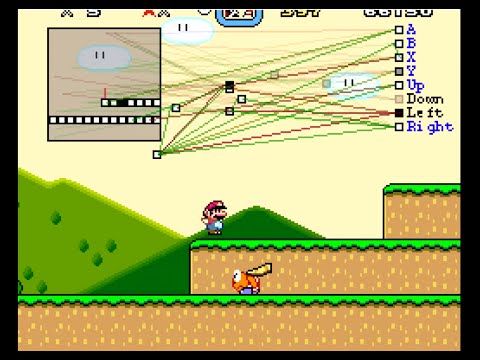 10 mo on HN
MarI/O - Machine Learning for Video Games
SethBling
10 HN recommender · 2015–2026
 8 mo on HN
Deep Dive into LLMs like ChatGPT
Andrej Karpathy
10 HN recommender · 2025–2026
 10 mo on HN
Computer program that learns to play classic NES games
suckerpinch
9 HN recommender · 2015–2025
 9 mo on HN
RL Course by David Silver - Lecture 1: Introduction to Reinforcement Learning
Google DeepMind
9 HN recommender · 2017–2026
4 comments from Hacker News
I'm just an enthusiast. With that said, I think the author's first image image really captures the core of forward propagation and back propagation. For people who want to get more of a feel on autodiffing, I find these 2 sources amazing [1, 2]. They don't use the word autodiffing, but looking at it, I can see it's the same thing. I once made an attempt at animating feed forward propagation [3]. If I'd animate back propagation, I'd probably make an animation on autodiffing as well as that is the most intuitive way I know on how to explain back propagation right now. It's still on my big to do list ;-) [1] link [2] 3Blue1Brown does in episode 4 of his Deep Learning series: ▶ this video [3] link
This was very timely for me and for anyone else learning, here are the first few videos of the series: link link link (Original video) ▶ this video
I'm in the same boat. For long time, I was interested in AI but at the same time intimidated by math. I'm relatively comfortable with discrete mathematics and classical algorithms and at the same time calculus and linear algebra is completely foreign to me. Also, I do not accept way to learn ML without good understanding of core principles behind it. So math is a must. A few months ago, I stumbled upon very amazing YouTube Channel 3Blue1Brown which explains math in very accessible way and at the same time I got feeling that I finally started understanding core ideas behind linear algebra and calculus. Just recently he published 4 videos about deep neural networks: link link link ▶ this video So my fear of ML was gone away and I'm very excited to explore whole new world for neural networks and other things like support vector machines etc
It's not satire. If you have some function with several inputs, the Jacobian is a matrix of all the partial derivatives of this function with respect to each input variable[1]. Since derivatives give the slope of a function, if you think about your function as being like a bumpy surface with the height at each point being the output, this matrix tells you which way (and how far) to change any input if you want to go "up" or "down" in the output. Backpropogation is a way to optimise a neural network. You want to know how best to nudge the weights of the network to optimise some loss function, so what you do is compute the gradient (ie partial derivative) of that function with respect to each of the weights. This allows you to then tweak the weights of the function so your network gets better at whatever task you're trying to get it to learn. See [2] to understand how this works and and [3] to understand how this relates to the Jacobian, but generally if you're trying to go "downhill" in your loss function it's easy to see intuitively that knowing which way the function slopes (ie the effect of tweaking each of the weights) is important and that's what the Jacobian tells you. The inverse of a matrix[4] and its transpose[5] are two different operations in linear algebra. Transpose turns rows into columns and columns into rows and the inverse of a matrix is a little harder to grasp maybe without background, but you could think of multiplying one matrix by the inverse of another a