AT&T Archives: The UNIX Operating System
AT&T Tech Channel10 HN recommenders · recommended in 8 months, 2013–2026
documentary · intro · evergreen · 2013–2026 on HN
A 1982 Bell Labs film hosted by Victor Vyssotsky on the origins and design philosophy of the UNIX operating system, with appearances by Kernighan, Thompson and Ritchie. It shows pipes, filters and a shell one-liner spell checker being built.
HN points people to it as the clearest primary-source explanation of Unix pipes and the small-tools philosophy, straight from the creators.
Up next
 4 mo on HN
FULL INTERVIEW with Yuri Bezmenov: The Four Stages of Ideological Subversion (1984)
Nicholas Marshall
4 HN recommender · 2020–2026
 5 mo on HN
World Building in Blender - Ian Hubert
Blender
4 HN recommender · 2019–2026
 3 mo on HN
WordTeX - A WYSIPCTWOTCG Typesetting Tool
Tom Wildenhain
3 HN recommender · 2018–2025
 2 mo on HN
Marble Marcher - A Fractal Physics Game
CodeParade
2 HN recommender · 2020–2024
 5 mo on HN
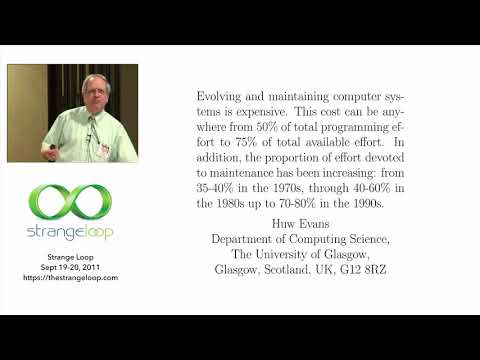
"We Really Don't Know How to Compute!" - Gerald Sussman (2011)
Strange Loop Conference
5 HN recommender · 2022–2026
 6 mo on HN
Nina Teicholz - 'Vegetable Oils: The Unknown Story'
Low Carb Down Under
3 HN recommender · 2018–2023
 7 mo on HN
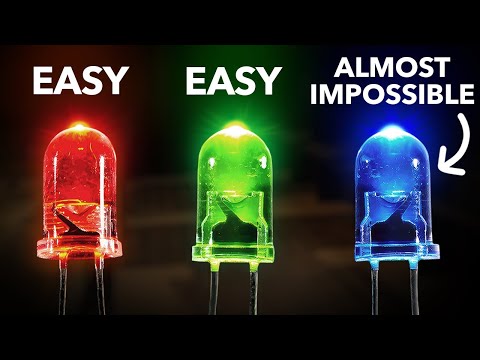
Why It Was Almost Impossible to Make the Blue LED
Veritasium
10 HN recommender · 2024–2026
 2 mo on HN
Computer Science - Brian Kernighan on successful language design
University of Nottingham
3 HN recommender · 2015–2022
 15 mo on HN
AT&T Archives: Similiarities of Wave Behavior (Bonus Edition)
AT&T Tech Channel
12 HN recommender · 2014–2026
 14 mo on HN
Micro Men - 720p (2009)
gimpymoo
15 HN recommender · 2015–2026
 11 mo on HN
Light Years Ahead | The 1969 Apollo Guidance Computer
TNMoC
11 HN recommender · 2021–2026
 12 mo on HN
Mechanical Computer (All Parts) - Basic Mechanisms In Fire Control Computers
Excelsior10000
13 HN recommender · 2014–2025
12 comments from Hacker News
This gets shared a ton, but the old Bell Labs video from 4:56 to 10:52 is still the best way I have seen pipes explained: ▶ this video
> Recently I discovered the AT&T history channel, with this gem: ▶ this video I go back to this video every once in a while ever since I discovered it a few years ago. I just think it is super relaxing. When I first watched it, I was beginning to use Linux and, when I opened my terminal emulator, I was like: "It's a Unix system, I know this!" The pipelines explanation was incredibly clear. I also love the Computerphile episodes with professor Kernighan.
Nice guide. cd ~ command goes to home directory though, not root. I wish someone showed me the UNIX operating system introduction by Kernighan et al before anything else. It can be found in AT&T arhives: ▶ this video
One of the few living oldschool UNIX legends still alive. Here is when he was young: ▶ this video Kind of explains in an epic manner why pipes were useful back then. They are still useful, but computers are so much more powerful that many techniques back then came primarily because their computers were not as powerful. I still, oddly enough, prefer the hardware of the 1970s, 1980s, almost early 1990s too. Today's hardware is much better, but I am nowhere as interested in it; it is now just like a common tool.
bwk is awesome AT&T Archives: The UNIX Operating System : ▶ this video Coolest guy in this video, casually explaining pipes while resting his feet on the desk.
Was just showing the subject to a youngster recently. Other folks mentioned the Code book, I liked that one. The MMM by Brooks of course. We also looked at the following videos on youtube/Kanopy and other places: - The Story of Math(s) by Marcus du Sautoy to set the stage... school and taxes in ancient Sumeria, Fibonacci bringing Indian numbers to Europe, and other fascinating subjects. - We watched short biographies of Babbage and Lovelace, full-length ones of Turing and Von Neumann. The "code breakers" of WWII. - Top Secret Rosies: The Female "Computers" of WWII, another good one. - There's more history in PBS' Crash Course Computer science, than you might expect. It is great although so peppy we had to watch at .9x with newpipe. Shows relays, vacuum tubes, to ICs, to the Raspberry Pi. As well as the logic gates they model. - "The Professor" at Computerphile is a great story teller about the early days. - There are great videos about CTSS being developed at MIT I think, where they are designing an operating system via paper terminal and trying to decide on how to partition the memory/storage: link - The Introducing Unix videos by ATT are straight from the source: ▶ this video - The movie/book "Hidden Figures" touches on this time as well. Facing obsolescence by IBM, one of the characters teaches herself Fortran. - The Pirates of Silicon Valley is a fun dramatization of the late 70s to 80s PC industry. It specifically calls out the meeting between MS and IBM as the deal of the
Rest in Peace! Her demonstration of the capabilities of the (then novel) pipes and scripts of the Unix Operating System is one of the best parts of this documentary: ▶ this video
This is an old but informative video on UNIX system productivity by AT&T hosted by Brian Kernighan [1]. Fun fact, the original unused PDP-7 computer mentioned in the article that being utilized by Ken Thompson to first develop UNIX actually belongs to another well-funded sound processing research group in Bell Labs. [1] ▶ this video
For me it's the unix example in [1] "AT&T Archives: The UNIX Operating System" . $ makewords sentences | lowercase | sort | unique | mismatch - It reads a file called sentences then prints the words that are not spelled correctly. To me it's; concise, expressive, flexible, modular... Which makes it beautiful... [1] ▶ this video
I'm always amazed how well Brian Kernighan can explain things. I love the episodes on the Computerphile youtube channel with him. Recently I discovered the AT&T history channel, with this gem: ▶ this video There is a massive difference in appearance and clarity between him and the other people appearing in that video, even the "presenter"...
Nit: You can get a link to a specific time in the video by clicking the "share" button and ticking "start at": ▶ this video
One a similar note, there is this period video where Brian Kernighan shows how to construct a spell checker using a UNIX shell one-liner: ▶ this video