Tested: Where Does The Tone Come From In A Guitar Amplifier?
Jim Lill3 HN recommenders · recommended in 3 months, 2024–2026
demo · general · evergreen · 2024–2026 on HN
Guitarist Jim Lill spends a year testing where guitar amplifier tone comes from, swapping tubes, rectifiers and bias types. He finds that much of it can be reproduced with EQ and distortion in different orders.
Recommended as a systematic, surprising experiment, often cited in audio and gear-obsession threads.
Up next
 4 mo on HN
Tested: Where Does The Tone Come From In An Electric Guitar?
Jim Lill
4 HN recommender · 2022–2026
 3 mo on HN
EEVblog #1132 - The 3 Cent Microcontroller!
EEVblog
3 HN recommender · 2018–2022
 2 mo on HN
Building Prototypes Dan Gelbart part 18 of 18 Design
Dan Gelbart
2 HN recommender · 2015–2024
 3 mo on HN
Who Killed Captain Alex: Uganda's First Action Movie (English Subtitles & Video Joker) - Wakaliwood
Official Wakaliwood
2 HN recommender · 2018–2023
 11 mo on HN
Music Theory and White Supremacy
Adam Neely
11 HN recommender · 2020–2024
 8 mo on HN
Music Software & Bad Interface Design: Avid’s Sibelius
Tantacrul
8 HN recommender · 2019–2026
 8 mo on HN
Trackers: The Sound of 16-Bit
Ahoy
7 HN recommender · 2021–2026
 6 mo on HN
Functional Composition - Chris Ford
ClojureTV
6 HN recommender · 2013–2023
 6 mo on HN
Intro to Synthesis Part 1 - The Building Blocks of Sound & Synthesis
matrixsynth
3 HN recommender · 2018–2022
 6 mo on HN
The Marvel Symphonic Universe
Every Frame a Painting
6 HN recommender · 2017–2026
 6 mo on HN
Notation Must Die: The Battle For How We Read Music
Tantacrul
6 HN recommender · 2023–2026
 5 mo on HN
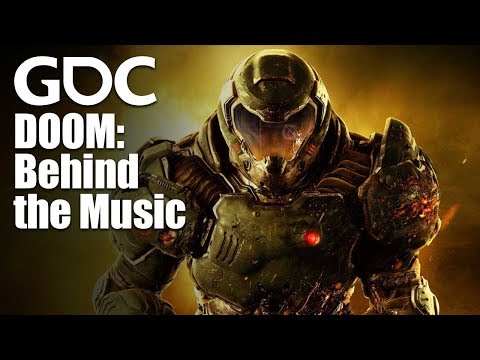
DOOM: Behind the Music
GDC Festival of Gaming
4 HN recommender · 2017–2023
6 comments from Hacker News
I'm convinced that at least 90% of "analog sound" can be simulated by taking the ideal block diagram and replacing every link with a parametric EQ->waveshaper->parametric EQ chain. Configuring those added components correctly is left as an exercise for the reader. Jim Lill's video on guitar amp tone is an interesting demonstration. Hear how close he gets to the original with an even simpler combination of EQ and distortion: ▶ this video
If this is appealing to you, check out this guy who ran a much more systematic set of experiments on even more sacred and sensitive targets: Tested: Where Does The Tone Come From In An Electric Guitar? link Tested: Where Does The Tone Come From In A Guitar Amplifier? ▶ this video
I'd like to plug the YouTube Video by Jim Lill - "Tested: Where Does The Tone Come From In A Guitar Amplifier?" ▶ this video
Jim Lill has a video testing amp tone: ▶ this video It's almost entirely EQ and distortion, applied in various orders (the exact signal chain matters, because EQ after distortion sounds different than distortion after EQ). By getting this right you can simulate any tube amp tone with solid state to a high degree of accuracy.
Love his series, but you really have to keep in mind that his testing methodology is "reductionist": a microphone's quality can't just be distilled to its EQ response. Phase, transient response, clipping, etc. are also part of the equation. edit: My "case in point" moment is Jim's (excellent!) DIY amp section in this video: ▶ this video . Its EQ indeed sounds like the big names, but I'm sure you'll also notice how its dynamics also sound so thin. That's likely because solid state clipping != (saggy) tube overdrive.
I just discovered GAS therapy [0], as there was some controversy about the OP-1 pricing (also from Teenage Engineering). To summarize both sides, software is pretty cheap and limitless. Device are limited which can spark creativity by constraints, their tactile form factor feel great, and their portable nature can be a great advantage. However, there are other arguments that typically revolve around how "software cannot replicate vintage sounds" where the holy wars really begin. Nobody has ever proven that, but the myth endures. Recently enough [1] showed all that basically with an eq, a compressor and a distortion you can reproduce any vintage amp sound, you just need to know how it deviates from a flat sound response. How expensive the vintage or high-end hardware is might be a deterrent for some but a very attractive proposition for others. [0] link [1] ▶ this video