CS50 Lecture by Mark Zuckerberg - 7 December 2005
CS502 HN recommenders · recommended in 2 months, 2016–2025
lecture · general · evergreen · 2016–2025 on HN
A December 2005 guest lecture by Mark Zuckerberg in Harvard's CS50, discussing Facebook's early days, its technical choices and computer science. It captures him as a 21-year-old founder before Facebook's rise.
HN commenters mine it for early-Facebook history, such as his view on open source, privacy and the problems that shaped its architecture.
Up next
 3 mo on HN
CRDTs and the Quest for Distributed Consistency
InfoQ
3 HN recommender · 2018–2020
 5 mo on HN
8 Frames in 16ms: Rollback Networking in Mortal Kombat and Injustice 2
GDC Festival of Gaming
4 HN recommender · 2020–2025
 14 mo on HN
Micro Men - 720p (2009)
gimpymoo
15 HN recommender · 2015–2026
 12 mo on HN
Project Code Rush - The Beginnings of Netscape / Mozilla Documentary
The Documentary Network
13 HN recommender · 2015–2026
 10 mo on HN
Ed Catmull, Pixar: Keep Your Crises Small
Stanford Graduate School of Business
9 HN recommender · 2010–2017
 9 mo on HN
LISA11 - Fork Yeah! The Rise and Development of illumos
USENIX
9 HN recommender · 2012–2026
 6 mo on HN
Secret History of Silicon Valley
Computer History Museum
6 HN recommender · 2010–2026
 4 mo on HN
The Spectacular Failure of the Star Wars Hotel
Jenny Nicholson
4 HN recommender · 2024–2026
 5 mo on HN
The Secret History of Silicon Valley
Google TechTalks
5 HN recommender · 2008–2016
 5 mo on HN
Netscape Mozilla Documentary 1998 - 2000 ProJect Code Rush - creative common licence
znoopy2k
5 HN recommender · 2011–2013
 4 mo on HN
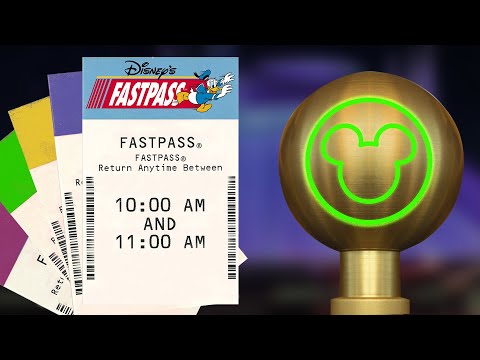
Disney's FastPass: A Complicated History
Defunctland
7 HN recommender · 2021–2024
 4 mo on HN
Complete Apple WWDC | Steve Jobs talk and answer developers questions | 1997
TheAppleFanBoy - Apple & Computer Archives
4 HN recommender · 2018–2025
9 comments from Hacker News
There's a now famous Harvard lecture video on YouTube of Zuckerberg earlier in the Facebook days, where he walks through the issues they hit early on. ▶ this video I watched it ages ago, but I seem to remember one thing that I liked was that each time they changed the architecture, it was to solve a problem they had, or were beginning to have. They seemed to be staying away from pre-optimization and instead took the approach of tackling problems as they had as they appeared, rather than imagining problems long before/if they occurred. It's a bit like the "perfect is the enemy of done" concept - you could spend 2-3x the time making it much more scalable, but that might have an opportunity cost which weakens you somewhere else or makes it harder/more expensive to maintain and support. Take it with a pinch of salt, but I thought it seemed like quite a good level-headed approach to choosing how to spend time/money early on, when there's a lot of financial/time constraints.
It's easy to poke fun at Mark because he's mega rich and can come off a little stiff, but he's pretty interesting to listen when he's speaking without a script. Here's Mark when he was 21 giving a lecture at Harvard's CS50: ▶ this video
But what happens if a company chooses truly the worst language. Like PHP? Oh, right. That was Facebook. They ALSO ran circles around their competitors and crushed them. I hear they are worth /even more/ than Viaweb! Great PHP story: > Dustin was like, 'Hey, I want to help out" > Zuckerberg told Moskovitz, "That's pretty cool. But you don't know any PHP." > "That weekend he went home, bought the book 'PERL for Dummies,' came back, and was like, 'OK, I'm ready to go,'" Zuck said, and told him, "The site's written in PHP, not PERL, dude." - ▶ this video
I suspect the difference is that in the past the only way to go commercial was to work with a big corporation. Going to market with something was so hugely expensive, and required extensive marketing and distribution infrastructure, which was all internal to these big concerns. The problem was these companies expected a lot of invasive creative control and long term contracts to give access to those capabilities, which to be fair were hugely expensive to build and operate. Nowadays all of that infrastructure exists as generic services on the internet you can throw together in a few days, with costs that scale with your needs. I recently watched a Q&A Mark Zuckerberg gave to the Harvard CS50 class in 2005 [0]. He explained that what made Facebook possible to start with was cheap hosted servers running open source software, and the ways that had changed over the previous decade. Nowadays with AWS and Google Cloud its even easier and cheaper. The same applies to physical goods now with eBay, Amazon Marketplace, Etsy, Shopify, running your own one-person media empire on Youtube, etc. The negative connotations with "selling out" were the fact that you had to sell out creative control. You don't have to do that anymore. Dave Chappelle is rightly still sore about how he was cheated over the Chappelle Show. Nowadays you can build an audience independently, and that fact means that even if you do make a deal with big business, they know you're not as dependent on them anymore, so crea
I'd speculate that knowing/discovering/finding the answer to that question is at the very core of why he built the service. I recently watched a 2005 guest lecture[1] by Zuckerberg, it hit me then, why facebook became the success it is/was. The core insight, was the "people you may know" feature, even though that's obvious when I say it, and think about it.. It never struck me before, that, facebook could have been anything (and, was indeed very different back then) and still have succeeded because solving that problem in a seemingly more efficient way at the time then nobody chocked on it. [1] ▶ this video
▶ this video Timestamp of the zucc talking about privacy "We care about it, because if people feel like their information isn't private, then that screws us in the longterm, too."
I agree, I don't want to sound like a Zuckerberg apologist, but it's simplistic to view the Zuckerberg and Facebook of today as we would a 19-year-old Zuckerberg and his elaborate PHP script. As a trivial example: In 2005, when Facebook was a non-trivial company, Zuckerberg [0] guest lectured at a Harvard CS50 class. When asked if Facebook would contribute to open-source, he said that he didn't foresee it being worth the trouble (can't find the exact timestamp, so this is all IIRC with a grain of salt). Now of course, open-source is a substantial part of Facebook. Is it because Zuckerberg in the following years had a Road to Damascus experience with Richard Stallman? Maybe, but it's more likely that Facebook evolved into the type of organization where OSS became a benefit to the bottom line, and it was a decision made by people lower than Zuckerberg at that point. Even if Zuckerberg is still as much a creep as he was in private IM messages as a 19-year-old, he's no longer the sole captain of his tiny boat. Him breaking the law means that many people end up getting in legal trouble, i.e. it doesn't really much matter what he alone thinks is moral when he has dozens of people/potential whistleblowers looking over his shoulder with greater moral concerns. [0] ▶ this video
The ones that are good at building something (or at least focused on it) won't be wasting their time trying to "give back" (read: find other opportunities). Zuckerberg did some very minimal "giving back" while building Facebook IIRC (the biggest being an actually useful course he visited at Harvard called CS50, here: ▶ this video )
> React is a library. It’s precisely the opposite philosophy of large, comprehensive frameworks like Angular and Ember. So when you select React, you’re free to choose modern best-of-breed libraries that solve your problem best. JavaScript moves fast, and React allows you to swap out small pieces of your application for better libraries instead of waiting around and hoping your framework will innovate. Just an aside, but who would've thought that Facebook would be the one to develop around the Unix philosophy? Yes, I know that Google is a monolith, but it became a monolith over one very specific feature and mission, whereas Facebook had to accompany many kinds of user-interaction and behavior right from conception. When Zuckerberg guest lectured CS50 (more than 10 years ago), he didn't foresee FB doing open-source: ▶ this video Excerpt: "There's a lot of work that goes into making stuff open source. And it's on top of whether or not you want to lose the competitive advantage...there's a lot of support and licensing and all that stuff. We found that it's been annoying" Yes, I know FB of 10 years ago is nothing like it is today, with much different people and components...didn't React arise partly/mostly from Instagram? Either way, I was encouraged to use it early on because it was purportedly being used in Instagram production. Angular 1.x wasn't in any of the big sites (other than DoubleClick?). It's nice to see it in more of Google's sites now...but honestly, how it has currently