Even Small Towns are Great Here (5 Years in the Netherlands)
Not Just Bikes1 HN recommender · recommended in 1 month, 2023–2026
explainer · general · evergreen · 2023–2026 on HN
Not Just Bikes reflects on five years in the Netherlands and tours small towns and cities, from Haarlem to Veenendaal. It argues that good urbanism with walkable streets, bike infrastructure and transit is found almost everywhere there, not just in Amsterdam.
Used as a go-to reference in car-dependence debates to show that small towns and rural areas can work without cars.
Up next
 2 mo on HN
Business Parks Suck (but they don't have to)
Not Just Bikes
2 HN recommender · 2022–2025
 12 mo on HN
How Self-Driving Cars will Destroy Cities (and what to do about it)
Not Just Bikes
17 HN recommender · 2024–2026
 11 mo on HN
Stroads are Ugly, Expensive, and Dangerous (and they're everywhere) [ST05]
Not Just Bikes
12 HN recommender · 2021–2025
 10 mo on HN
Why This Channel Exists (and why I hate Houston)
Not Just Bikes
11 HN recommender · 2021–2025
 10 mo on HN
Why American Cities Are Broke - The Growth Ponzi Scheme [ST03]
Not Just Bikes
14 HN recommender · 2021–2024
 9 mo on HN
The Wrong Way to Set Speed Limits [ST06]
Not Just Bikes
9 HN recommender · 2021–2025
 9 mo on HN
Cities Aren't Loud: Cars Are Loud
Not Just Bikes
10 HN recommender · 2021–2025
 10 mo on HN
Why Canadians Can't Bike in the Winter (but Finnish people can)
Not Just Bikes
10 HN recommender · 2021–2026
 9 mo on HN
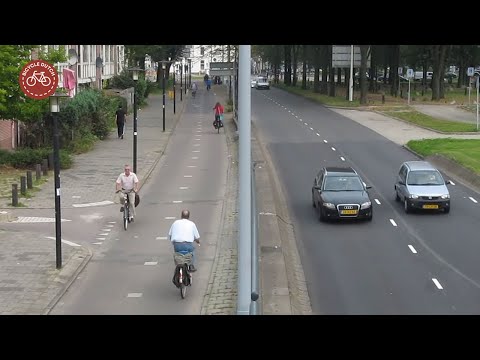
How the Dutch got their cycle paths
BicycleDutch
9 HN recommender · 2013–2022
 9 mo on HN
Why Japan Looks the Way it Does: Zoning
Life Where I'm From
8 HN recommender · 2021–2026
 8 mo on HN
The Best Country in the World for Drivers
Not Just Bikes
9 HN recommender · 2021–2026
 7 mo on HN
Why Grocery Shopping is Better in Amsterdam
Not Just Bikes
7 HN recommender · 2020–2025
12 comments from Hacker News
We actually don’t have to work with what exists. We actively chose and continue to choose what exists. Every day new land is developed that perpetuates these choices. Every day we decide to keep things the same or implement change. Here’s a nice video about how rural towns can be configured to not be car dependent: ▶ this video You’ll notice that this isn’t some ancient European pre-automobile city stuff, you’ll see many single family home tract houses in the suburbs and small towns of the Netherlands that would be at home in any American suburb. The Netherlands did struggle with post-war car-oriented development that it has successfully pushed back against. If you live in Arlington, Texas, you live in a city of over 200,000 people that doesn’t even have bus service.
Did I say we should run subways to every corner? Here’s a nice video about how small suburbs and even farms don’t need to involve deep car dependence: ▶ this video Meanwhile, Arlington, Texas has over 200,000 people with no bus system. And before you say “oh it’s Europe it’s old” I will point out that the Netherlands had a huge car dependency problem in the mid-century and deliberately moved away from it during/after the oil crisis. You can see multiple single family home developments that would be right at home in a US suburb in this video. The author even reaches a rural farm without a car. What about if American transit authorities just did basic stuff like work together and perform actual regional planning rather than working in silos and having conflicts with each other? For example, there’s zero reason why NJ transit should be a different agency than NYC’s transit authority. They should be the same agency that works toward a comprehensive regional transit system focused on the metropolitan area rather than arbitrary state borders. Instead, they’re forced to do things like sell $100 World Cup train tickets because they haven’t been empowered to reap the rewards of the economic development they enable.
Then why does public transit work in other countries with suburbs? Obligatory repost of this video about small towns and cities in the Netherlands being easily accessible by public transit and cycling: ▶ this video I will also point out that a large proportion of suburbs in the US are comparatively brand new developments. While we might not be able to retrofit existing developments, fast-growing suburban locations like those in Texas can change course right now and decide to build in a way that’s transit-oriented.
Hot weather transit: link Cold weather transit: link Transit is small towns and suburbs: ▶ this video I would remind all of us that our built environment is not an inevitability, it is a continuous choice, especially in a rapidly expanding state like Texas. In 1960, 8 million fewer people lived in the Netherlands, and cars definitely existed and were mainstream back then. This idea that the Netherlands is special and this magical thing they've done can't be done anywhere else is a weak one in my mind. It's never too late to change course. It's not a black and white choice where we must suddenly give up our vehicles and never drive, it's more like a gradual increase in the number of trips that are feasible and enjoyable without a car. I know people who lived in Cleveland who started using the bus to get to work when the HealthLine BRT line was completed. They still drive basically everywhere else, but that one bus line changed their daily habits dramatically.
I completely understand your reaction, and it's a very typical one when I talk about this subject. I hope you're willing to engage in a productive conversation and maybe you'll come away with at least a little new perspective. I am not at all advocating for stifling urban density. I never suggested that nor ever talked about building subways or skyscrapers. The organization I linked to is called "Strong Towns" not "Strong Cities" and that is on purpose. > Also a feature: if you can't afford this, perhaps that isn't the community for you? Let's reframe this: If I'm a business owner, I can pay an American breadwinner $100,000 and they'll spend $10,000 on transportation per year for their family. Or, I can hire someone who lives in a place where they don't have to spend that much and I can pay them $95,000 a year. Maybe that other family only owns one car per family instead of two, I'm not even saying that they never drive. They just don't have to use a car to reach 100% of the destinations they want to reach in their life (grocery store, school, work, playground, etc). This is what I'm really getting at here: Americans collectively blowing all this money on longer roads and sewer lines and a bunch of half-empty parking lots that don't generate tax income and economic activity makes America less competitive on the global stage. It’s a silent drag on the economy. This is before we even dive into the rabbit hole of the statement you just made: that you implicitly believe that this
I never said non-city people all need to move to cities. In fact, small towns predate automobiles by thousands of years, and are not examples of urban sprawl. Furthermore, there are examples of suburbs and small towns that are well-served by transit, don't waste land wildly, and don't force you to own a car. [1] I'm just saying that American zoning and regional planning should be adjusted to use land better and be more focused on humans than vehicles. I'm not saying that everyone needs to live in a studio apartment, nor that the government should use eminent domain to re-develop vast swaths of land and displace people. But simple things like zoning law changes can impact the direction of the future. You've done a lot of talking about freedom, facscism, and dictatorship of being forced to live in close quarters. I would submit that the opposite has its own aspects of this "dictatorship." For example, you are forced to buy an automobile from a corporation (and most of them sold today track your every move and sell data to insurance companies [2]). You are forced to risk personal injury to drive that vehicle on the road rather than a safer alternative like walking, biking or transit. You are forced to change your job or lifestyle or home if you ever lose the ability to drive yourself by age or disability. You say that the non-city people will never move to the city, but that has literally already been happening in the past 20 years or so. Finally, I will point out that cities ar
You don’t have to be in a large or even a medium sized city for car dependency to be alleviated. There’s a not just bikes video about this exact thing. ▶ this video
GP here, my parent comment mentioned "This seems very different from the large anti-car movement in the Netherlands in the 1970s". The videos show mostly the result of that movement. If one thinks that traffic in the US is ok and has no idea about how it is in the Netherlands, those videos show what's different. ▶ this video
Small towns and suburbs don't have to be huge road/car hellscapes. I think most Americans don't realize how good it could be. Towns with good walking paths, public transit, and, yes, safe bike paths are: 1. Cheaper for governments to maintain infrastructure - heavy road use leads to more requirements of maintenance. Road sizes in the US are also huge. Needlessly giant firetrucks keep building standards this way. 2. Cheaper for getting around - no gas/insurance/car required. 3. Cheaper for housing - car storage takes up a ton of space. 4. Much, much quieter - cars are the noisiest thing in any town. 5. Much more social and therefore more community oriented. This fosters a more trusting society - something we are in dire need of. 6. Easier to get around as things like grocery stores are built in walking distance to dwellings. 7. Just much more beautiful. It's not just big cities that can benefit from these things. Small towns in the Netherlands are much better than Amsterdam in this way, for example. A very small town can have a town square that you'll see your neighbours in as you buy groceries. The model we've made for ourselves is extremely expensive and literally dystopic hell. We don't need anything other than better organization to get to utopia here. We just lack imagination. Europe could learn a lot from America in economics. But here is where America needs to learn from Europe. Not just Bikes talks a lot about the subtle differences that make life so much more enjoyabl
There's no reason that small towns and rural areas can't have bicycle paths, shade trees, and safe crosswalks. Example: ▶ this video
Even smaller cities and towns can have good bike infrastructure. But it requires good interconnected infrastructure which largely doesn't exist in the US or Canada. ▶ this video
Its just a very American views. I know its crazy to think but not every city in the world is surrounded by endless suburban sprawl. And if you have a good train connection, you can go out of a city very fast an efficiently. Zürich, you have forest 1.6km from the downtown train station. Or 9min with public transport to an even larger forest. To small? Ok, lets look at Berlin. From main train-station, you have a gigantic park only a few minutes away. If that isn't nature enough for you, its a 7.5km distance to a forest outside of the city. Amsterdam, less then 5km to be in the surrounding country side. Vienna, 4km to country side, 7km to a nature reserve. I have not been in any European city where going into to country side isn't trivially easy. Even my 80+ year old grandmother who lived in the cities former industrial area would go for daywalks in nature. > This is a circular claim. So if a suburb works well it's not a suburb? No its not 'suberbia'. 'Suberbia' has a particular definition. This video gives some perspective of what I am talking about:$ ▶ this video