Dr. Bill Harris on the Omega-3 Index: Increasing Omega-3 to Promote Longevity & Transform Health
FoundMyFitness4 HN recommenders · recommended in 4 months, 2022–2022
interview · intermediate · 2022–2022 on HN
Rhonda Patrick interviews Dr. Bill Harris, co-inventor of the Omega-3 Index and author of more than 300 papers on fatty acids. They cover EPA and DHA dosing, fish oil studies such as REDUCE-IT, and how omega-3 levels relate to health and longevity.
HN commenters point to it as a researcher-led answer on omega-3 dosing, with the takeaway that most people take too little.
Up next
 3 mo on HN
DollarShaveClub.com - Our Blades Are F***ing Great
Dollar Shave Club
3 HN recommender · 2013–2016
 11 mo on HN
Video explains the world's most important 6-sec drum loop
Landon Proctor
15 HN recommender · 2011–2026
 3 mo on HN
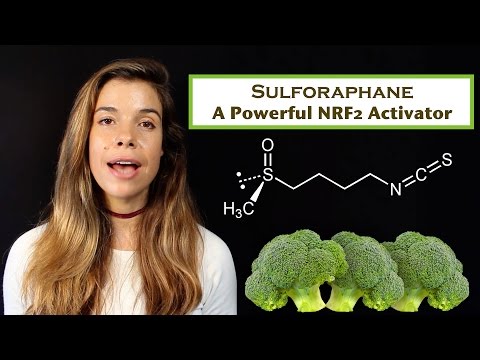
Sulforaphane and Its Effects on Cancer, Mortality, Aging, Brain and Behavior, Heart Disease & More
FoundMyFitness
3 HN recommender · 2017–2022
 4 mo on HN
Prof. Thomas Seyfried - 'Cancer as a Metabolic Disease: Implications for Novel Therapies'
Low Carb Down Under
1 HN recommend · 2020–2023
 1 mo on HN
Obesity is a National Security Issue: Lieutenant General Mark Hertling at TEDxMidAtlantic 2012
TEDx Talks
1 HN recommend · 2021–2026
 5 mo on HN
Government Surveillance: Last Week Tonight with John Oliver (HBO)
LastWeekTonight
5 HN recommender · 2015–2023
 2 mo on HN
David Sinclair | Why We Age and Why We Don't Have To | Talks at Google
Talks at Google
2 HN recommender · 2020–2021
 4 mo on HN
PFAS: Last Week Tonight with John Oliver (HBO)
LastWeekTonight
4 HN recommender · 2021–2025
 12 mo on HN
Sugar: THE BITTER TRUTH
University of California Television (UCTV)
13 HN recommender · 2010–2024
 9 mo on HN
Dr. Michael Greger | How Not To Die | Talks at Google
Talks at Google
8 HN recommender · 2016–2022
 8 mo on HN
Eating less Meat won't save the Planet. Here's Why
Joseph Everett - WIL
10 HN recommender · 2021–2026
 8 mo on HN
Dr. Jason Fung - 'Therapeutic Fasting - Solving the Two-Compartment Problem'
Low Carb Down Under
7 HN recommender · 2017–2022
5 comments from Hacker News
If interesting in Omega-3 benefits, I would suggest watching this video with Dr. Rhonda Patrick and Dr. Bill Harris who has researched fatty acids for over 40 years. [1] [1] - ▶ this video [video]
The NMN research didn't pan out in the end, just throwing that out here. There is something involved in NMN, but taking it (or any of the precursors or metabolites) alone doesn't actually seem to reliably cause what they were looking for. Most likely, it's something like the curcumin vs ground turmeric issue (curcumin doesn't work alone, it combines with another chemical found in turmeric to produce the active chemical, and none of the curcumin supplements work), or with glucoraphanin and myrosinase to produce sulforaphane (popularized by Dr Rhonda Patrick; sulforaphane is short lived, and you need to package them correctly to not self-react in a supplement while it's sitting there on a shelf, so the delivery mechanism is the hard part), or with the flavor of garlic, allicin, another short lived chemical produced by alliin and alliinase (which is why crushing garlic is important instead of slicing, and ground garlic and factory produced minced garlic will never have that magical flavor). Also, as for Omega 3, watch ▶ this video Dr Rhonda Patrick interviews Dr Bill Harris; the main take away from this isn't that it works (we all know that already), it's what the dose range is: we're all underdosing.
I learned a lot here, but I'm not able to restitute it accurately now: [Dr. Bill Harris on the Omega-3 Index: Increasing Omega-3 to Promote Longevity & Transform Health ]( ▶ this video ). From this and other sources, I can summarize an answer as this: omega-3s in large enough doses, doses rarely used in studies, and especially EPA, is extremely good at reducing inflammation (see "resolvins" and EPA), is a good natural blood thinner and improves blood lipids. The doctor interviewed above thinks that the reduction of inflammation is the main benefit. This finding stuck with me: smokers with a good level of omega-3s had the same risk of death in a 10 year period than non-smokers with low omega-3s. Re: ratios and food sources; of course there are. Seafood often has almost exclusively omega-3s as far as I'm aware, though I'm sure this doesn't apply to farm-raised salmon, for instance. Re: conversion rate from ALA, I couldn't find good references initially, but I've found someone citing a "0.5-20%" range for conversion of ALA to EPA/DHA (and I think the conversion to DHA is even lower, or there was some additional caveat). So that's the point, there is a wide variance.
Before people get all excited... Prescription strength EPA can cause heart arrhythmia once you start crawling above 4g a day. No idea if it can happen at doses lower. link I still think 1G-2G of fish oil, with more of a lean to EPA, is probably beneficial over the long run. I, personally, take about 1-1.5G a day of a third-party tested brand but only do so 4 days a week. I give myself a break from supplements over Fri-Sun. Here's a fantastic talk between Dr Rhonda Patrick and Dr. Bill Harris. From the YT Description, he is the author of more than 300 scientific papers on fatty acids and health. He is a professor in the Department of Medicine in the Samford School of Medicine at the University of South Dakota, the co-inventor of the Omega-3 Index, founder of OmegaQuant Analytics, and president and founder of the Fatty Acid Research Institute. ▶ this video
They're both polyunsaturated fats. While an over-simplification Omega3s (which ALA is) tend to be anti-inflammatory and have tons of positive effects of cardiovascular health (up to a point - more on this later) while Omega6s, which are necessary for our survival, do tend to have an inflammatory effect. The goal is to be high-ish in Omega3s without getting mercury poisoning and low in Omega6s. The modern diet - so if you go out to eat at all, if you cook with corn/canola/soybean/cottonseed oils or shortenings like Criso, if you use 90% of most modern pre-made marinades, salad dressings, cereals, chips, crackers, cookies, and even most bread (not including some brands of butter bread), they all load up on "seed oils" (Meaning LA). When people say a good diet is rich in whole foods and low in processed foods - this is what is at the heart of it. Processed foods tend to be high in omega6s, high in sugar, and high in sodium,. The latter 2 are largely for taste, or in salt's case taste and preservation. Omega6s are used b/c the oils are super cheap. These are oils that couldn't exist without modern industry, in the bulk in which we produce them. (unlike say..beef tallow, coconut oil, butter, olive oil, ghee, duck fat, etc.) And initially they were sold by non-food industries as a way to maximize profits on byproducts from other industrial processes. They have incredibly high smoke points and they don't go rancid or spoil, so if you want to make say... Cheeze-Its or Pringles, it's