How We’re Fooled By Statistics
Veritasium3 HN recommenders · recommended in 3 months, 2014–2025
explainer · general · evergreen · 2014–2025 on HN
A short Veritasium video explaining regression to the mean and how ignoring it leads to wrong conclusions about punishment versus reward, medical treatments and sports streaks. It uses the example of flight instructors who believed criticism works better than…
HN commenters link it as the clearest short explanation of regression to the mean, especially for how it misleads people about feedback and statistics.
Up next
 10 mo on HN
Siggraph2019 Geometric Algebra
Bivector
8 HN recommender · 2020–2022
 2 mo on HN
Ferguson, MO and Police Militarization: Last Week Tonight with John Oliver (HBO)
LastWeekTonight
2 HN recommender · 2020–2026
 3 mo on HN
(405) Choosing a High Security Lock
Bill Johnson
3 HN recommender · 2016–2017
 10 mo on HN
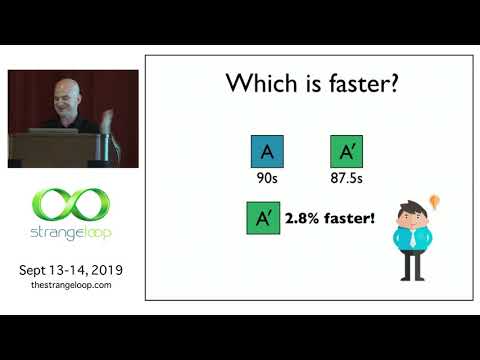
"Performance Matters" by Emery Berger
Strange Loop Conference
12 HN recommender · 2019–2025
 2 mo on HN
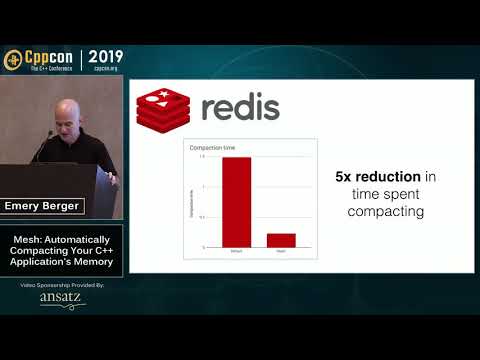
CppCon 2019: Emery Berger “Mesh: Automatically Compacting Your C++ Application's Memory”
CppCon
2 HN recommender · 2019–2023
 14 mo on HN
A Better Default Colormap for Matplotlib | SciPy 2015 | Nathaniel Smith and Stéfan van der Walt
Enthought
15 HN recommender · 2015–2026
 11 mo on HN
DON'T PANIC — Hans Rosling showing the facts about population
Gapminder Foundation
8 HN recommender · 2017–2021
 8 mo on HN
Is Most Published Research Wrong?
Veritasium
8 HN recommender · 2017–2025
 6 mo on HN
How not to be ignorant about the world | Hans and Ola Rosling
TED
5 HN recommender · 2015–2023
 6 mo on HN
I don't like notebooks.- Joel Grus (Allen Institute for Artificial Intelligence)
O'Reilly
6 HN recommender · 2018–2025
 6 mo on HN
VisiData Lightning Demo at PyCascades 2018
Saul Pwanson
6 HN recommender · 2018–2025
 6 mo on HN
Emacs + org-mode + python in reproducible research; SciPy 2013 Presentation
Enthought
5 HN recommender · 2014–2018
4 comments from Hacker News
Or perhaps it's just the old phrase "Lies, damned lies, and statistics" that is appropriate once again? Veritasium explains it better than me. Please watch ▶ this video
> results are so obviously and immediately measurable Ehm… not really – especially not the "obviously" part :) Controlled or even abusive coaching can sometimes lead to better short-term results, but often at the cost of athletes’ mental health and long-term performance. What’s worse, coaching culture in many countries falls victim to the "regression to the mean" fallacy. I’m sure HN readers are familiar with it, but most coaches aren’t – and they’re not trained to adjust their intuition accordingly. Coaches tend to praise athletes when they perform well and criticize them when they don’t. But statistically, if an athlete has an unusually good day in practice, they’re likely to perform worse next time. And if they’re having a rough day, odds are they’ll improve next time. That’s just the nature of sports practice. This creates a repeating pattern: praise followed by worse results, and criticism followed by improvement. Over time, this becomes a learned behavior pattern – reinforced by the environment and by other coaches who interpret it as validation of their approach. Derek from Veritasium has a great video on this: ▶ this video
>Recognizing people's successes and what they are doing well is a 1000% more effective than harping on what people have messed up Yes, this is (verifiably) true. One must be aware, however, that positive feedback is usually going to be ineffective, thanks to natural "regression to the mean" effects, elucidated wonderfully in this Veritasium video[1]. (The point, in the end though, is that performance is going to statistically improve if people do worse than average, and do worse if they do really well, regardless of the feedback you give them", which is called "regression to the mean". The net effect is that you might get a false positive for negative feedback, and a false negative for positive feedback if you don't account for the natural tension that brings everything back to average.) [1] ▶ this video
is that actually the case? [are model weights being published less frequently?] It sure feels like it. But it could be survivorship bias: link or regression to the mean: ▶ this video . It's possible that StyleGAN and GPT-2 just happened to coincide, and both companies just happened to decide to release their models rather than hoard them, and that the usual case is for companies to rarely (if ever) release weights with their research. But the more interesting question is, why wouldn't they? So onward to your second one: are ethical concerns actually the reasons some models/weights are not released? Or is it about hoarding a potentially valuable commodity? Or some other reason, or a combination of several? As with most things, the answer is likely the mundane, dull truth that big companies tend to have lots of inertia and friction preventing such things from happening. Sources of friction seem to include (but are not limited to): - are we legally responsible for what other people do with the model? (no.) - should we restrict people from using the model commercially? (why bother? but sure, nVidia did that for stylegan. It didn't stop Artbreeder from blatantly ignoring and monetizing it anyway. And while that sounds negative, Artbreeder is one of the coolest ML projects ever, as far as I'm concerned, so the world is better off for ignoring your stupid policy.) - What if people start misusing the model? (So what? I feel like I should just get in the face of whoever is asking this qu