Is Most Published Research Wrong?
Veritasium8 HN recommenders · recommended in 8 months, 2017–2025
explainer · general · evergreen · 2017–2025 on HN
Veritasium explains why a large share of published research findings may be false, covering p-values, p-hacking, publication bias and low replication rates. It draws on John Ioannidis's well-known paper and describes reforms such as preregistration.
HN commenters link it whenever a shaky study or the p<0.05 threshold comes up, as a short primer on false positives in science.
Up next
 3 mo on HN
that dark matter video aged like milk
Angela Collier
3 HN recommender · 2024–2024
 5 mo on HN
Revolutionary Paint: How to Make Surfaces Stay Cool in the Sun
Tech Ingredients
5 HN recommender · 2023–2026
 2 mo on HN
Monads and Gonads
Google TechTalks
2 HN recommender · 2013–2022
 3 mo on HN
Dr Russell Barkley on ADHD Meds and how they all work differently from each other
Adhd Videos
3 HN recommender · 2018–2024
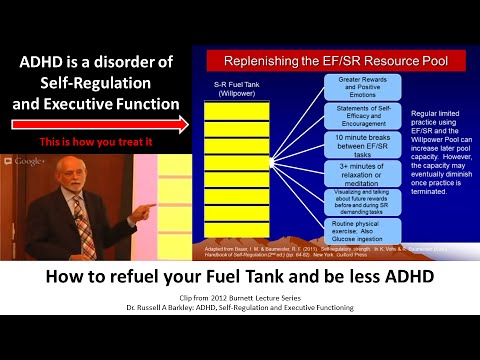 9 mo on HN
This is how you treat ADHD based off science, Dr Russell Barkley part of 2012 Burnett Lecture
Adhd Videos
10 HN recommender · 2015–2025
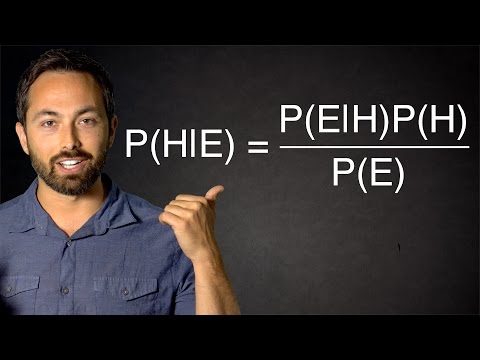 2 mo on HN
The Bayesian Trap
Veritasium
2 HN recommender · 2017–2024
 3 mo on HN
Training AI Without Writing A Reward Function, with Reward Modelling
Robert Miles AI Safety
3 HN recommender · 2019–2023
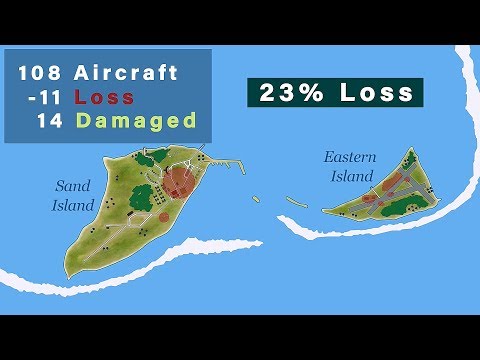 6 mo on HN
The Battle of Midway 1942: Told from the Japanese Perspective (1/3)
Montemayor
7 HN recommender · 2019–2022
 15 mo on HN
The Quantum Conspiracy: What Popularizers of QM Don't Want You to Know
Google TechTalks
11 HN recommender · 2012–2025
 11 mo on HN
James Burke Connections, Ep. 1 "The Trigger Effect"
DRS_Education
12 HN recommender · 2019–2026
 10 mo on HN
Hamming, "You and Your Research" (June 6, 1995)
securitylectures
11 HN recommender · 2012–2023
 9 mo on HN
Why Being Delusional is a Superpower
Veritasium
9 HN recommender · 2020–2024
12 comments from Hacker News
Wikipedia is infamously bad at teaching math. This Veritasium video does a great job at explaining how such skewed priors can easily appear in our current academic system and the paradox in general: ▶ this video
Please watch this video. It neatly shows why should you treat small and less rigorous studies with suspicion, even if there are many giving some results: ▶ this video
Cue “p = 0.05 is a random choice” and a big thread about p-hacking. Any takers? It feels like everything to say has already been said about the bias of small sample sizes and the dangers of p-hacking. But it also seems like the discussion is inevitable here. I wonder if there’s a new insight to glean, somehow... For a background on why p-values are misleading, see ▶ this video which is excellent. He points out that 0.05 was selected by Ronald Fischer in 1925, and people have gone with it since.
If the test data does not have a 50/50 split (or something around that ratio), the headline is straight up lies. Skewed test data is the most common problem with research, reminds me of this great video by Veritasium (Is most published research wrong?): ▶ this video
My dude. Please go get yourself some education on how science works. I feel embarrassed for you. The reproducibility crisis is about the prevalence of false positive results in the scientific literature. This video is a good primer: ▶ this video A false positive is when a paper says "this works" when it actually doesn't, because of a statistical fluke in their sample. Even if citing the reproducibility crisis as an excuse to believe something that science has repeatedly found to be false isn't a really bad reason for belief (which it definitely is)... it doesn't even apply because there can't be false positive results regarding neurolinguistic programming because there aren't any positive results regarding neurolinguistic programming. Even the paper put out by neurolinguistic programming practicioners themselves wasn't able to produce a detectable effect over a placebo. I'm sorry, my friend, but this is an intervention. You're in a cult. You're making the exact same arguments as homeopaths and faith healers and fortune tellers.
It's not 'these days' it's the intrinsic nature of false hypotheses outnumbering true hypotheses by an enormous ratio. Even if everything were working perfectly you'd expect false results to outnumber true results. It's like the common example of disease screening, where even if you only get a false positive 1% of the time, but there are only 1% of true positives in your sample population, you're going get many more inaccurate results than accurate results. This video walks through an example calculation and what kinds of steps are being taken to improve on things. ▶ this video
There's an interesting video by Veratasium "Is Most Published Research Wrong?" (Clickbaity title to be sure.) It shows, on the overall statistics of valid/invalid vs. published/unpublished papers, the arbitrary p-value threshold is wholy inadequate to prevent a sizable fraction of published papers from being false positives (invalid but published). ▶ this video
Definitely. Another good idea is to show the difference between reality and data can be overwhelmingly significant. Videos demonstrating this with examples: - "The Bayesian Trap" link - "Is Most Research Wrong?" ▶ this video
I can understand the sarcasm and respect your take Science has helped reduce mortality at birth and manage or even eliminate a lot of diseases like malaria, HIV, small pox, polio and many more. Also for burns, broken bones and accidents. And continues to. I advocate vaccines. I myself took the Anti Covid shot 3 times. And use medicines and supplements regularly. There’s another side to it though. At what point do I just take an Adderall that’s prescribed to me? Or a pain killer? Rather than trying preventive lifestyle cures? We need a way to tell when to apply what but IMHO in practical life what gains ground is what serves the providers more rather than the beneficiaries. An interesting example is that Anaesthesia was a more quickly adopted invention than Anti-Septic. Even though the latter is more important for the safety of patients. But the former makes life easier for docs, hence it was adopted much faster. There is a place for both and knowing when to apply which is key. You cannot trust HCPs using allopathy aka science backed by academia in every case cause they’re motivated by self interest and aren’t perfect! Even people like Gabriel Weinberg have acknowledged this in his book Super Thinking when touching upon inefficiencies in healthcare and academia. I believe that to be able to trust science more we need to save science from p-value manipulation by self-interest groups… This video by Veritasium also talks about how the accuracy of most published research is contes
Fair enough, you might have indeed rejected those authors - however, vast swathes, for Baumeister the majority, did not at the time. It's almost certainly true now for existing authors we are yet to identify, or maybe never will. I admit the point on TESS, I didn't research that enough. I'll look into that at a later point as I have an interest in learning more. To address your studies regarding expert / study forecasting - thank you for sharing some papers. I had time and knew some papers in the area so I have formulated a response because, as you allude to later regarding cultural predictions, there is debate in the question of the usefulness of expert vs non-expert forecasts (and e.g. there is a wide base of research on recession/war predictions showing the error rate is essentially random at a certain number of years out). I have not fully comprehended the first paper but I understand the gift of it. Economics bridges sociology and the harder science of mathematics, and I do think it makes sense for it to be more predictable than psychology studies by experts(and note the studies being predicted were not survey-response like most are in psychology), but even this one paper does not particularly support your point. Critically, one conclusion in the paper you cite is that "Forecasters with higher vertical, horizontal, or contextual expertise do not make more accurate forecasts.", "If forecasts are used just to rank treatments, non-experts, including even an easy-to-recruit
It's really starting to get hard to believe ANYTHING that comes out in a research paper this days. 7 years ago Veritasium published a video showing that most published research is wrong. News since then has shown that it's not getting better. ▶ this video
> most science withstands the scrutiny If "most" means "most published papers" and "scrutiny" means "can replicate" then no, it doesn't withstand scrutiny: most published research is wrong. ▶ this video (2016) (the exact percentages of non-replicatable articles may be different in different fields)