Why the world population won’t exceed 11 billion | Hans Rosling | TGS.ORG
THINK Global School4 HN recommenders · recommended in 4 months, 2017–2023
lecture · general · 2017–2023 on HN
Hans Rosling uses population statistics to explain why the world population will level off rather than grow without limit. He shows that falling child mortality and rising prosperity lead to smaller families.
Offered as an approachable, data-driven rebuttal to Malthusian overpopulation fears.
Up next
 1 mo on HN
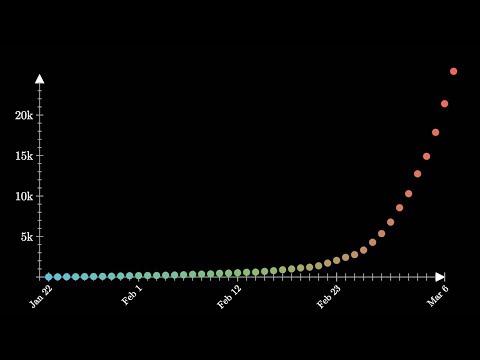
Exponential growth and epidemics
3Blue1Brown
10 HN recommender · 2020–2020
 1 mo on HN
Why Gas Engines Are Far From Dead - Biggest EV Problems
Engineering Explained
1 HN recommend · 2020–2022
 3 mo on HN
The Fall of The Simpsons: How it Happened
Super Eyepatch Wolf
9 HN recommender · 2017–2026
 3 mo on HN
"Why do you lock your door?" - RVASec 2012
Schuyler Towne
2 HN recommender · 2014–2020
 4 mo on HN
Religions and babies | Hans Rosling
TED
4 HN recommender · 2013–2024
 4 mo on HN
34C3 - Dude, you broke the Future!
media.ccc.de
4 HN recommender · 2018–2024
 14 mo on HN
A Better Default Colormap for Matplotlib | SciPy 2015 | Nathaniel Smith and Stéfan van der Walt
Enthought
15 HN recommender · 2015–2026
 12 mo on HN
Hans Rosling's 200 Countries, 200 Years, 4 Minutes - The Joy of Stats - BBC
BBC
10 HN recommender · 2010–2023
 11 mo on HN
DON'T PANIC — Hans Rosling showing the facts about population
Gapminder Foundation
8 HN recommender · 2017–2021
 8 mo on HN
Wealth Inequality in America
politizane
8 HN recommender · 2013–2025
 7 mo on HN
Animations of unseeable biology | Drew Berry | TED
TED
7 HN recommender · 2017–2025
 7 mo on HN
Immigration, World Poverty and Gumballs
NumbersUSA
7 HN recommender · 2013–2024
8 comments from Hacker News
This video might be more approachable: ▶ this video I'm sure it won't convince all of the Malthusian doom and gloom sorts, but it's worth a try.
Hans Rosling rebuts this, especially in Factfulness.* If you look at population trends in countries worldwide, populations routinely level out only after improving underlying economic and health conditions. When infant mortality is high and children are an economic necessity, parents compensate by having many kids. When a country gets better healthcare and better economic opportunities, there's an initial generation of population explosion as more kids suddenly survive childhood, but then the population immediately plateaus and begins to recede. The epidemiological studies and population data is overwhelming that the simple model Malthus used fails to explain human behavior. * Also in some videos online: 1. link 2. ▶ this video But to put in a closing plug for Factfulness, it's one of the best simple and accessible primers how to avoid major cognitive biases, and also teaches a lot about the current state of the world.
What do you think the benefits of mandatory population control are? Have you seen any of Hans Rosling's [1] talks on the topic of population growth? After watching, would you still think there is need for mandatory population control? [1] ▶ this video
I highly recommend by the late Hans Rosling: Why the world population won’t exceed 11 billion. It explains quite well what the sister comment by riffraff refers to. [1]: ▶ this video
“Why the world population won’t exceed 11 billion” - talk by Han’s Rosling (7yr ago) ▶ this video He was popular at TED and built gapminder data viz tool when web2 tech started becoming popular.
What was the previous generation's child mortality rate? From what I read, that seems to be the dominant factor for the number of children you're expected to get, not so much what religion one has. Probably contraception availability also plays a role there, but I'd be surprised if the two don't go hand in hand: if you have money to spend on healthcare then you'll also have the money for cheap contraceptives. Edit: another comment ( link ) linked to a video by the author of the book that I read the above claim in: ▶ this video (the conclusion is what I linked, about 1 minute of watch time)
>as a result of that, the world's population has been growing and growing At first yes, but not recently, now the opposite is true, if anything. We haven't had exponential growth since the 60s and are currently headed towards a steady state population because of improved standards of living. Turns out health and properity leads to smaller families. We do still have significant growth, but that is largely because we're filling out the older demographics in many countries, the birth rate is largely under control already, and once the current generations spread through we'll be in a stead state (around 11 billion). In fact, there's no way to _stop_ this growth now, short of killing or sterilising people, since the birthrate is already under control, we're just waiting for the last exponential generations to get old. see ▶ this video Long term, we probably should encourage (slightly) sub-2 children per family to let the total population shrink, but that will take a long time (unless something disasterous happens)
The world's population will peak at 11 billion in 2050, so that's the problem we are tasked to solve ▶ this video