Music as a Language: Victor Wooten at TEDxGabriolaIsland
TEDx Talks3 HN recommenders · recommended in 3 months, 2017–2018
talk · general · evergreen · 2017–2018 on HN
Bassist Victor Wooten argues that music should be learned the way children learn their first language: by immersion and play, without early correction or rigid academic instruction. He draws on how babies pick up speech from the people around them.
HN commenters point to it when discussing how to teach children or beginners, as a language-like alternative to formal instruction.
Up next
 3 mo on HN
Gender Neutral Pronouns: They're Here, Get Used To Them
Tom Scott
3 HN recommender · 2013–2015
 6 mo on HN
BlueHat IL 2019 - Andrew "bunnie" Huang - Supply Chain Security: "If I were a Nation State...”
Microsoft Israel R&D Center
6 HN recommender · 2019–2024
 15 mo on HN
But what is the Fourier Transform? A visual introduction.
3Blue1Brown
16 HN recommender · 2018–2025
 6 mo on HN
Cybersecurity as Realpolitik by Dan Geer presented at Black Hat USA 2014
Black Hat
1 HN recommend · 2014–2023
 4 mo on HN
Mark Blyth ─ Global Trumpism
Watson School of International and Public Affairs
3 HN recommender · 2016–2019
 3 mo on HN
Chernobyl 3828
TeleconStudio
2 HN recommender · 2014–2019
 4 mo on HN
Flat Earth: A Measured Response
hbomberguy
3 HN recommender · 2019–2024
 3 mo on HN
TasBlock at AGDQ 2017: TASBot
TASVideosChannel
3 HN recommender · 2019–2025
 11 mo on HN
Music Theory and White Supremacy
Adam Neely
11 HN recommender · 2020–2024
 8 mo on HN
Music Software & Bad Interface Design: Avid’s Sibelius
Tantacrul
8 HN recommender · 2019–2026
 8 mo on HN
Trackers: The Sound of 16-Bit
Ahoy
7 HN recommender · 2021–2026
 6 mo on HN
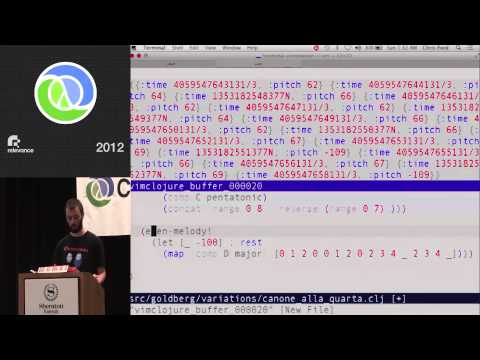
Functional Composition - Chris Ford
ClojureTV
6 HN recommender · 2013–2023
3 comments from Hacker News
> it's important at the beginning to do the chore together This is very important. Kids are clever and surprisingly capable when they are able to gain some firsthand experience. The problem is they don't actually have that experience. Humans learn by observing and imitating ; working together on the same task lets them easily observe in detail from an experienced role model. Immediate feedback lets them rapidly iterate their attempts to imitate their observations. Victor Wooten gave an outstanding TED talk[1] on this topic[2]: > If you think about how you learned [to speak English], you realize you weren’t taught it. People just spoke to you. But the coolest thing is [...] you were allowed to speak back. > Now if I take the music example, in most cases, our beginners are not allowed to play with the better people. You’re stuck in the beginning class. You have to remain there a few years, until you are elevated to the intermediate and then advanced. [...] > But with language, to use a musical term, even as a baby you’re jamming with professionals, all the time — to the point that you don’t even know you’re a beginner. No one says, “I can’t talk to you until you got to go over there. When you’re older, then I can speak to you.” It doesn’t happen. No one tells you what you have to say. You’re not made to sit in a corner and practice. You’re never even corrected when you’re wrong. > Think about it, when you’re 2, 3 years old and you say a word wrong over and over, no one corrects
Check out Victor Wooten's Ted Talk on thinking about music as a language. He compares learning music with learning to talk. The general premise: "Nobody waits until you're an expert in language before being allowed to speak, why are you expected to be a master before you can make music with other musicians?". ▶ this video
A musical instrument. I would suggest not teaching them the traditional way, but in a more natural way. Check out the approach of Victor Wooten [0]. If you want things a little more structured, try Improvise for Real [1]. Both will teach creativity, self expression and more. Plus its fun! [0] ▶ this video [1] www.improviseforreal.com