The Voting System That Should Replace Every Election
CGP Grey7 HN recommenders · recommended in 7 months, 2012–2021
explainer · general · evergreen · 2012–2021 on HN
A short CGP Grey explainer on the alternative vote (instant runoff voting) versus first past the post, made around the 2011 UK referendum. It shows how ranked ballots are tallied and why they avoid spoiler effects.
HN's go-to link whenever ranked-choice voting or voting reform comes up, because it explains the mechanics quickly and entertainingly.
Up next
 4 mo on HN
YouTubers have to declare ads. Why doesn't anyone else?
Tom Scott
6 HN recommender · 2021–2024
 8 mo on HN
Contrepreneurs: The Mikkelsen Twins
Folding Ideas
10 HN recommender · 2022–2026
 2 mo on HN
The Alt-Right Playbook: The Card Says Moops
Innuendo Studios
2 HN recommender · 2019–2025
 4 mo on HN
The Alt-Right Playbook: How to Radicalize a Normie
Innuendo Studios
4 HN recommender · 2020–2026
 5 mo on HN
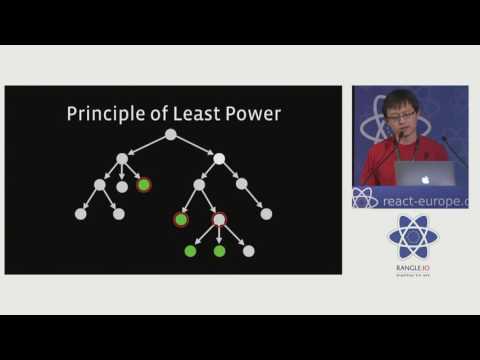
Cheng Lou - On the Spectrum of Abstraction at react-europe 2016
ReactEurope
5 HN recommender · 2016–2022
 3 mo on HN
The Alt-Right Playbook: Introduction
Innuendo Studios
3 HN recommender · 2020–2022
 2 mo on HN
Rupert Sheldrake - The Science Delusion BANNED TED TALK
James Dearden Bush
2 HN recommender · 2013–2022
 2 mo on HN
Hackfest 2015: Theo de Raadt presented "Pledge: A new security technology in openbsd"
Hackfest Communication
2 HN recommender · 2015–2022
 12 mo on HN
George Lakoff: Moral Politics
University of California Television (UCTV)
3 HN recommender · 2016–2024
 11 mo on HN
Why Electronic Voting Is Still A Bad Idea
Tom Scott
11 HN recommender · 2020–2026
 11 mo on HN
Republic, Lost | Lawrence Lessig | Talks at Google
Talks at Google
10 HN recommender · 2011–2017
 11 mo on HN
Antonin Scalia - On American Exceptionalism
AmericanRhetoric.com
12 HN recommender · 2019–2025
12 comments from Hacker News
GCP Gray has a great series on voting systems. Here is his one on Alternative Voting: ▶ this video Highly recommend his videos. Funny and informative. Also his Podcast, Hello Internet is awesome.
I've been a huge fan of this system ever since CGP Grey made an excellent video on how it works and why it's great. Link: ▶ this video
> All governments are aristocracies. All states are. Not all systems of government are states. > media manipulations of wide populous The media is owned by the same "aristocracy" that controls the state. In the US and other capitalist countries the aristocracy mostly consists of billionaires and a few political "clans" (usually with ties to "old money"). In the USSR the aristocracy was the Bolshevik intelligentsia and former capitalists that formed the bureaucracy. The problem isn't inherent to humanity, it's inherent to centralized systems. The video you linked actually supports this somewhat: a ruler can't rule alone, they need a staff of advisors and delegates to carry out the ruler's orders. But this is only a problem if you try to have a ruler, or a committee of rulers. The usual counter-argument is that decentralized systems don't work at scale. You can have small communities decide things with direct democracy but clearly that doesn't scale because it's harder to reach consensus the larger the group becomes. To address this I would invite you to read into Democratic Confederalism or watch Anark's aptly-titled video "after the revolution"[0] that explores a very similar anarchist/mutualist governance structure. In most of these scenarios the answer to "direct democracy doesn't scale" is a delegate system and it's easy to mistake this for the same representative democracy we're used to but the important difference is that the delegation is not only proportional but volun
I watched the video at your link, but it wasn't very descriptive as to how the votes are actually tallied. This video does a good job of explaining RCV: ▶ this video Is there a similar video for STAR? I can see the problem with RCV now. It doesn't completely eliminate the spoiler effect, just makes it less likely. I understand how votes are cast in each system and they seem similar. STAR seems like RCV, but you can put multiple candidates in the same rank. I'm not sure how STAR votes are tallied, but wouldn't you be able to implement that same system with RCV? The only difference is same-ranking candidates. Is that the key to STAR's improvement? EDIT: Is it just this simple? You sum their score, then instant runoff the top 2?: link I can't tell if it's better or not yet. It still definitely doesn't elect the condorcet winner... which you can see from 3 voters and 12 candidates: Voter 1: 4 for A, 3 for B, 2 for C, 1 for J Voter 2: 4 for D, 3 for E, 2 for F, 1 for J Voter 3: 4 for G, 3 for H, 2 for I, 1 for J It's more contrived than the example for RCV, so I think it's more resistant to spoiler effect, but it clearly happens here. Essentially, every favored candidate higher than 1 is different and they all have the same candidate for their last favorite candidate. As you can see, A,D,G have the most votes, but in 1-on-1 face-offs, J would win most of the elections. Voter 1 likes J more than D,E,F,G,H, and I. Voter 2 like J more than 6 other candidates as well and same with Voter
> Or vote for someone you actually believe in even if they are not likely to win. Maybe I'm crazy but I believe voting for the lesser of two evils No you are not crazy, you just haven't studied the game theory of voting. In our old, outdated first-past-the-post voting system voting, according to game theory you should vote for the less or 2 evils. A vote for a 3rd party that has no chance of winning is no different than not voting at all. Most people intuitively get this, which is why we are stuck with a 2 party system. There are better more democratic system like Maine's rank choice voting. There you can safely vote for your favorite candidate without worrying about the spoiler effect. If you want to learn more: ▶ this video
The best solution to Gerrymandering is the Alternate Vote. CGP Grey has a great video explaining it: ▶ this video He also has a great "what is gerrymandering" video that illustrated this same idea, but with fun animals. link
While personally I think this is a great idea, it's nothing new. In a technocratic society; specialists rule. It wouldn't matter whether the President would be a programmer, engineer, or theorist. Any scientist would do an equally good job at re-factoring the government's inefficiencies. But sadly, a FPTP voting process means it's a popularity contest. Fix the voting system, and open up this possibility. My vote's on this: ▶ this video
Reform the electoral system to achieve the representation we all deserve. The electoral system we use now: link Alternatives: link link ▶ this video link We can start introducing these to everyone at the state and local level to build momentum for electoral reform at the federal level. A good old fashioned general strike until we get what we need from our "representatives".
How important is this privilege if I can maliciously control how you vote? Now imagine the good we can do with real electoral reform (Democrats idea of repealing citizens United is a meager start, but weak lip service to real reform) What we have now - First Past The Post Voting - link Range Voting - link Single Transferable Vote - link Alternative Vote - ▶ this video Mixed-Member Proportional Representation - link Electoral reform is just step 1, something we can all come together for. Something no one could possibly be against. How about if I control who can be voted for? Of course it matters - link bonus video: This video will make you angry - link
Elections are supposed to be bloodless revolutions. If you can't effect change through the electoral system, then the non violent solution is to revolutionize how we vote. Relevant videos (IMO) First Past The Post Voting - link Range Voting - link Single Transferable Vote - link Alternative Vote - ▶ this video Mixed-Member Proportional Representation - link Bonus video This video will make you angry - link
The real problem is both main stream political parties don't represent around 45% of the country. First Past The Post Voting- link Range Voting- link Single Transferable Vote - link Alternative Vote - ▶ this video Mixed-Member Proportional Representation - link
Some tweaks I'd make: Corporate structure: link Electoral system: What we have now - link Range voting - link Alternative vote - ▶ this video Single transferrable vote - link Marx wrote about the theory of societal evolution; That there are certain phases civilization must pass through. The communism he wrote about would have to be very far down the road, 100+ years (IMO). This does not mean people sit back and do nothing, we still would have to work towards it. (Most) Capitalists profit from the status quo, and work to keep in place systems to maintain their spot in the hierarchy. Thus the antiquated electoral system in the USA, and the top heavy power/pay structures of business. TL;DR: give the average person more of a say/choice in the world they live in (politics/workplace), and they will find their way forward. (IMO)