Milton Friedman - I, Pencil
Free To Choose Network1 HN recommender · recommended in 1 month, 2019–2026
explainer · general · evergreen · 2019–2026 on HN
A two-minute clip in which Milton Friedman uses a humble pencil to show how thousands of strangers across many countries cooperate, without central direction, to make a simple product. It is a short visual version of the 'I, Pencil' essay's argument about fre…
HN commenters cite it as the quick, shareable illustration of hidden supply-chain complexity and decentralized knowledge, and bring it up in threads on AI, manufacturing and specialization.
Up next
 10 mo on HN
Fear the Boom and Bust: Keynes vs. Hayek - The Original Economics Rap Battle!
Radical Discourse
10 HN recommender · 2010–2024
 8 mo on HN
Debt: The First 5,000 Years | David Graeber | Talks at Google
Talks at Google
8 HN recommender · 2013–2024
 7 mo on HN
The Machinery Of Freedom: Illustrated summary
bitbutter
4 HN recommender · 2012–2020
 6 mo on HN
The Psychology of Human Misjudgement - Charlie Munger Full Speech
BuffettMungerWisdom
6 HN recommender · 2014–2023
 6 mo on HN
The Economics of Airline Class
Wendover Productions
6 HN recommender · 2017–2025
 7 mo on HN
Peter Thiel on "The Portal", Episode #001: "An Era of Stagnation & Universal Institutional Failure."
Eric Weinstein
8 HN recommender · 2019–2024
 7 mo on HN
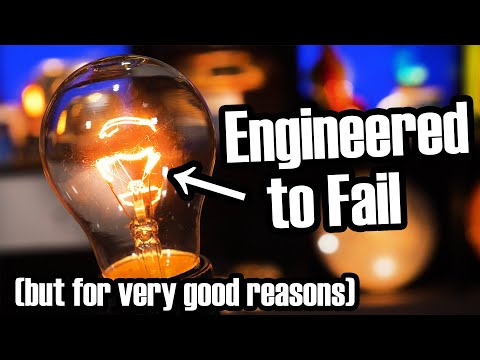
Longer-lasting light bulbs: it was complicated
Technology Connections
9 HN recommender · 2023–2026
 6 mo on HN
Tobacco: Last Week Tonight with John Oliver (HBO)
LastWeekTonight
6 HN recommender · 2015–2021
 6 mo on HN
Democracy at Work: Curing Capitalism | Richard Wolff | Talks at Google
Talks at Google
6 HN recommender · 2017–2026
 6 mo on HN
The Lottery: Last Week Tonight with John Oliver (HBO)
LastWeekTonight
6 HN recommender · 2014–2023
 6 mo on HN
Milton Friedman - The Negative Income Tax
LibertyPen
7 HN recommender · 2012–2022
 5 mo on HN
The Carbon Offset Problem
Wendover Productions
5 HN recommender · 2022–2023
12 comments from Hacker News
Milton Friedman put it best, in "I, Pencil". Everything around you is the result of hundreds to thousands of economic actors, loosely but robustly coordinated in a way to get you what you actually want at as low of a price as you can get away with. The complexity of the supply chain is the price of admission to the game. ▶ this video
This also applies to other things. No one person knows how to make a pencil. Three minute video by Milton Friedman: ▶ this video
Not just both sides, but infinite sides, every country border for anything that crosses the border. Making a pencil might requires dozens to thousands of mining/factories in the pencil supply chain and there is taxation at every level! Milton Friedman - I, Pencil: ▶ this video and link "Look at this lead pencil. There’s not a single person in the world who could make this pencil. Remarkable statement? Not at all. The wood from which it is made, for all I know, comes from a tree that was cut down in the state of Washington. To cut down that tree, it took a saw. To make the saw, it took steel. To make steel, it took iron ore. This black center—we call it lead but it’s really graphite, compressed graphite—I’m not sure where it comes from, but I think it comes from some mines in South America. This red top up here, this eraser, a bit of rubber, probably comes from Malaya, where the rubber tree isn’t even native! It was imported from South America by some businessmen with the help of the British government. This brass ferrule? [Self-effacing laughter.] I haven’t the slightest idea where it came from. Or the yellow paint! Or the paint that made the black lines. Or the glue that holds it together. Literally thousands of people co-operated to make this pencil. People who don’t speak the same language, who practice different religions, who might hate one another if they ever met! When you go down to the store and buy this pencil, you are in effect trading a few minutes of your time for a
In business, you pay for those contributions. Milton Friedman describes how a pencil is made with the self-coordinated efforts of millions of people around the globe: ▶ this video
>Genuine question - are people comfortable with this? It's a question of degree, but in general, yeah. I'm totally comfortable being reliant on other entities to solve complex problems for me. That's how economies work [1]. I neither have nor want to acquire the lifetime of experience I would need to learn how to produce the tea leaves in my tea, or the clean potable water in it, or the mug they are contained within, or the concrete walls 50 meters up from ground level I am surrounded by, or so on and so forth. I can live a better life by outsourcing the need for this specialized knowledge to other people, and trade with them in exchange for my own increasingly-specialized knowledge. Even if I had 100 lifetimes to spend, and not the 1 I actually have, I would probably want to put most of them to things that, you know, aren't already solved-enough problems. Everyone doing anything interesting works like this, with vanishingly few exceptions. My dad doesn't need to know how to do algebra to get his taxes done, he just has an accountant. And his accountant doesn't need to know how to rewire his turn of the century New England home. And if you look at the exceptions, like that really cute 'self sufficient' family who uploads weekly YouTube videos called "Our Homestead Life"... It often turns out that the revenue from that YouTube stream is nontrivial to keeping the whole operation running. In other words, even if they genuinely no longer go to Costco, it's kind of a gyp. [1]: [VI
And what about all the parts that Zeiss is using? That's basically Milton Friedman on how a pencil is made, but on steroids: ▶ this video
What is the counter-example? We recycle known good stuff to avoid getting bogged down and introducing fresh flaws. The admonition to know what we're doing and act deliberately applies to so much in life, but flies in the face of Milton Friedman's point in "I, Pencil" => ▶ this video
The last guy who traditionally "knew everything" was Erasmus. The shame is not in outsourcing the skill to, e.g. make a pencil[1]; rather, the shame is not retaining one's major skill. In IT, that is actually thinking . [1] ▶ this video
Thanks for posting this. I saw a video[0] with Milton Friedman in it that quoted this essay but didn't understand it's origin. ▶ this video
Leonard Read had the same feeling when he wrote "I, Pencil". Here [1] you have it narrated by Milton Friedman. [1] ▶ this video
The show "The Walking Dead" always bothered me. Where do they keep finding gas that will still run a car? It wont last forever in tanks, and most gas is just in time delivery (Stations get daily delivery) -- And someone noted on the show that the grass was always mowed. I feel like the AI safety folks are spinning an amazing narrative, the AI is gonna get us like the zombies!!! The retort to the ai getting out of the box is how long is the extortion cord from the data center? Lets get a refresher on complexity: I, Pencil ▶ this video The reality is that we're a solar flair away from a dead electrical grid. Without linesman the grid breaks down pretty quickly and AI's run on power. It takes one AI safety person with a high powered rifle to take out a substation link Let talk about how many factories we have that are automated to the extent that they are lights out... link Its not a big list... there are still people in many of them, and none of them are pulling their inputs out of thin air. As for those inputs, we'll see how to make a pencil to understand HOW MUCH needs to be automated for an AI to survive without us. For the for seeable future AI is going to be very limited in how much harm it can cause us, because killing us, or getting caught at any step along the way gets it put back in the box, or unplugged. The real question is, if we create AGI tomorrow, does it let us know that it exists? I would posit that NO it would be in its best interest to NOT come out of its clos
Sure, we can simplify it as such.... Deploy it to what? How? Via what? Who is managing it? Who is paying for it? Who physically installed the server, and setup your ability to DrawTheRestOfTheHTML? Personally - while we want abstraction in our deployment understandings to smooth ramp understanding - its important to see all the supporting inputs that made your SFTP of an .html possible. >>I once saw him teach a philosophy lesson about a pencil. A Fuckin' Pencil! ▶ this video