A Million Dollars vs A Billion Dollars, Visualized: A Road Trip
Tom Scott3 HN recommenders · recommended in 3 months, 2021–2026
explainer · general · evergreen · 2021–2026 on HN
Tom Scott makes the difference between a million and a billion dollars tangible by using distance on a road trip instead of volume. The drive makes the scale of a billion intuitively felt.
HN points to it whenever discussion turns to billionaire wealth or the human difficulty of grasping very large numbers.
Up next
 17 mo on HN
How The Economic Machine Works by Ray Dalio
Principles by Ray Dalio
18 HN recommender · 2014–2026
 15 mo on HN
Try to Rule Fairly and You'll Be Overthrown
CGP Grey
15 HN recommender · 2016–2025
 2 mo on HN
Velocity 09: John Allspaw and Paul Hammond, "10+ Deploys Pe
O'Reilly
2 HN recommender · 2018–2023
 7 mo on HN
Incels | ContraPoints
ContraPoints
7 HN recommender · 2018–2024
 3 mo on HN
The Art of the Bodge: How I Made The Emoji Keyboard
Tom Scott
4 HN recommender · 2018–2024
 2 mo on HN
Fatboy Slim - The Rockafeller Skank | Het verhaal achter het nummer
Top 2000 a gogo
2 HN recommender · 2021–2021
 3 mo on HN
New computers don't speed up old code
Matthias random stuff
3 HN recommender · 2025–2025
 4 mo on HN
Worst Nuclear Accidents in History
Kurzgesagt – In a Nutshell
7 HN recommender · 2021–2023
 11 mo on HN
What Happened to Horses Is Happening to Us
CGP Grey
11 HN recommender · 2014–2026
 10 mo on HN
Winners Take All | Anand Giridharadas | Talks at Google
Talks at Google
9 HN recommender · 2018–2026
 10 mo on HN
The Coming Collapse of the Middle Class with Elizabeth Warren
University of California Television (UCTV)
10 HN recommender · 2008–2022
 8 mo on HN
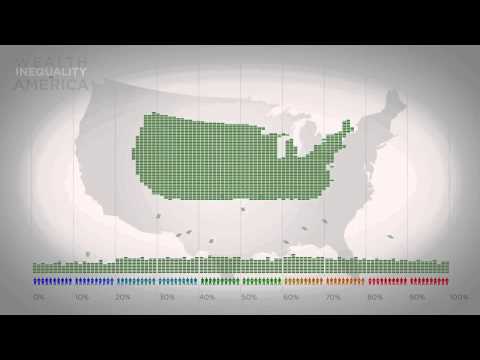
Wealth Inequality in America
politizane
8 HN recommender · 2013–2025
7 comments from Hacker News
It's hard to actually visualise large numbers; a common problem actually Tom Scott has a great video on it: ▶ this video EDIT: Decide to swap the examples to British cities, inkeeping with what you said about apples/oranges; which people may be less familiar with; but hopefully it gives the sense of scale.
I don't know the answer to your question, but I think this[0] video might help to visualize the mind-boggling scale of the world (in the video you can substitute dollars with human beings). And it's only one billion visualized so in order to go through the entire human population you would have to watch it 7.9 times which would take something over 10 hours. As the dollar meter keeps running relentlessly you can imagine yourself being one split of a second somewhere there, and then you can imagine the sea of people working hard at compilers, optimizers, math etc. blasting you all at once with their brilliant observations. It's only natural to get overwhelmed if you expose yourself to the aggregate of the most brilliant and productive humans, because as rare as they might be, the human population is so staggeringly big that there are LOTS of them. You might not be doing so bad compared to the rest of the humanity though ;) [0] ▶ this video (A Million Dollars vs A Billion Dollars, Visualized: A Road Trip)
I find these scrolling websites unergonomic and not at all that good at getting the point across (other than "yeah, it's a lot"). Also, with the text-length budget of that site I think it's a shame it doesn't explain what wealth, profit, liquidity and cash-on-hand is. Better visualisations imo: - Tom Scott: A Million Dollars vs A Billion Dollars, Visualized: A Road Trip ▶ this video - How rich are Jeff Bezos and Elon Musk in Minecraft terms link
I feel like we need a society where the amount of capital you get to keep is inversely proportional to how much you give back to society, on a percentage level. Have $100 billion dollars? Great. The more you give back in charity and community, the more you get to keep. Care more about "number go brrr" and less about your fellow man? We tax all kinds of personally harmful behavior like drinking and smoking. We should also tax anti-social behavior similarly. Someone like Musk with multiple hundreds of billions of dollars in capital should lose 75% of it unless you give back at least 25 or 30% of it, minimum. I'm not qualified to decide the exact percentage points. But we have to do something to keep the rich from vacuuming up almost every penny that exists. Relevant for perception, possibly the greatest such illustration: ▶ this video Daily reminder that to this day, John Rockefeller is considered one of the wealthiest humans in history, despite the fact that today's billionaires dwarf his raw numbers.
Tom Scott did a video on this, "A Million Dollars vs A Billion Dollars, Visualized: A Road Trip": * ▶ this video The length of one million USD is about the distance of a US football field or UK football pitch (which he demonstrates walking in a parking lot). The length of one billion USD is driving over an hour at a speed of 100 kph (55 mph), the rest of the video.
In late 1970s he was worth $67M by 1982 it was $370M , $670M in 1983 and billonare in 1986 at age 56.[1] He bought control of Berkshire Hathaway in 1965 about 17 years prior to hiring Jain. His model and name were well known in the right circles by then. In the investment world and cricles where he would be searching for talent in early 80s he had demigod status, making that kind of returns as pure investor without being a founder of tech company like Apple/MS was unheard of . He was not as popular with general public , it wasn't as big a story for middle aged man making money by investing in boring stocks as compared to 20-30yr old tech rock stars with more colourful life like Jobs/Gates and type of products Apple /MS were building at that time. General public popularity came much later when he became the richest in the world --- [1] It is very very hard to 20x $50M by just investing in lower risk diversified assets. We don't fully grasp how rich billionaires are. Tom Scott video ▶ this video comes to mind
> Also just assuming that someone who donates billions is evil without any research whatsoever is just lazy clickbait journalism. Assuming someone who donates billions is not evil is also lazy thinking... To me the article doesn't say Gates is "evil". They say Gates uses his immense influence to make the world how he sees fit. Do you have any evidence against Gate's being in strong favor of IP over open access? And let's roll with it... Do you think Gates should have the power to influence the lives of billions like that? I don't mean "access to vaccines" and other superficial no-brainers, I mean setting up the world way beyond the good bits. It's not like the "patents: good, corporate power: good" weltanschauung is general consensus, especially in research where he plays his cards[+]. [+] ▶ this video