Are we in control of our decisions? | Dan Ariely
TED2 HN recommenders · recommended in 2 months, 2011–2017
talk · general · evergreen · 2011–2017 on HN
In a TED talk, behavioral economist Dan Ariely uses visual illusions and his research to show that people are less rational in their decisions than they think. He covers defaults, such as organ donation rates, and how choice framing steers decisions.
Used to illustrate predictable irrationality, such as defaults and the effect of the middle option among three choices.
Up next
 10 mo on HN
Fear the Boom and Bust: Keynes vs. Hayek - The Original Economics Rap Battle!
Radical Discourse
10 HN recommender · 2010–2024
 8 mo on HN
Debt: The First 5,000 Years | David Graeber | Talks at Google
Talks at Google
8 HN recommender · 2013–2024
 7 mo on HN
The Machinery Of Freedom: Illustrated summary
bitbutter
4 HN recommender · 2012–2020
 6 mo on HN
The Psychology of Human Misjudgement - Charlie Munger Full Speech
BuffettMungerWisdom
6 HN recommender · 2014–2023
 6 mo on HN
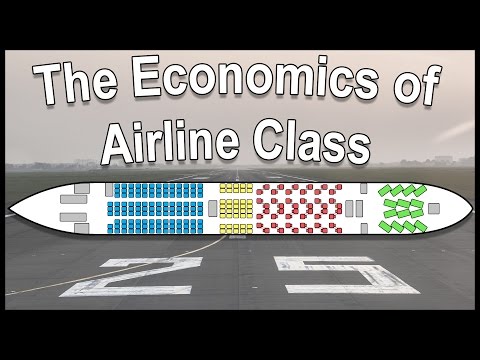
The Economics of Airline Class
Wendover Productions
6 HN recommender · 2017–2025
 7 mo on HN
Peter Thiel on "The Portal", Episode #001: "An Era of Stagnation & Universal Institutional Failure."
Eric Weinstein
8 HN recommender · 2019–2024
 7 mo on HN
Longer-lasting light bulbs: it was complicated
Technology Connections
9 HN recommender · 2023–2026
 6 mo on HN
Tobacco: Last Week Tonight with John Oliver (HBO)
LastWeekTonight
6 HN recommender · 2015–2021
 6 mo on HN
Democracy at Work: Curing Capitalism | Richard Wolff | Talks at Google
Talks at Google
6 HN recommender · 2017–2026
 6 mo on HN
The Lottery: Last Week Tonight with John Oliver (HBO)
LastWeekTonight
6 HN recommender · 2014–2023
 6 mo on HN
Milton Friedman - The Negative Income Tax
LibertyPen
7 HN recommender · 2012–2022
 5 mo on HN
The Carbon Offset Problem
Wendover Productions
5 HN recommender · 2022–2023
5 comments from Hacker News
> 7. If you are given a choice, you believe you have acted freely. Dan Ariely has a great talk on "decision illusions"(1) that goes into more depth on this topic. He starts off with visual illusion as a metaphor for rationality: "So if we have these repeatable and predictable mistakes with vision, which we are so good at, what's the chance we don't make even more mistakes with something we're not as good at?" (1) ▶ this video
I wouldn't label it stupidity or ignorance, but it is a weel documented quirk of human behavior the default state of opt in / opt out systems makes a huge difference. This ted talk is an excellent and talks about the very significant differences in organ donation rates between countries that use an opt out system vs. those that use an opt in. ▶ this video
Question to deep learning practitioners: Is there any research on comparing the 99.9% confidence about something wrong, to the human weakness of 'optical illusion'? If you watch a few minutes of this Dan Ariely TED Talk [1], we humans are fooled into near certainty that the table on the left has longer vertical distance that the horizontal distance of that on the right. Even after the speaker shows this is not the case, we still "confidently see" the wrong thing. (not to mention, we suffer from non-optical illusions as well, like cognitive biases, and fallacious reasoning, as shown later in the talk). It seems to me you guys have discovered 'machine optical illusion'. It's just that the machine has illusions about something completely different. I believe exploring the space of architectures/weights/what-not might lead towards making a machine get into the same kind of optical illusions as the human visual system gets into. At the least, it looks like a very promising research direction to me. [1] ▶ this video
This touches on an interesting human behavior; the difference between $0.00 and $0.01 is huge, much larger than $0.01 to $0.02, or even $0.01 to $0.99 - this is talked about (among other interesting topics) in the book "Predictably Irrational" by Dan Ariely. link ▶ this video
About 3 years ago, Dan Ariely presented "Are we in control of our actions" [1] which demonstrated, among other things, that when offering 3 graduated choices the middle choice has a strong orienting effect on the decider. That is, the middle choice points the way towards which pair should be considered - the bottom two or the top two. The prices of the author's packages are $39, $79, and $169. The differences are $40 and $90, respectively. According to Ariely, in this situation more people will consider the $39/$79 pair (because they are more similar, in this case based on price) rather than the $79/$169 pair, and, in fact, this is what the author reports. [1] ▶ this video